• 2026.08.20 (Thu)
  • All articles
  • LOGIN
  • JOIN
Global Economic Times
fashionrunwayshow2026
  • Synthesis
  • World
  • Business
  • Industry
  • ICT
  • Distribution Economy
  • Well+Being
  • Travel
  • Eco-News
  • Education
  • Korean Wave News
  • Opinion
  • Arts&Culture
  • Sports
  • People & Life
    • International Student Report
    • With Ambassador
  • Column
    • Cho Kijo Column
    • Cherry Garden Story
    • Ko Yong-chul Column
    • Kim Seul-Ong Column
    • Lee Yeon-sil Column
  • Photo News
  • New Book Guide
MENU
 
Home > ICT

The Sunset of an Era: 3G Network Fades into History

Kim Young Min Reporter / Updated : 2026-08-20 21:54:11
  • -
  • +
  • Print


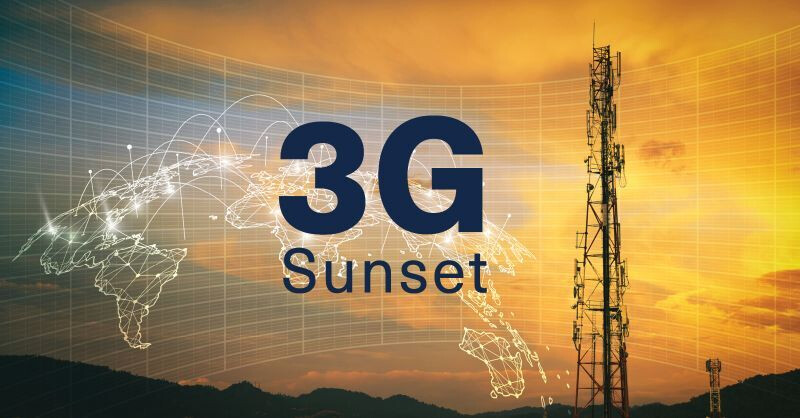
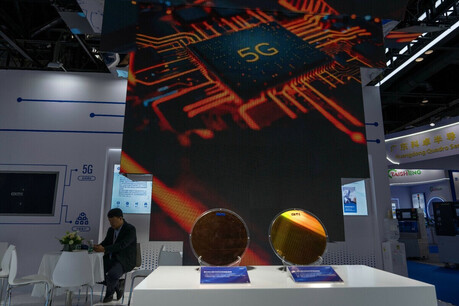
The 3rd Generation (3G) mobile network, a cornerstone of the modern digital age that brought video calling and mobile internet to the palm of our hands, has entered its final phase. After more than two decades of service, the technology that once defined the cutting edge of mobile communication is being phased out as carriers shift their focus toward more advanced LTE and 5G networks. 

A Legacy of Innovation

Launched in South Korea in 2003 through Wideband Code Division Multiple Access (WCDMA) services by SK Telecom and KTF, 3G technology revolutionized how people interacted with their devices. It transformed mobile phones from simple voice-communication tools into multimedia hubs. At its peak in 2011, 3G accounted for approximately 68% of all mobile subscriptions in South Korea.

However, the rapid proliferation of 4G LTE, followed by the widespread adoption of 5G, led to a steady decline in 3G’s relevance. By June 2013, LTE subscriptions surpassed 3G, and by June 2026, the number of 3G users had dwindled to just 328,214—a fraction of the total mobile market. 

The Strategic Shift

SK Telecom’s decision to halt new subscriptions is part of a broader, long-term plan to decommission the 3G network entirely, ideally by the end of 2027. The company cited several factors for this move: the persistent decline in traffic and subscriber numbers, the deterioration of aging hardware, and the necessity of reallocating spectrum for next-generation network infrastructure. 

This trend is not isolated to South Korea. Global telecommunications giants, including Verizon, T-Mobile, and AT&T in the United States, as well as NTT Docomo, SoftBank, and KDDI in Japan, have already retired their 3G networks to improve spectral efficiency and bolster 4G/5G performance. In South Korea, LG U+ has notably avoided this transition, having moved directly from 2G to LTE without implementing a 3G network.

Protecting the Consumer

Recognizing that a complete shutdown poses challenges for the remaining user base, SKT has introduced a robust support system to facilitate a smooth migration to LTE or 5G. Existing 3G users are being offered several incentives, including free device replacements (choosing from designated LTE/5G models) paired with monthly discounts, or generous hardware subsidies and subscription fee reductions of up to 70% for 24 months. 

Special provisions have been made for the elderly. Customers aged 65 and over who transition to newer networks are eligible to retain the “New Silver Plan,” a senior-friendly tariff priced at 9,900 KRW per month. For those who choose to discontinue service or switch to a different carrier rather than upgrading, SKT is providing a 40,000 KRW termination subsidy and waiving all related penalty fees. 

The Path Forward

KT is also actively preparing for its own 3G sunset, citing the need to minimize user inconvenience while finalizing plans for suspending new subscriptions. The Ministry of Science and ICT has expressed agreement with the necessity of this transition, emphasizing that the focus remains on "user protection" throughout the decommissioning process.

While the curtain closes on 3G, the industry looks ahead to a future defined by even faster, more integrated connectivity. The retirement of 3G is not merely about clearing out old technology; it is a vital step toward optimizing the digital infrastructure required to power smart cities, autonomous vehicles, and the expanding Internet of Things (IoT). 

For now, the network that started the mobile internet revolution holds a place of honor as the bridge between simple cellular devices and the indispensable smartphones of today.

[Copyright (c) Global Economic Times. All Rights Reserved.]

  • #globaleconomictimes
  • #micorea
  • #mykorea
  • #Lifeplaza
  • #nammidonganews
  • #singaporenewsk
  • #Taiwanpost
  • #Samsung
  • #Doosa
Kim Young Min Reporter

Popular articles

  • Samsung Electronics Reassigns CSS Power Semiconductor Staff to Memory and Foundry Divisions

  • SK Hynix Declares Q2 Dividend of 375 Won Per Share, Signals Enhanced Shareholder Returns in Q3

  • Slight Relief: Domestic Fuel Prices Drop for 11th Consecutive Week as Gasoline and Diesel Hover in 1,800-Won Range

I like it
Share
  • Facebook
  • X
  • Kakaotalk
  • LINE
  • BAND
  • NAVER
  • https://globaleconomictimes.kr/article/1065617556953485 Copy URL copied.
Comments >

Comments 0

Weekly Hot Issue

  • Genesis Unveils the GV90: A New Benchmark for Future Luxury Mobility 
  • A New Chapter in Oncology: Moderna’s mRNA Cancer Vaccine Achieves Landmark Phase 3 Success 
  • Trump Shifts Strategy: Acknowledges North Korea’s Nuclear Status, Prioritizes Capability Limits over Denuclearization
  • U.S. National Debt Crosses $40 Trillion Milestone, Raising Fiscal Alarm
  • Japan Eases Overtime Rules to Boost Industrial Competitiveness; Korea Remains Stuck in 52-Hour "Trap"
  • Busan Named 'Best Incentive Destination in Asia' at 2026 M&C Asia Stella Awards 

Most Viewed

1
The 16th Ethiopia-gil World Festival & Meskel Festival
2
Goldman Sachs Maintains KOSPI Target at 12,000, Citing "Excessive Market Fear"
3
Nable Communications Secures 5G Private Network Upgrade Deal with LG Uplus
4
'Delisting Countdown' Becomes Reality as Mass Administrative Stock Designations Hit Listed Companies
5
TSMC Accelerates 3nm Capacity Expansion: Monthly Output Set to Exceed 180,000 Wafers by Year-End
광고문의
임시1
임시3
임시2

Hot Issue

"The Era of Automatic Alliance Protection is Over": South Korea’s New 'Four-Pillar' Survival Strategy

Korea Post to Issue Commemorative Stamps Marking 150th Birth Anniversary of Baekbeom Kim Gu 

Korean fintech expertise is making significant strides in the Vietnamese financial market, signaling a new era where "work records" serve as a foundation for credit.

Advancing the Era of ‘Green Ammonia’: KIST Develops High-Efficiency Catalyst for Ambient Ammonia Production

Fashion Runway Show 2026

Global Economic Times
korocamia@naver.com
CEO : LEE YEON-SIL
Publisher : KO YONG-CHUL
Registration number : Seoul, A55681
Registration Date : 2024-10-24
Youth Protection Manager: KO YONG-CHUL
Singapore Headquarters
5A Woodlands Road #11-34 The Tennery. S'677728
Korean Branch
Phone : +82(0)10 4724 5264
#304, 6 Nonhyeon-ro 111-gil, Gangnam-gu, Seoul
Copyright © Global Economic Times All Rights Reserved
  • 향기네무료급식
  • BCB부천방송
  • 반달곰 프로젝트
Search
Category
  • All articles
  • Synthesis
  • World
  • Business
  • Industry
  • ICT
  • Distribution Economy
  • Well+Being
  • Travel
  • Eco-News
  • Education
  • Korean Wave News
  • Opinion
  • Arts&Culture
  • Sports
  • People & Life 
    • 전체
    • International Student Report
    • With Ambassador
  • Column 
    • 전체
    • Cho Kijo Column
    • Cherry Garden Story
    • Ko Yong-chul Column
    • Kim Seul-Ong Column
    • Lee Yeon-sil Column
  • Photo News
  • New Book Guide
  • Multicultural News
  • Jobs & Workers