![[등록] 2026-09-01 15:48:31](/support/_updata/banner2/tl181982910_6749.png)


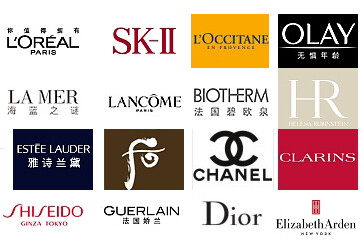
Global cosmetic brands are facing significant headwinds in South Korea, the home turf of K-beauty. Declining profitability and a series of business withdrawals underscore the challenges these international players are encountering in this dynamic market.
According to data from South Korea's Financial Supervisory Service, Carver Korea, the operator of the well-known home shopping cosmetic brand AHC, reported a revenue of 278.2 billion KRW in the past year, marking an 11.5% decrease compared to the previous year. This represents a substantial fall from its peak revenue exceeding 600 billion KRW. The company's operating profit and net profit also saw significant drops, falling by 29.8% to 44 billion KRW and by 27.1% to 37.7 billion KRW, respectively, year-on-year.
Carver Korea originated as a domestic aesthetic professional brand and gained prominence through home shopping channels. It was acquired by private equity firm Bain Capital and others in 2016, and subsequently sold to global consumer goods giant Unilever in September 2017. Unilever's acquisition of Carver Korea for approximately 3.05 trillion KRW remains the largest merger and acquisition deal in the history of the South Korean cosmetics industry, drawing considerable attention at the time.
Japanese cosmetics company Shiseido Korea is also grappling with sluggish performance. Its revenue last year saw a marginal increase of 0.1% to 90.1 billion KRW, while it recorded an operating loss of 1.6 billion KRW, turning into a deficit. Although its net loss decreased to 600 million KRW from 2 billion KRW in the previous year, the company's overall financial health remains a concern.
Kose Korea, which houses brands like Addiction and Sekkisei, also experienced a sharp decline in revenue last year, falling by 38.9% to 22.6 billion KRW. The company faced operating and net losses of 3.8 billion KRW and 2.4 billion KRW, respectively, failing to escape the red.
The situation is similar for Swiss luxury skincare brand La Prairie. La Prairie Korea reported a revenue of 17.6 billion KRW last year, a 7.9% decrease year-on-year. Its operating loss widened by approximately 1 billion KRW to 2.8 billion KRW, and it also swung to a net loss of the same magnitude.
Beyond declining profitability, several global brands have opted to exit the South Korean market altogether. LVMH Group's premium beauty brand Fresh recently announced its withdrawal, ceasing operations on its domestic online official mall on April 15th. Fresh entered the South Korean market directly in 2012, capitalizing on the natural cosmetics trend. However, consecutive years of sales decline in 2022 and 2023 led to sustained poor performance, ultimately resulting in its departure.
L'Oréal Korea's makeup brand Maybelline New York has also decided to discontinue its domestic operations by the first half of this year. Its official online mall has already halted sales. Maybelline New York entered the South Korean market in 1998 and recently attempted a brand renewal targeting younger consumers. Despite these efforts, the brand could not overcome its poor performance and chose to withdraw.
Industry insiders attribute this trend to the rapid growth in quality and brand competitiveness of K-beauty, fueled by the global proliferation of K-content. As domestic cosmetic brands have experienced significant growth, the foothold of global brands within the South Korean market has conversely diminished. According to the Korea Cosmetic Industry Research Institute, South Korea's cosmetics exports reached 11.2 billion USD last year, a substantial 20.5% increase year-on-year. In contrast, imports decreased by 1.4% to 16.6 billion USD.
An industry representative commented, "In the past, expensive and well-recognized global brands were preferred. However, as K-beauty has gained technological prowess and price competitiveness, domestic consumers' perceptions have changed." They further added, "This shift has influenced the market withdrawal of overseas brands."
The rise of K-beauty on the global stage is a multifaceted phenomenon. South Korean beauty products have garnered international acclaim for their innovative formulations, high-quality ingredients, and trendy packaging. The "Korean skincare routine," often involving multiple steps and a focus on gentle yet effective products, has gained a dedicated following worldwide. Furthermore, the influence of Korean pop culture (K-pop) and Korean dramas (K-dramas) has played a significant role in driving the popularity of K-beauty products and trends. Celebrities and influencers associated with these cultural exports often showcase and endorse Korean beauty brands, further amplifying their reach and appeal.
Domestically, South Korean consumers are increasingly discerning and well-informed about beauty products. They have access to a wide array of local brands that offer comparable or even superior quality at more competitive prices compared to many international brands. The emphasis on natural and innovative ingredients, coupled with effective marketing strategies by domestic companies, has resonated strongly with local consumers. The strong domestic competition has pushed K-beauty brands to constantly innovate and adapt to consumer preferences, further strengthening their market position.
The struggles of global beauty brands in South Korea highlight the intense competition and evolving consumer landscape within the beauty industry. While the South Korean market remains attractive due to its size and influence on global beauty trends, international players need to adapt their strategies to effectively compete with the increasingly dominant K-beauty brands. This may involve focusing on niche markets, leveraging unique product offerings, or forging strategic partnerships with local players to better understand and cater to the preferences of South Korean consumers. The recent exits and declining performances serve as a cautionary tale for global brands seeking to maintain or expand their presence in this highly competitive and trend-setting beauty market.
[Copyright (c) Global Economic Times. All Rights Reserved.]