
• 2026.06.05 (Fri)
  • All articles
  • LOGIN
  • JOIN
Global Economic Times
fashionrunwayshow2026
  • Synthesis
  • World
  • Business
  • Industry
  • ICT
  • Distribution Economy
  • Well+Being
  • Travel
  • Eco-News
  • Education
  • Korean Wave News
  • Opinion
  • Arts&Culture
  • Sports
  • People & Life
    • International Student Report
    • With Ambassador
  • Column
    • Cho Kijo Column
    • Cherry Garden Story
    • Ko Yong-chul Column
    • Kim Seul-Ong Column
    • Lee Yeon-sil Column
  • Photo News
  • New Book Guide
MENU
 
Home > ICT

70% of Hacked Companies Fail to Report Breaches: Call for Enhanced Cybersecurity Response

Yim Kwangsoo Correspondent / Updated : 2026-03-27 21:26:17
  • -
  • +
  • Print
- Ministry of Science and ICT releases ‘2025 Information Security Survey’ results
- Underreporting fueled by perception of "insignificant damage" and administrative burden
- Only half of surveyed firms maintain formal information security policie
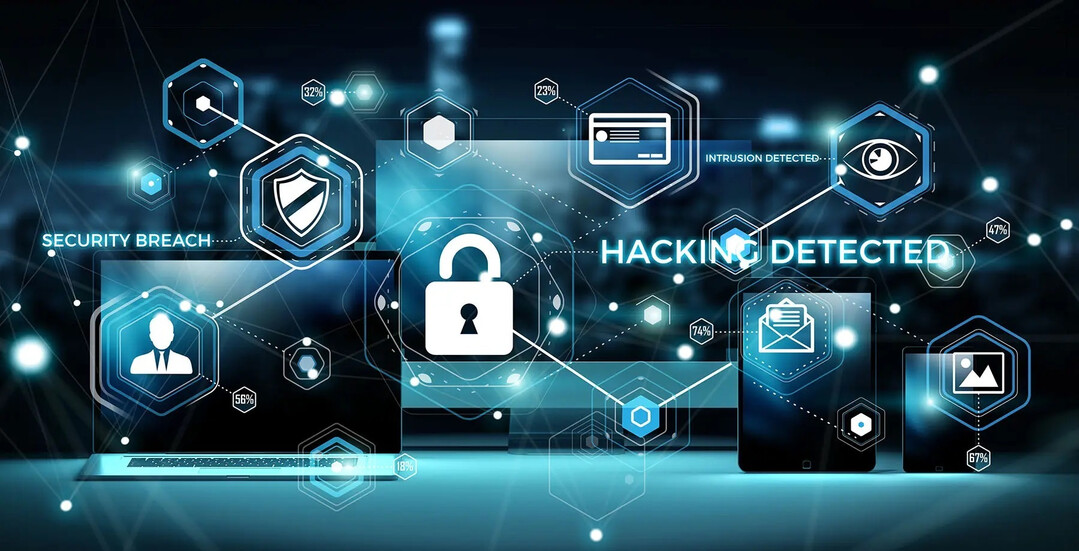


[SEOUL] A stark reality check has been issued to South Korea’s corporate sector as new government data reveals that nearly seven out of ten companies falling victim to cyberattacks choose to remain silent. The findings highlight a critical vulnerability in the nation’s collective defense against increasingly sophisticated digital threats.

The Silence of the Breached
On March 27, 2026, the Ministry of Science and ICT (MSIT), in collaboration with the Korea Information Security Industry Association (KISIA), published the results of the ‘2025 Information Security Survey.’ The comprehensive study analyzed 5,500 companies with ten or more employees and 3,000 individual internet users aged 12 to 69.

While only 0.2% of all surveyed companies reported experiencing a clear security breach, the response to those incidents was underwhelming. Among the firms that suffered attacks, a mere 31.4% officially reported the incident to the relevant authorities. This leaves a staggering 68.6% of security compromises unaccounted for in official statistics.

Barriers to Reporting: Apathy and Red Tape
The survey delved into why businesses hesitate to come forward. The most common reason, cited by 59.7% of respondents, was the belief that the “damage was not significant enough” to warrant a report. However, experts warn that "insignificant" initial breaches are often precursors to larger, more devastating ransomware attacks or data leaks.

Other significant deterrents included:

Administrative Burden (30.9%): Fears regarding the time and resources required for official investigations and post-incident processing.
Perceived Futility (29.0%): A belief that reporting the crime would not actually assist in the recovery of lost data or assets.
Furthermore, 7.5% of companies admitted they were entirely unaware of security incidents until long after they occurred, suggesting a widespread lack of advanced detection capabilities.

Underfunded and Underprepared
The report paints a somber picture of the general state of corporate cybersecurity infrastructure. Despite the rising frequency of global cyber warfare and industrial espionage, basic security hygiene remains inconsistent:

Policy Gaps: Only 52.6% of companies have an established formal information security policy.
Lack of Manpower: Dedicated security organizations exist in only 35.3% of firms.
Education Deficit: Just 32.7% of businesses conduct regular security training for their staff.
Budgeting: Only 54.8% of enterprises allocate a specific budget for information security measures.

Government Pledges Stronger Support
In response to these findings, the government emphasized the need for a shift in corporate culture—from viewing cybersecurity as a cost center to seeing it as a vital component of business continuity.

Lim Jeong-gyu, Director General of the Information Protection and Network Policy Bureau at the MSIT, stated, "As cyber threats become more sophisticated and automated, it is imperative that the private sector bolsters its primary defense lines. The government will continue to push for initiatives that enhance national information security capabilities and streamline the reporting process to reduce the burden on businesses."

Industry analysts suggest that without mandatory reporting requirements for a broader range of incidents and better incentives for transparency, the "silent majority" of hacked firms will continue to leave the entire national network at risk.

[Copyright (c) Global Economic Times. All Rights Reserved.]

  • #Korea
  • #Seoul
  • #Hallyu
  • #USA
  • #Economy
  • #Busoness
  • #Global
  • #World
  • #Consumer
  • #Export
  • #Import
  • #Hanguel
  • #Travel
  • #Tour
  • #Food
Yim Kwangsoo Correspondent

Popular articles

  • AIDC Emerges as New Growth Engine for Telcos, Filling the Void Left by Stagnant Wireless Revenues

  • U.S. World Cup "Host City Boom" Fizzles: Hotel Bookings Slump One Month Before Kickoff

  • "Countdown to Renewed Strikes on Iran?" At Least 50 U.S. Aerial Refueling Tankers Massed at Israeli Airport

I like it
Share
  • Facebook
  • X
  • Kakaotalk
  • LINE
  • BAND
  • NAVER
  • https://globaleconomictimes.kr/article/1065615875963460 Copy URL copied.
Comments >

Comments 0

Weekly Hot Issue

  • Samsung Electronics Super-Enterprise Union Loses Majority Status Amid Backlash Over Bonus Disparities
  • Samsung to Embed Vital Signs and Heart Health Scores in Upcoming Galaxy Watch9 Lineup
  • Apple Honors Digital Excellence: 12 Exceptional Apps and Games Celebrated at the 2026 Design Awards
  • Nexon Revamps Signature Youth Coding Competition into AI-Driven 'Nexon Young Programmers Cup'
  • Tech University of Korea Gathers 200 Game and AI Researchers to Discuss Industrial Expansion
  • Major Korean Telcos Trim Online-Exclusive Plans by Up to 50% Amid Shift to Unified Mobile Tariffs

Most Viewed

1
From a moment of collective sacrifice to a moment of collective democracy: The Timing of the Election in Ethiopia and Korea
2
U.S. Holds Off on Immediate Comprehensive Semiconductor Tariffs, but Pressure Mounts for Samsung and SK Hynix to Accelerate Domestic Investments
3
[Interview] "Halal is Not a Religious Regulation, but a 'Trust Infrastructure'… Creating a Premium 'K-Halal' Centered on Data and Platforms"
4
‘600 Million Won Bonus’ at Samsung Electronics Triggers Deep Sense of Relative Deprivation Among Korean Workers
5
Bomb Attack Targets Moving Train in Pakistan: At Least 29 Dead, 102 Injured
광고문의
임시1
임시3
임시2

Hot Issue

Murata Unveils Next-Gen Resin Electrode MLCC for Automotive Applications

Samsung to Embed Vital Signs and Heart Health Scores in Upcoming Galaxy Watch9 Lineup

L&F Plus Secures KRW 220 Billion from National Growth Fund to Anchor South Korea’s First Mass LFP Cathode Production

Samsung Electronics Super-Enterprise Union Loses Majority Status Amid Backlash Over Bonus Disparities

Fashion Runway Show 2026

Global Economic Times
korocamia@naver.com
CEO : LEE YEON-SIL
Publisher : KO YONG-CHUL
Registration number : Seoul, A55681
Registration Date : 2024-10-24
Youth Protection Manager: KO YONG-CHUL
Singapore Headquarters
5A Woodlands Road #11-34 The Tennery. S'677728
Korean Branch
Phone : +82(0)10 4724 5264
#304, 6 Nonhyeon-ro 111-gil, Gangnam-gu, Seoul
Copyright © Global Economic Times All Rights Reserved
  • 에이펙2025
  • APEC2025가이드북TV
  • 반달곰 프로젝트
Search
Category
  • All articles
  • Synthesis
  • World
  • Business
  • Industry
  • ICT
  • Distribution Economy
  • Well+Being
  • Travel
  • Eco-News
  • Education
  • Korean Wave News
  • Opinion
  • Arts&Culture
  • Sports
  • People & Life 
    • 전체
    • International Student Report
    • With Ambassador
  • Column 
    • 전체
    • Cho Kijo Column
    • Cherry Garden Story
    • Ko Yong-chul Column
    • Kim Seul-Ong Column
    • Lee Yeon-sil Column
  • Photo News
  • New Book Guide
  • Multicultural News
  • Jobs & Workers













