• 2025.12.06 (Sat)
  • All articles
  • LOGIN
  • JOIN
Global Economic Times
APEC2025KOREA가이드북
  • Synthesis
  • World
  • Business
  • Industry
  • ICT
  • Distribution Economy
  • Well+Being
  • Travel
  • Eco-News
  • Education
  • Korean Wave News
  • Opinion
  • Arts&Culture
  • Sports
  • People & Life
  • Column
    • Cho Kijo Column
    • Lee Yeon-sil Column
    • Ko Yong-chul Column
    • Cherry Garden Story
  • Photo News
  • New Book Guide
MENU
 
Home > Synthesis

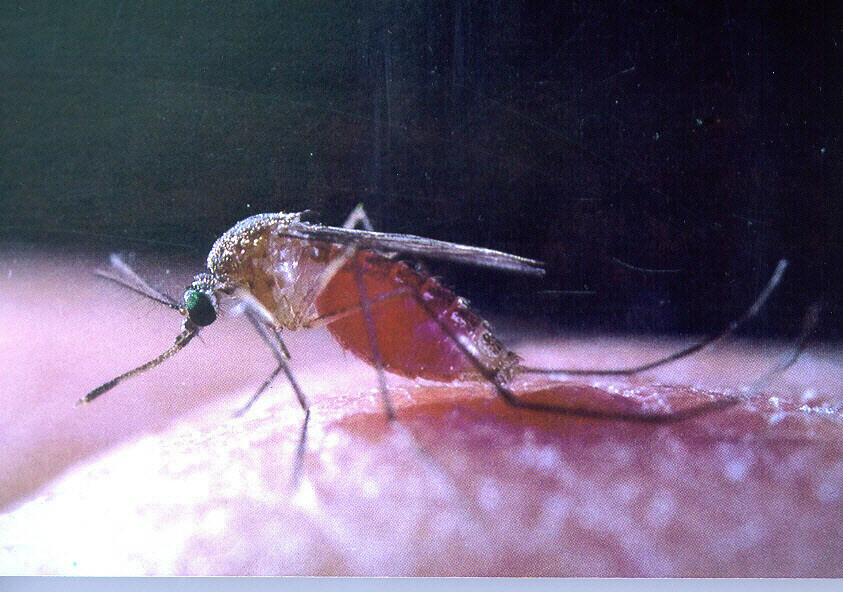
DAEJEON CITY CONFIRMS FIRST JAPANESE ENCEPHALITIS MOSQUITO OF THE YEAR ‘Warning to be Cautious of Mosquito Bites’

HONG MOON HWA Senior Reporter / Updated : 2025-08-10 20:41:33
  • -
  • +
  • Print
Peak Infection Risk from August to October... Emphasis on Everyday Practices like Using Repellents

The Daejeon Institute of Health and Environment has issued a special warning to citizens after confirming the first 'Culex tritaeniorhynchus' mosquito, the vector for Japanese encephalitis, within the city this year.

Since April, the Institute of Health and Environment has been collecting and studying mosquitoes at five locations, including Hanbat Arboretum and Jungchon Neighborhood Park, to prepare for mosquito-borne infectious diseases. On August 7, 'Culex tritaeniorhynchus,' the Japanese encephalitis vector mosquito, was confirmed among the mosquitoes collected at Hanbat Arboretum. Genetic analysis has not detected the Japanese encephalitis virus as of yet.

Culex tritaeniorhynchus lives in wetlands such as rice paddies, livestock pens, and puddles, and mainly feeds at night. Its population density is known to peak nationwide in August and September and remain active until the end of October. In Wando-gun, South Jeolla Province, these mosquitoes accounted for 60.1% of all collected mosquitoes, leading to a nationwide Japanese encephalitis alert on August 1.

The institute emphasized that August to October is the most active period for mosquitoes and stressed the importance of following preventive measures in daily life to prevent Japanese encephalitis and other mosquito-borne infectious diseases.

During the mosquito season from April to October, wear light-colored, long clothing to minimize skin exposure when outdoors.

Additionally, use mosquito repellent on exposed skin, clothes, the tops of shoes, and socks, and avoid strong perfumes or cosmetics that can attract mosquitoes.

To prevent mosquitoes from entering indoors, check window screens and use mosquito nets if necessary. Stagnant water in puddles or blocked drains around the house should be removed regularly.

"The best way to prevent Japanese encephalitis is to avoid being bitten by mosquitoes," said Jung Tae-young, director of the Institute of Health and Environment. "I hope all citizens will strictly follow the prevention guidelines and have a healthy summer."

[Copyright (c) Global Economic Times. All Rights Reserved.]
  • #globaleconomictimes
  • #micorea
  • #mykorea
  • #Lifeplaza
  • #nammidonganews
  • #singaporenewsk
  • #Samsung
  • #Daewoo
  • #Hyosung
  • #A
HONG  MOON HWA Senior Reporter
HONG MOON HWA Senior Reporter

Popular articles

  • South Chungcheong Agricultural Research Institute Launches Nation's First Continuous 'MCT Biochar' Research Facility

  • Daedeok Innopolis to Global Markets: Daejeon Hosts Tech Exchange Focused on Funding and International Expansion

  • Daejeon City Honors Four ‘Promising Small Businesses’ for Innovation and Growth

I like it
Share
  • Facebook
  • X
  • Kakaotalk
  • LINE
  • BAND
  • NAVER
  • https://globaleconomictimes.kr/article/1065613257335567 Copy URL copied.
Comments >

Comments 0

Weekly Hot Issue

  • China Stages Massive Naval Show of Force Amid Heightened Tensions with Japan
  • EU Launches Antitrust Probe into Meta Over WhatsApp AI Chatbot Restrictions
  • Sports Icons Converge as 2026 FIFA World Cup Draw Approaches
  • Russia Vows 'Strongest Response' as EU Proposes Using Frozen Assets for Ukraine Loan
  • US Layoffs Surge: Over 1.17 Million Job Cuts Announced in First 11 Months of 2025
  • EU Weighs 'Buy European' Rule: Up to 70% Local Content for Key Products

Most Viewed

1
Korean War Ally, Reborn as an 'Economic Alliance' Across 70 Years: Chuncheon's 'Path of Reciprocity,' a Strategic
2
A Garden Where the City's Rhythm Stops: Dongdaemun's 'Cherry Garden', Cooking Consideration and Diversity
3
The Sudden Halt of Ayumi Hamasaki's Shanghai Concert: Unpacking the Rising Sino-Japanese Tensions
4
Farewell to a Legend: South Korea Mourns the Passing of Esteemed Actor Lee Soon-jae
5
China’s Anti-Starlink Strategy: Simulation Suggests 2,000 Drones Needed for Taiwan Disruption
광고문의
임시1
임시3
임시2

Hot Issue

Global Billionaire Count Hits 2,919, Total Wealth Reaches $15.8 Trillion

China Stages Massive Naval Show of Force Amid Heightened Tensions with Japan

Russia Vows 'Strongest Response' as EU Proposes Using Frozen Assets for Ukraine Loan

UK and Norway Form Joint Naval Fleet to Counter Rising Russian Submarine Threat

Let’s recycle the old blankets in Jeju Island’s closet instead of incinerating them.

Global Economic Times
korocamia@naver.com
CEO : LEE YEON-SIL
Publisher : KO YONG-CHUL
Registration number : Seoul, A55681
Registration Date : 2024-10-24
Youth Protection Manager: KO YONG-CHUL
Singapore Headquarters
5A Woodlands Road #11-34 The Tennery. S'677728
Korean Branch
Phone : +82(0)10 4724 5264
#304, 6 Nonhyeon-ro 111-gil, Gangnam-gu, Seoul
Copyright © Global Economic Times All Rights Reserved
  • 에이펙2025
  • APEC2025가이드북TV
  • 세종시
Search
Category
  • All articles
  • Synthesis
  • World
  • Business
  • Industry
  • ICT
  • Distribution Economy
  • Well+Being
  • Travel
  • Eco-News
  • Education
  • Korean Wave News
  • Opinion
  • Arts&Culture
  • Sports
  • People & Life
  • Column 
    • 전체
    • Cho Kijo Column
    • Lee Yeon-sil Column
    • Ko Yong-chul Column
    • Cherry Garden Story
  • Photo News
  • New Book Guide
  • Multicultural News
  • Jobs & Workers