

TOKYO — Japan’s political landscape is bracing for a high-stakes clash as the ruling coalition pushes to fast-track a controversial bill aimed at reducing the number of seats in the House of Representatives.
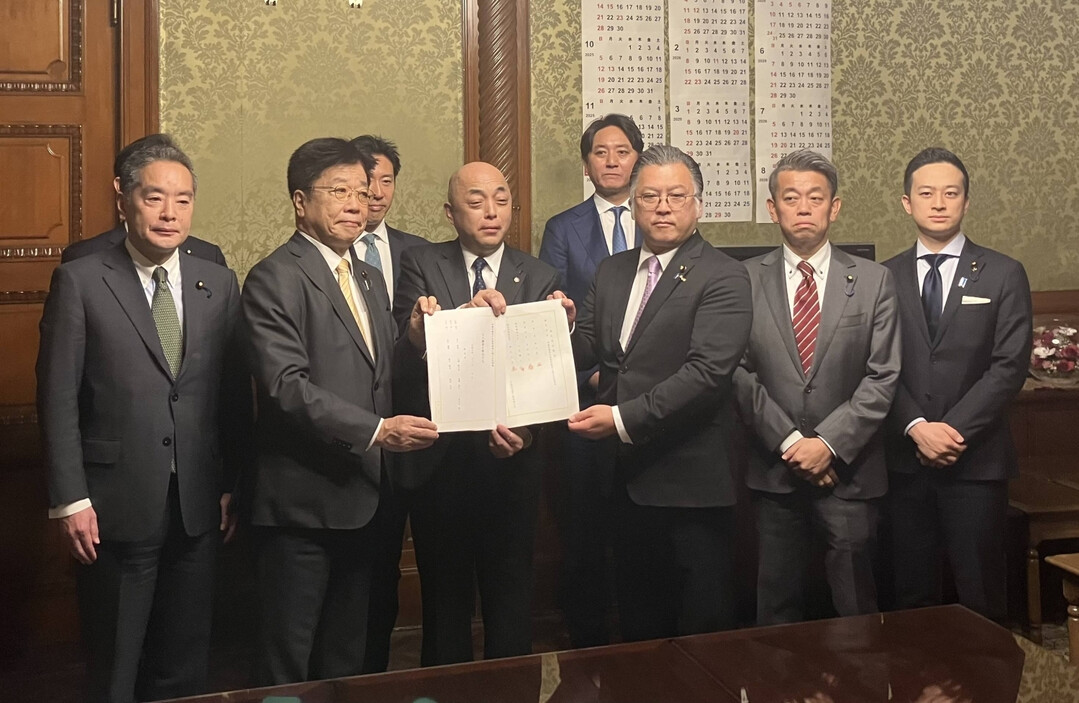
The Liberal Democratic Party (LDP) and its coalition partner, the Japan Innovation Party (JIP)—also known as Nippon Ishin no Kai—are aiming to kick off lower chamber deliberations on the legislation as early as Tuesday, with ambitions to pass it before the current extraordinary Diet session concludes on December 12.
At the core of the proposed legislation is a plan to eliminate 31 of the 176 proportional representation seats within the 465-seat lower chamber. For the JIP, securing the passage of this seat-reduction measure is a nonnegotiable priority, anchoring the reform agenda it championed upon entering the ruling coalition in October 2025. To secure broader backing, the ruling bloc collaborated with the Democratic Party for the People (DPP) to incorporate provisions allowing multiple parties to establish joint proportional representation candidate lists, jointly submitting the bill to the Lower House last Thursday.
However, the legislative push faces fierce resistance from the rest of the opposition camp. Critics, including Komeito policy chief Hiromasa Nakano, argue that slashing proportional representation seats exclusively would disproportionately inflate the volume of wasted votes. Meanwhile, Democratic Reform Party leader Junya Ogawa strongly criticized the ruling coalition for bypassing consensus-building, asserting that changing the fundamental rules of democratic competition unilaterally is unacceptable.
The procedural battle is already deadlocked in the Lower House's special committee on political reform. While the ruling bloc proposed advancing the seat-cut bill following votes on carried-over political donation bills, the Chudo parliamentary group—representing the Democratic Reform Party and Komeito—rejected the proposal, contending it would prematurely truncate vital discussions on corporate political donations.
With some hardliners within the ruling camp advocating for forced votes if cooperation fails, observers warn of a repeat of the parliamentary gridlock witnessed during the previous extraordinary session last July.
This looming standoff threatens to spill over into broader legislative priorities, most notably an Upper House bill proposing a temporary reduction of the consumption tax on food and beverages from 8% to 1% over a two-year period starting in April 2027. Opposition figures, including Constitutional Democratic Party Diet affairs chief Yoshitaka Saito, have cautioned that escalating tensions over the electoral reform bill could severely disrupt deliberations on the tax relief measure.
While the ruling coalition harbors hopes of securing the consumption tax cut in early December before ramming through the seat-reduction bill, uncertainty remains high as opposition parties ready a robust defense to block the legislation.
[Copyright (c) Global Economic Times. All Rights Reserved.]