![[등록] 2026-09-01 15:48:31](/support/_updata/banner2/tl181982910_6749.png)


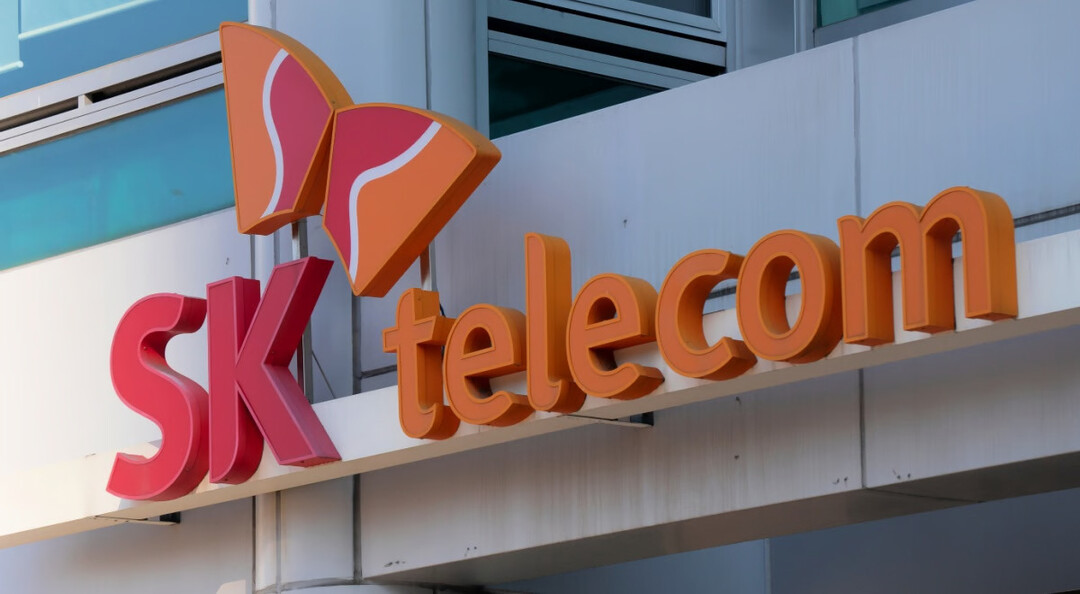
SK Telecom has announced a strategic corporate restructuring plan to split its subsidiary, SK Broadband, through a corporate demerger, creating a dedicated Artificial Intelligence Data Center (AIDC) infrastructure specialist tentatively named "SK Horizon". Alongside this structural split, the company has secured a massive 3.08 trillion KRW (approximately $2.3 billion USD) investment from global and domestic private equity heavyweights to accelerate its ambition of becoming the premier AI infrastructure hub in Asia.
According to industry announcements on August 27, SK Telecom’s board approved the demerger proposal, which divides SK Broadband into a surviving entity that retains its core wired telecom, media, and enterprise operations, and a newly established corporate entity, SK Horizon, focused exclusively on next-generation digital infrastructure. To fuel the rapid expansion required for global AI computing workloads, SK Telecom has partnered with global investment firm KKR (Kohlberg Kravis Roberts) and a domestic consortium comprising IMM Investment and Stonebridge Capital. This consortium will pump a total of 3.08 trillion KRW into SK Horizon. Upon the completion of the transaction and regulatory approvals, SK Telecom will retain a 51% controlling stake, ensuring management stability, while KKR and the IMM-Stonebridge consortium will hold 29% and 20%, respectively.
Strategic Scope and Infrastructure Footprint
The newly minted SK Horizon will inherit and expand upon a robust foundation of digital assets. The company will initially manage eight operational data centers located in strategic metropolitan areas such as Seocho in Seoul and Ilsan in Goyang, Gyeonggi Province. Furthermore, it will take charge of cutting-edge AI data centers currently under construction in Ulsan and Guro, Seoul. In total, SK Horizon’s portfolio will encompass an expansive 318-megawatt (MW) infrastructure footprint, positioning it to handle the staggering computing demands of generative AI applications, large language models (LLMs), and cloud service providers.
Beyond land-based data centers, SK Horizon plans to methodically roll out international submarine cable networks. High-capacity submarine cables are critical arteries for global AI business operations, facilitating seamless cross-border data transfer, ultra-low latency, and robust connectivity between domestic AI server farms and global cloud ecosystems.
Demerger Mechanics and Corporate Governance
Unlike a physical spin-off (material demerger) where the parent company holds 100% of the new subsidiary’s shares, SK Telecom opted for a shareholder-friendly corporate demerger (human demerger). Under this structure, existing shareholders of SK Broadband will receive shares in both the surviving entity and the new SK Horizon proportional to their current holdings. The split ratio has been calculated based on net asset book values, setting the ratio at 0.84 for the surviving SK Broadband and 0.16 for SK Horizon.
Kim Sung-soo, the current Chief Executive Officer of SK Broadband, is slated to concurrently helm SK Horizon as its inaugural CEO. The brand name "Horizon" reflects the corporate vision of "opening new horizons" in the booming global AIDC sector. SK Telecom plans to convene an extraordinary general meeting of shareholders within the first quarter of next year to secure final statutory approvals and complete all organizational transition protocols.
Broader Industry Implications and Market Context
This strategic reorganization underscores a broader paradigm shift within the telecommunications and technology sectors. Traditional telcos are aggressively transforming into AI and digital infrastructure powerhouses. Building and maintaining high-density AI data centers requires astronomical capital expenditure (CapEx)—vastly different from traditional broadband networks—due to specialized liquid-cooling technologies, high-density power requirements, and advanced graphic processing unit (GPU) clusters.
By isolating the capital-intensive AIDC business into a specialized vehicle backed by marquee private equity investors, SK Telecom has unlocked a powerful financial mechanism. It allows SK Horizon to raise independent debt and equity capital without straining the parent company's balance sheet, while granting institutional investors direct exposure to the high-growth AI infrastructure asset class.
Industry analysts note that South Korea is well-positioned to leverage its robust power grid, advanced semiconductor manufacturing, and world-class telecommunications infrastructure to capture a significant share of the Asian AI data center market. With SK Horizon's 318 MW capacity target and substantial financial backing, SK Group is cementing its status as an indispensable pillar in the global AI supply chain, bridging cutting-edge silicon architecture with physical cloud infrastructure.
[Copyright (c) Global Economic Times. All Rights Reserved.]