![[등록] 2026-09-01 15:48:31](/support/_updata/banner2/tl181982910_6749.png)


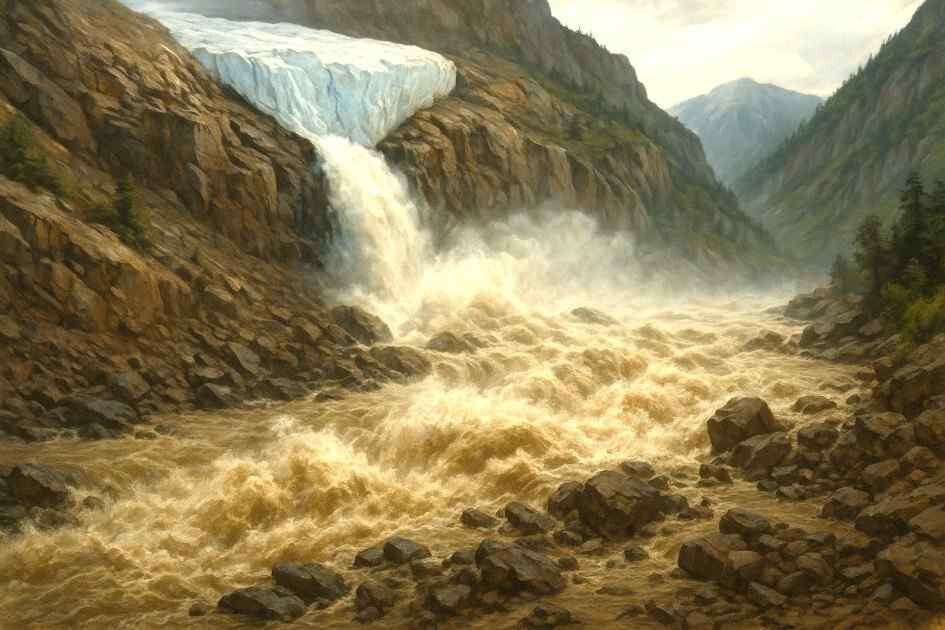
The Bhote Koshi River basin, located along the border between China (Tibet) and Nepal, has a long history of devastating flash floods triggered by glacial collapses, ice avalanches, and glacial lake outburst floods (GLOFs). As climate change accelerates, these catastrophic events are becoming increasingly frequent and severe, posing severe threats to downstream communities and critical infrastructure.
Historical Precedents and Recurrence Cycles
The 1981 Catastrophe: In July 1981, the Chilenmako glacial lake in Tibet burst, sending roughly 20 million cubic meters of water surging down the Bhote Koshi. The flood raised water levels by 30 meters, destroying a hydropower plant, highways, and the historic China-Nepal Friendship Bridge, resulting in an estimated 200 fatalities. Geological studies later indicated that similar disasters struck the region in 1935 and 1964, pointing to a recurring 30-year cycle.
Mid-2010s to Early 2020s Events: In July 2016, an outburst at the Gongbatongsha lake in Tibet—triggered by a monsoon-induced landslide—wiped out livestock and local herders. More recently, small-scale lake breaches, such as the 2024 outburst of the Tianbo Lake in eastern Nepal and multiple lake failures in 2025, have consistently demonstrated how minor upstream breaches can cascade into massive downstream disasters.
Amplified Risks Driven by Climate Change
The overarching geography of the Bhote Koshi basin makes it exceptionally vulnerable. Spanning roughly 3,400 square kilometers, the basin contains an estimated 150 glaciers. According to the International Centre for Integrated Mountain Development (ICIMOD), 59 of these glaciers are at a critically high risk of collapse.
Scientific research from Yunnan University shows that between 1991 and 2012, the surface area of numerous Himalayan glacial lakes expanded dramatically—in some cases growing by up to 162%. Furthermore, modern geospatial tracking around high-risk transit hubs like the Friendship Bridge reveals dozens of clustered glacial lakes, exponentially raising the probability that future ice avalanches or minor lake outbursts will trigger wide-scale downstream devastation.
[Copyright (c) Global Economic Times. All Rights Reserved.]