![[등록] 2026-09-01 15:48:31](/support/_updata/banner2/tl181982910_6749.png)


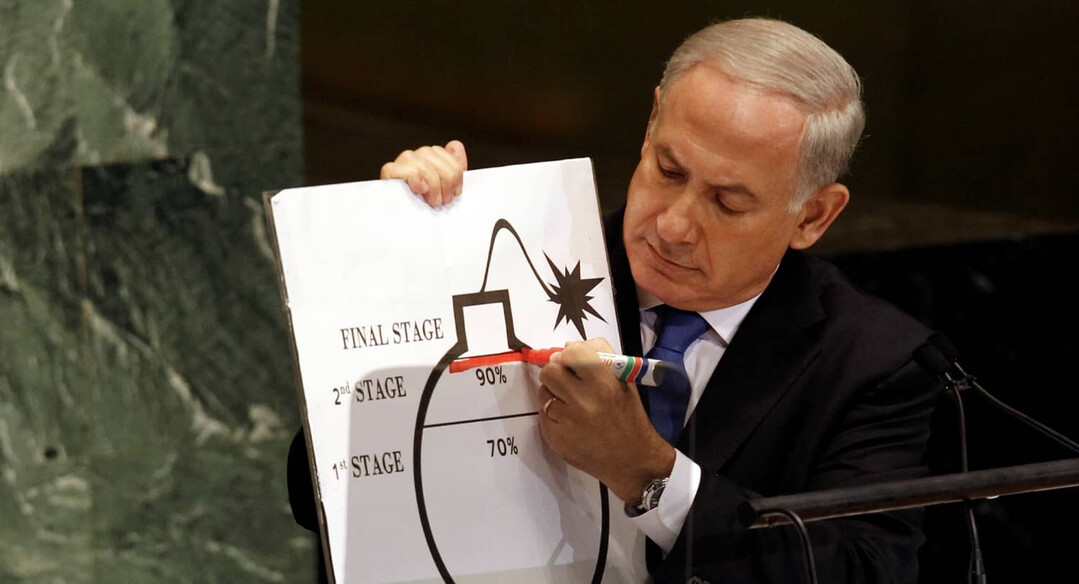
JERUSALEM – In a high-stakes press conference held on March 19, 2026, Israeli Prime Minister Benjamin Netanyahu declared a "historic turning point" in the conflict with Iran. Asserting that Israel has achieved overwhelming military superiority, Netanyahu claimed that Tehran’s capabilities to enrich nuclear fuel and manufacture ballistic missiles have been effectively neutralized.
The announcement comes after 18 days of intensive aerial bombardment, a campaign that the Prime Minister described as having reduced the Islamic Republic to its weakest state in modern history.
A Crippled Military Infrastructure
According to data released by the Israeli Air Force (IAF) and echoed by Netanyahu, the scale of the operation—dubbed by some as a "lightning campaign"—is unprecedented. In less than three weeks, Israel reportedly deployed 12,000 munitions across Iranian territory.
The strategic impact of these strikes includes:
Air Defense: Destruction of approximately 85% of Iran’s integrated air defense networks.
Offensive Capabilities: Elimination of 60% of Iran’s ballistic missile launch pads.
Strategic Reach: For the first time, Israeli strikes reached as far as Iran’s naval bases on the Caspian Sea, signaling that no part of the country remains out of reach.
"Iran can no longer enrich uranium, nor can it produce the missiles intended to carry it," Netanyahu stated during his second major press briefing since the outbreak of hostilities. He characterized Israel’s current standing not just as a regional power, but as a "global powerhouse."
The "Trump Factor" and Gas Field Ceasefire
Addressing international speculation regarding foreign involvement, Netanyahu moved to dispel rumors that Israel had "dragged" the United States into the conflict. He dismissed such claims as "fake news," specifically highlighting his rapport with U.S. President Donald Trump.
"Does anyone truly believe someone can dictate terms to President Trump?" Netanyahu asked rhetorically. "He makes decisions based solely on what is beneficial for the United States."
The Prime Minister confirmed that while the two nations are in "close coordination," the U.S. has exercised significant influence over the scope of the targets. At President Trump’s explicit request, Netanyahu announced that Israel has halted airstrikes on Iranian gas fields to prevent further global energy instability.
Political Turmoil in Tehran
Beyond the physical destruction of military assets, Netanyahu pointed to a "severe internal fracture" within the Iranian leadership. He claimed the regime is currently paralyzed by infighting, with uncertainty surrounding who is actually in command.
Particular attention was drawn to Mojtaba Khamenei, the son of the late Supreme Leader and the presumed successor. Netanyahu noted that Mojtaba has remained out of the public eye throughout the crisis, suggesting a vacuum of power or a deep-seated fear among the elite.
Looking Ahead: An Early Resolution?
The Prime Minister concluded with an optimistic timeline, suggesting that the war could conclude "much faster than people anticipate." With the Iranian regime’s military teeth pulled and its leadership in disarray, the path to a ceasefire or a total collapse of the current clerical order appears increasingly likely to Israeli intelligence.
As of March 20, 2026, the international community remains on high alert. While Israel celebrates a tactical victory, questions remain regarding the long-term stability of the region and the humanitarian cost of the 12,000-bomb campaign.
[Copyright (c) Global Economic Times. All Rights Reserved.]