![[등록] 2026-09-01 15:48:31](/support/_updata/banner2/tl181982910_6749.png)


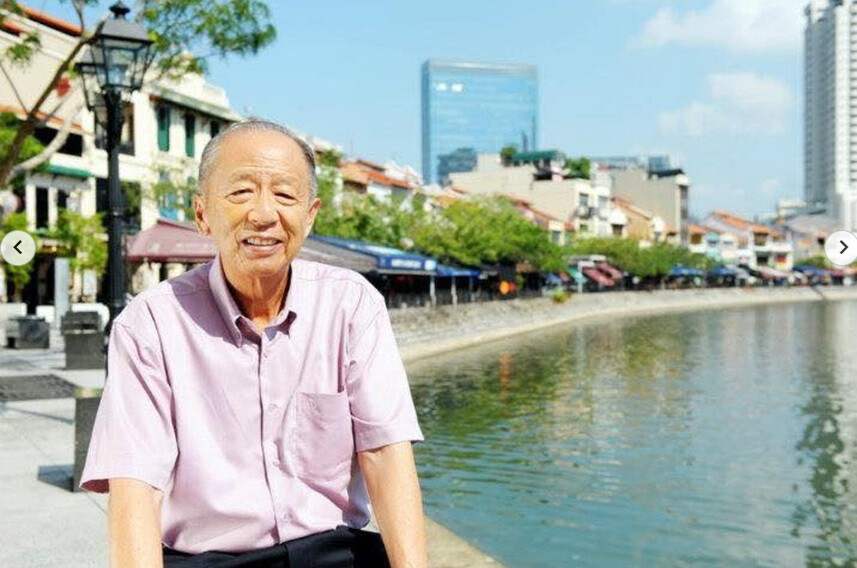
Singapore - Behind Singapore's remarkable transformation lies the dedication of the late Lee Ek Tieng, an outstanding civil servant. He played a pivotal role in turning the once heavily polluted Singapore River into today's iconic landmark and spearheaded the development of NEWater, an innovative water recycling technology, thereby enabling Singapore to possess a world-class public health and water system. Mr. Lee Ek Tieng passed away on April 6th at the age of 91, leaving behind two sons and five grandchildren.
A graduate in engineering, Mr. Lee built a distinguished career in the civil service and public sector. He served as Permanent Secretary of the Ministry of the Environment, Commissioner of Public Utilities Board (PUB), and Head of the Singapore Civil Service, dedicating himself to the nation's development. He retired as Managing Director of the Government of Singapore Investment Corporation (GIC) in July 2007 at the age of 73 and stepped down as Chairman of the PUB Board in 2001.
Prime Minister Lee Hsien Loong paid tribute to his achievements on April 9th via his Facebook page, recalling that "Mr. Lee played a pivotal role in building a clean and green Singapore. In the early years of independence, he oversaw critical infrastructure projects, including the building of the island-wide sewerage system and the cleaning up of our waterways."
Building a Centralized Sewage Treatment System
In 1972, under the newly established Ministry of the Environment, Mr. Lee embarked on building a modern sanitation system. This followed his Sewerage Master Plan, proposed in the late 1960s shortly after he began his civil service career following his graduation from the University of Malaya in 1958.
The system involved constructing pumping stations across the island to convey sewage to a central treatment plant located at Alexandra Road, where it would be treated according to international standards before being discharged into the sea. This proved to be a decisive step in ending the unhygienic night soil collection practice when the last night soil treatment plant in Lorong Halus ceased operations in 1987.
By 1992, Singapore had established 136 pumping stations and a total of 2,340 km of sewage pipelines. By 1997, all of Singapore's population had access to modern sanitation facilities. The significance of this sewerage network development is further underscored by the fact that it progressed in tandem with Singapore's major developments, including the construction of public housing estates and industrial parks, as well as the Singapore River cleanup.
Promoting Cremation and Columbaria Facilities
In 1965, the Singapore government designated all major cemeteries as land available for development. Newly independent Singapore faced an acute land shortage, making land acquisition for national development an unavoidable choice.
According to the 2025 publication 'Lee Ek Tieng: The Green General Of Lee Kuan Yew' by Mr. Lee and his team, who was then the Permanent Secretary of the Ministry of the Environment, they began the delicate and controversial task of progressively closing some of the 213 cemeteries across the island starting in 1973. The closed land was redeveloped for housing, healthcare, and educational facilities.
The government actively promoted cremation as a land-efficient and cost-effective alternative to burials, even though it was not a common practice at the time. The book notes, "Mr. Lee steered Singaporeans, especially the Chinese community, towards cremation for the larger good of Singapore. However, he was also mindful of other communities such as Muslims, Jews, and Parsis, for whom cremation is forbidden."
Mr. Lee and his team provided burial sites in Choa Chu Kang for these minority groups, explaining that their cemeteries would be smaller and have fewer graves.
Anticipating that the sole crematorium at the time, the Mount Vernon crematorium, which could only handle four cremations four times a week, would not be able to cope with the increasing demand for cremation, Mr. Lee directed the construction of 15 new columbarium blocks and two additional crematoria in 1978.
The Grand Operation to Clean Up the Singapore River
In 1970, Mr. Lee was appointed head of the newly established Anti-Pollution Unit under the Prime Minister's Office, tasked with the critical mission of tackling air pollution caused by factories and poorly maintained vehicles.
By 1977, the Anti-Pollution Unit began to focus on water pollution issues. This involved the arduous task of cleaning up the once severely polluted Singapore River and Kallang Basin. These two water bodies accounted for approximately 30% of Singapore's total land area at the time.
In the late 19th century, the Singapore River became a hub for trade and commercial activities. However, as commercial activity along the river flourished, so did pollution. By the early 1900s, businesses and hawkers indiscriminately dumped waste into the river, and oil and debris from lighters ferrying cargo from ships anchored offshore further sullied the waters. The lack of proper sanitation meant that illegal settlers used the river as a toilet, adding to the stench and worsening the water quality. The rivers near the Kallang Basin were similarly heavily polluted due to shipyards, duck farms, and pig farms.
From 1977 to 1987, as Permanent Secretary of the Ministry of the Environment, Mr. Lee spearheaded a S$300 million multi-agency project that brought about a dramatic transformation of this river system. For the tens of thousands of illegal settlers, farmers, and hawkers who treated the river as their personal toilet and refuse dump, Mr. Lee and his team first had to offer alternatives for relocation. This included providing financial compensation to businesses and alternative housing for families.
Following this, the actual cleanup began. Approximately 80 derelict vessels and countless amounts of rubbish were removed from the river, and the riverbed was dredged to eliminate all pollutants.
NEWater and the Nation's Water Tap System
Most people would be familiar with Singapore's "four national taps": water from local catchments, imported water, NEWater, and desalinated water. However, relatively few may know that Mr. Lee played a significant role in securing and establishing these four sources.
Aiming to secure a sustainable source of drinking water for the nation, Mr. Lee, together with engineer Tan Ghee Paw, proposed water recycling and desalination as alternative sources in Singapore's first Water Master Plan formulated in 1972.
The first attempt came two years later with the construction of Singapore's first experimental water recycling plant in Jurong. However, the water treatment technology at the time was too expensive and unreliable, leading to its closure after only a year.
In 1998, with a secure and expanded network of reservoirs and improved relations between Singapore and Malaysia, Mr. Lee revived the project, sending two PUB engineers to the United States to study the latest applications of membrane technology in the recycling of water for potable use.
Two years later, a large-scale demonstration plant capable of producing 10,000 cubic meters of reclaimed water per day was commissioned. This innovative water security enhancement strategy, named NEWater, currently meets up to 40% of Singapore's water demand and aims to meet up to 55% of future water needs by 2060.
In a Facebook post on April 9th, Ms. Grace Fu, Minister for Sustainability and the Environment and Minister-in-charge of Trade Relations, paid tribute to Mr. Lee, recalling, "He championed the development of NEWater to supplement our water needs from an increasing population. In fact, he was the one who coined that iconic name."
The foresight and dedicated efforts of the late Mr. Lee Ek Tieng have laid a solid foundation for Singapore's growth into a global model for maintaining a clean and sustainable environment today. His achievements will forever shine brightly in Singapore's history.
[Copyright (c) Global Economic Times. All Rights Reserved.]