![[등록] 2026-09-01 15:48:31](/support/_updata/banner2/tl181982910_6749.png)


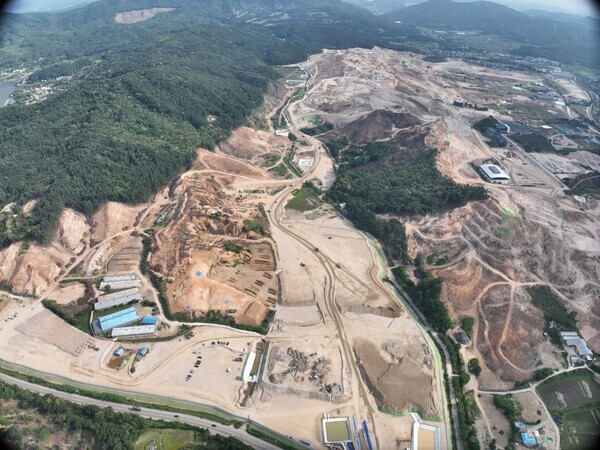
Yongin, South Korea – A critical water supply project intended to feed the ambitious Yongin Semiconductor Cluster has encountered a major setback, casting a shadow over the future of South Korea's flagship initiative to become the world's leading semiconductor manufacturing hub. The construction of the Suyeopcheon Dam in neighboring Yanggu, Gyeonggi Province, a vital component of the long-term water security plan for the sprawling industrial complex, has been indefinitely stalled due to fierce opposition from local residents. This unexpected hurdle has triggered an urgent scramble for alternative water sources, as government projections indicate that the cluster's immense water demands will far outstrip the capacity of the currently planned supply infrastructure once it reaches full operational capacity.
The Ministry of Environment announced just yesterday the commencement of the basic and detailed design phases for the first stage of the integrated water supply project dedicated to the Yongin Semiconductor Cluster. This initial phase, backed by a substantial investment, aims to lay the groundwork for a reliable provision of industrial-grade water essential for the intricate and water-intensive processes involved in semiconductor fabrication. The government's ambitious roadmap envisions a total investment of approximately 2.2 trillion KRW by 2034 to deliver a staggering 1.07 million tons of water per day to the cluster. This colossal undertaking is strategically divided into two phases to incrementally meet the escalating water demands as the cluster expands: Phase 1, targeting a daily supply of 310,000 tons by 2031, and Phase 2, aiming to add another 760,000 tons per day by 2035. The current design efforts are concentrated on the crucial first phase of this vital infrastructure project.
The initial phase of the water supply project entails the construction of an extensive 46.9-kilometer dedicated pipeline originating from the Paldang Dam, a major existing water source in the region, and the establishment of a critical booster pumping station. This pumping station will play a crucial role in elevating the water pressure sufficiently to supply the higher-altitude areas within the Yongin industrial complex. The design phase is anticipated to span approximately 18 months, with completion targeted for November of the following year. Construction is then slated to proceed diligently until 2030, with the optimistic goal of commencing water supply to the initial facilities within the semiconductor cluster by January 2031.
However, this carefully orchestrated water supply strategy faces a significant threat in the form of the stalled Suyeopcheon Dam project. This proposed dam in Yanggu, Gyeonggi Province, was envisioned as the long-term cornerstone of the cluster's water security, intended to supplement the initial supplies from the Paldang Dam and ensure a sustainable water source for future expansion. Projections from the Gyeonggi Research Institute paint a stark picture of the future water needs of the Yongin Semiconductor Cluster, estimating a daily demand of a colossal 1.67 million tons after 2035. Even with the successful completion of both phases of the government's integrated water supply project, the total available water supply would only reach 1.07 million tons per day, leaving a substantial deficit of 600,000 tons – a shortfall that could severely impede the cluster's growth and operational efficiency.
The Suyeopcheon Dam, identified by environmental authorities as the largest among 14 candidate climate change adaptation dams, was designed to have an immense total storage capacity of 100 million tons. Upon its completion, the dam was projected to have the capacity to supply over 1 million tons of water daily, making it an indispensable component of the long-term water security strategy for the water-hungry semiconductor cluster. However, these plans have been derailed by the resolute opposition of local residents in the Yanggu region.
The primary concerns of the residents revolve around the potential environmental ramifications of the dam construction. These include the inundation of fertile agricultural land, the destruction of natural habitats and biodiversity, and the inevitable displacement of established communities. Vocal protests have been staged, and numerous petitions have been filed, urging the government to abandon the dam project and instead explore alternative water sources that would minimize the adverse impacts on their livelihoods and the delicate local ecosystem. Environmental activist groups have also joined the chorus of opposition, highlighting the potential long-term ecological consequences of such a large-scale dam project.
The indefinite postponement of the Suyeopcheon Dam construction has triggered a sense of urgency within the government and associated agencies, compelling them to actively seek and evaluate alternative solutions to guarantee a stable and sufficient water supply for the strategically crucial semiconductor cluster. Several potential alternatives are currently under consideration. These include exploring options to augment the capacity of existing water sources in the region, investing heavily in the development and implementation of advanced water recycling and reuse technologies within the semiconductor manufacturing facilities themselves, and revisiting other potential dam sites in the broader region that might encounter less vehement local resistance. However, each of these alternatives presents its own set of challenges, including feasibility, cost-effectiveness, and potential environmental impacts.
The development timeline for the Yongin Semiconductor Cluster is highly ambitious, with the first wave of advanced fabrication plants expected to commence operations in the early 2030s. Any significant delay in securing a reliable and adequate water supply could have cascading effects, potentially jeopardizing these ambitious timelines and undermining the overall success of the multi-billion dollar project, which is considered pivotal for South Korea's economic prosperity and its ambition to maintain its leading position in the fiercely competitive global semiconductor market.
This unfolding situation starkly underscores the inherent challenges of harmonizing large-scale industrial development with the imperative of environmental protection and the legitimate concerns of local communities. Finding a sustainable, environmentally responsible, and socially acceptable solution to the looming water supply crisis will be absolutely critical for the future viability and success of the Yongin Semiconductor Cluster and, by extension, for South Korea's broader strategic objectives in the high-stakes global semiconductor industry. The government now faces the daunting task of navigating these complex and often conflicting interests to ensure that the nation's technological and economic aspirations are not derailed by a fundamental resource constraint.
[Copyright (c) Global Economic Times. All Rights Reserved.]