• 2026.03.06 (Fri)
  • All articles
  • LOGIN
  • JOIN
Global Economic Times
fashionrunwayshow2026
  • Synthesis
  • World
  • Business
  • Industry
  • ICT
  • Distribution Economy
  • Well+Being
  • Travel
  • Eco-News
  • Education
  • Korean Wave News
  • Opinion
  • Arts&Culture
  • Sports
  • People & Life
    • International Student Report
    • With Ambassador
  • Column
    • Cho Kijo Column
    • Cherry Garden Story
    • Ko Yong-chul Column
    • Kim Seul-Ong Column
    • Lee Yeon-sil Column
  • Photo News
  • New Book Guide
MENU
 
Home > Business

Burger King Fined ₩300 Million by Fair Trade Commission for Forcing Franchisees to Use Specific Cleaning Products and Tomatoes

Desk / Updated : 2025-08-16 18:03:31
  • -
  • +
  • Print

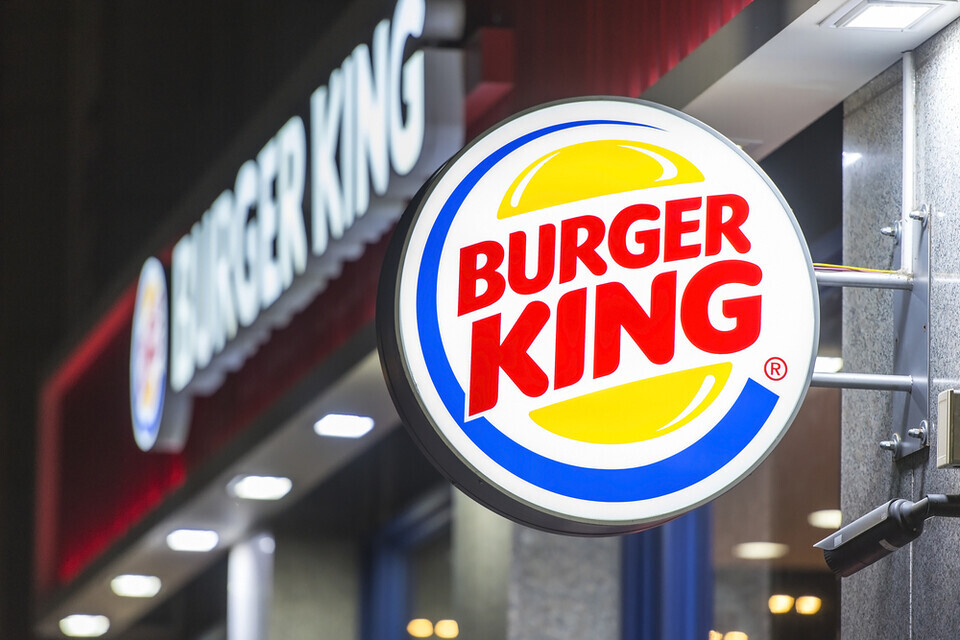
SEOUL — BKR Co., the operator of the fast-food brand Burger King, has been fined ₩300 million by the Korea Fair Trade Commission (KFTC) for allegedly forcing its franchisees to use specific, hard-to-find U.S. brand cleaning products and KFTC-approved domestic tomatoes. The KFTC deemed these actions an unfair trade practice, issuing a corrective order and the fine.

According to a KFTC investigation, BKR Co. listed 15 types of cleaning products and tomatoes as “recommended” items in its disclosure document, allowing franchisees to purchase them from any supplier as long as they met the company’s standards. However, the investigation found that BKR Co. effectively mandated the use of specific products that were difficult to find on the market and available only through its internal purchasing system.

Furthermore, store inspections were conducted to verify the use of approved products. Failure to comply resulted in demerits on the franchise’s evaluation score. If the score fell below a certain threshold, the franchisee faced penalties such as official warnings, suspension of delivery services, or even temporary business shutdowns. In the case of tomatoes, the KFTC noted a particularly severe policy where the use of unapproved products would result in a score of zero, regardless of other factors, with threats of store closure or contract termination.

The KFTC concluded that the cleaning products were not directly related to the taste or quality of Burger King's core product, the hamburger. The commission also found that purchasing them directly from the headquarters was not essential for maintaining brand image. By designating only specific products as "useable" and effectively compelling franchisees to buy them from the headquarters, BKR Co. was found to have violated Article 12, Clause 1, Sub-clause 2 of the Franchise Business Act (Restriction on Business Counterparties).

Additionally, the KFTC pointed out that BKR Co.'s failure to properly disclose the significant consequences—penalties based on inspections—while listing the items as "recommended" constituted a deceptive provision of information, a violation of Article 9, Clause 1, Sub-clause 2 of the same act.

A KFTC official stated, "This action penalizes a franchisor that has indirectly mandated items unrelated to business uniformity, thereby shifting the burden onto franchisees. We will continue to monitor and address unfair practices that hinder franchisees' rational decision-making or infringe upon their economic interests."

BKR Co. responded to the sanctions, stating, "We have only recommended the use of certain items in line with global headquarter procedures to maintain consistent quality and hygiene across all Burger King stores worldwide. There have been no instances of franchisees being penalized for this reason." The company clarified that the cleaning products were suggested to ensure they were free of harmful substances, and the tomatoes were provided at a loss. BKR Co. also explained that the term "closure" in its policy merely referred to a two-hour period for corrective action, and no actual business shutdowns had occurred.

However, BKR Co. acknowledged that its prior communication with prospective franchisees was inadequate and committed to enhancing transparency by supplementing its disclosure documents and guidance procedures.

[Copyright (c) Global Economic Times. All Rights Reserved.]

  • #globaleconomictimes
  • #micorea
  • #mykorea
  • #Lifeplaza
  • #nammidonganews
  • #singaporenewsk
  • #Samsung
  • #Daewoo
  • #Hyosung
  • #A
Desk
Desk

Popular articles

  • Samsung TV Plus Surpasses 100 Million Monthly Active Users, Solidifying Leadership in Global FAST Market

  • South Korean Conglomerates Pledge 270 Trillion Won for Regional Investment to Boost Jobs and Growth

  • Mixed U.S. Employment Data Sparks Wall Street Retreat; Fed Shifts Focus to Inflation

I like it
Share
  • Facebook
  • X
  • Kakaotalk
  • LINE
  • BAND
  • NAVER
  • https://globaleconomictimes.kr/article/1065603765350771 Copy URL copied.
Comments >

Comments 0

Weekly Hot Issue

  • The Illusion of a "Stress-Relieving" Smoke: Study Finds Smokers More Prone to Depression
  • From Table to Space: Japan Unveils Edible Spoons Made of Cookies
  • Luckin Coffee Shakes Up Global Market with Blue Bottle Acquisition
  • U.S. Private Sector Hiring Hits 7-Month High in February, ADP Reports
  • Self-Employed Loan Delinquency Rates Double in a Decade Amid Economic Headwinds
  • Multi-Homeowner Loan Balance Hits 103 Trillion Won; Half Concentrated in Seoul and Gyeonggi

Most Viewed

1
Adwa’s Echo in Korea: A Shared Story of Dignity and Freedom
2
2026, The Grand Year of Hangeul Celebration — The River of History Where Five Streams Converge
3
A New Milestone for Ukraine’s Post-War Reconstruction: The Birth of ISVP
4
Mexican currency and the powerful history behind its designs
5
Revised and Expanded Edition of ‘Failure of Negotiations with North Korea: Truth and Solutions’ Published
광고문의
임시1
임시3
임시2

Hot Issue

South Korean Markets Shaken by "Iran Shock": KOSPI Suffers Historic Rout Amid Soaring Oil and FX Rates

Self-Employed Loan Delinquency Rates Double in a Decade Amid Economic Headwinds

U.S. Private Sector Hiring Hits 7-Month High in February, ADP Reports

Industrial Output Dips in January Amid Semiconductor Adjustments; Middle East Tensions Loom as Wild Card

Let’s recycle the old blankets in Jeju Island’s closet instead of incinerating them.

Global Economic Times
korocamia@naver.com
CEO : LEE YEON-SIL
Publisher : KO YONG-CHUL
Registration number : Seoul, A55681
Registration Date : 2024-10-24
Youth Protection Manager: KO YONG-CHUL
Singapore Headquarters
5A Woodlands Road #11-34 The Tennery. S'677728
Korean Branch
Phone : +82(0)10 4724 5264
#304, 6 Nonhyeon-ro 111-gil, Gangnam-gu, Seoul
Copyright © Global Economic Times All Rights Reserved
  • 에이펙2025
  • APEC2025가이드북TV
  • 독도는우리땅
Search
Category
  • All articles
  • Synthesis
  • World
  • Business
  • Industry
  • ICT
  • Distribution Economy
  • Well+Being
  • Travel
  • Eco-News
  • Education
  • Korean Wave News
  • Opinion
  • Arts&Culture
  • Sports
  • People & Life 
    • 전체
    • International Student Report
    • With Ambassador
  • Column 
    • 전체
    • Cho Kijo Column
    • Cherry Garden Story
    • Ko Yong-chul Column
    • Kim Seul-Ong Column
    • Lee Yeon-sil Column
  • Photo News
  • New Book Guide
  • Multicultural News
  • Jobs & Workers