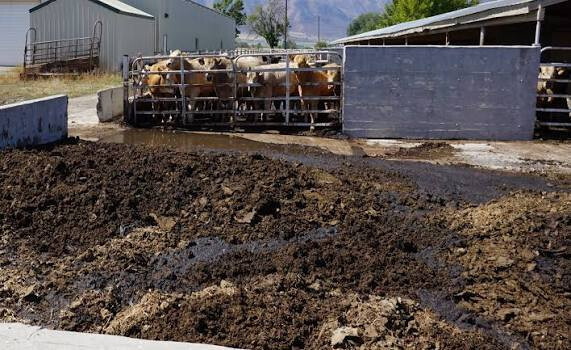
BORYEONG — Can rural communities successfully transition to sustainable self-reliance by turning agricultural waste into power? Experts and agricultural researchers gathered recently to explore this very question.
During a two-day academic seminar held on December 12–13 at Bitche Palace in Boryeong, South Chungcheong Province, stakeholders from industry, academia, and government discussed innovative methods to convert livestock manure into viable energy sources. Co-hosted by the National Institute of Animal Science (NIAS) and the Korea Pork Producers Association, and organized by the Korean Society for Livestock Environment, the event highlighted pioneering models of rural energy independence.
A prime example spotlighted at the conference was the Hongcheon Eco-Friendly Energy Town in Gangwon Province. Operational since 2015, this facility processes a mixture of livestock waste and municipal food scraps to generate biogas. The gas is subsequently refined into clean city gas and piped directly to local homes for heating, while organic byproducts are recycled into agricultural compost and liquid fertilizer.
The conference's opening sessions focused heavily on national policy trends concerning agricultural biomass, village-level energy autonomy, and trial setups for manufacturing solid fuel out of processed livestock manure. Subsequent discussions centered on expanding these green technologies across more rural regions to simultaneously bolster local energy security and mitigate environmental pressures.
On the second day, researchers presented cutting-edge breakthroughs across three core areas: resource recycling, environmental management, and smart livestock farming powered by Information and Communications Technology (ICT). Presentations covered advanced methods for odor reduction, greenhouse gas mitigation, water quality control, and animal welfare enhancement.
Cho Yong-min, head of the National Institute of Animal Science, emphasized the dual benefits of these initiatives. "Turning livestock waste into energy not only eases the environmental footprint of the livestock sector but also lays a solid foundation for rural energy independence," Cho noted. He added that the institute remains committed to fostering collaborative networks among industries, universities, research bodies, and government agencies to tailor these recycling technologies to diverse regional needs.
[Copyright (c) Global Economic Times. All Rights Reserved.]