• 2026.06.05 (Fri)
  • All articles
  • LOGIN
  • JOIN
Global Economic Times
fashionrunwayshow2026
  • Synthesis
  • World
  • Business
  • Industry
  • ICT
  • Distribution Economy
  • Well+Being
  • Travel
  • Eco-News
  • Education
  • Korean Wave News
  • Opinion
  • Arts&Culture
  • Sports
  • People & Life
    • International Student Report
    • With Ambassador
  • Column
    • Cho Kijo Column
    • Cherry Garden Story
    • Ko Yong-chul Column
    • Kim Seul-Ong Column
    • Lee Yeon-sil Column
  • Photo News
  • New Book Guide
MENU
 
Home > Synthesis

Paraguay's Ministry of Education to Restructure Schools with Low Student Numbers: Aims to Address Budget Waste and Academic Underachievement

Desk / Updated : 2025-07-25 17:56:49
  • -
  • +
  • Print


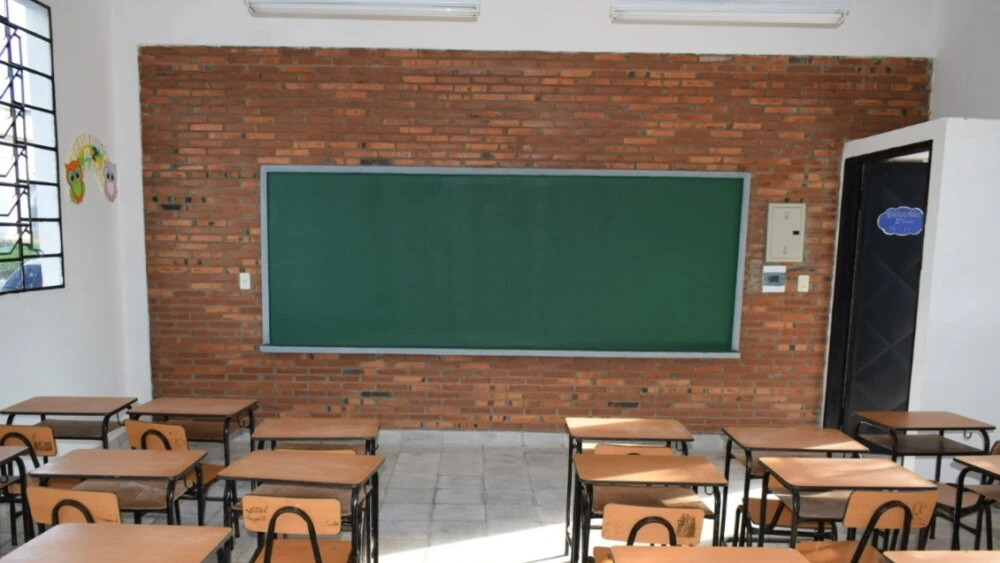
Paraguay's Ministry of Education and Sciences (MEC) is pushing forward with a large-scale project to reorganize educational institutions that have become "ghost schools" due to declining student numbers. Minister of Education Luis Ramírez revealed that more than 2,355 schools nationwide have only 20 to 30 students, with some exhibiting the peculiar phenomenon of having more teachers than students. This is highlighted as a serious problem leading to wasted education budgets and students' academic underachievement.

Minister Ramírez stated, "Out of 6,000 schools, 2,355 have only 20 to 30 students," emphasizing that there's no longer a need to build schools, especially in areas with severe student exodus. There have also been reports of some municipalities investing over $1 million in unused classrooms despite a sharp decline in student numbers. This is due to changes in the Fonacide fund provisions, which require municipalities to invest 70% of their resources in school infrastructure. Ramírez added that he is considering ways to allow these funds to be invested in transportation for students.

The core of the problem lies in the deterioration of educational quality due to insufficient student numbers. Minister Ramírez expressed concern that in schools with fewer students, teachers are not professionally trained for 'multi-grade' education, where they teach multiple grades simultaneously, leading to students not learning properly. He lamented, "If there are more teachers than students, what are those children learning and in what environment? If there are no teachers trained in multi-grade education, those students will learn nothing."

The MEC's current reorganization project focuses on solving these problems and efficiently restructuring the education system. The main aspects of the project are as follows:

School Integration and Relocation: Schools with low student numbers will be merged and consolidated to promote efficient class operations. This will resolve issues of idle classrooms and surplus teachers and provide students with an environment where they can learn with more peers.

Strengthened Commuter Support: Municipalities will be encouraged to utilize Fonacide funds to provide transportation for students, supporting their relocation to larger nearby schools. This is expected to increase student access and help alleviate imbalances in educational opportunities.

Conversion to Learning Support Centers: The idle facilities of consolidated schools will be considered for conversion into 'learning stimulation centers' for mathematics and language learning in the afternoons. This aims to help students improve their academic performance and efficiently utilize the educational infrastructure within the community.

Teacher Retraining and Redeployment: Retraining programs will be established to enhance teachers' expertise in multi-grade education, and teachers will be redeployed to schools with higher student numbers to balance the teacher-to-student ratio.

Minister Ramírez emphasized that this project aims to increase the efficiency of the education system and ultimately improve students' learning experiences. He stated that "organizing the institutions is the most crucial point," and through this, they will be able to provide a better learning environment for students and allocate educational resources more effectively. The MEC plans to address the structural problems facing Paraguay's education system through this reorganization project, laying the groundwork for all students to receive quality education.

[Copyright (c) Global Economic Times. All Rights Reserved.]

  • #globaleconomictimes
  • #micorea
  • #mykorea
  • #Lifeplaza
  • #nammidonganews
  • #singaporenewsk
  • #Samsung
  • #Daewoo
  • #Hyosung
  • #A
Desk
Desk

Popular articles

  • Banking War 2.0: South Korean Banks Race to Transition into 'AI-First' Institutions

  • Celltrion’s Zymfentra Sees Explosive 300% Growth, Hits Record Quarterly Prescriptions in the U.S.

  • China’s Foundry Offensive: Chasing Samsung’s No. 2 Spot via ‘Mature Node’ Dominance

I like it
Share
  • Facebook
  • X
  • Kakaotalk
  • LINE
  • BAND
  • NAVER
  • https://globaleconomictimes.kr/article/1065603379610066 Copy URL copied.
Comments >

Comments 0

Weekly Hot Issue

  • Nvidia CEO Jensen Huang to Arrive in South Korea for "Sam-So" Meeting with Tech Tycoons
  • Samsung Electronics Super-Enterprise Union Loses Majority Status Amid Backlash Over Bonus Disparities
  • Samsung to Embed Vital Signs and Heart Health Scores in Upcoming Galaxy Watch9 Lineup
  • Apple Honors Digital Excellence: 12 Exceptional Apps and Games Celebrated at the 2026 Design Awards
  • Nexon Revamps Signature Youth Coding Competition into AI-Driven 'Nexon Young Programmers Cup'
  • Tech University of Korea Gathers 200 Game and AI Researchers to Discuss Industrial Expansion

Most Viewed

1
From a moment of collective sacrifice to a moment of collective democracy: The Timing of the Election in Ethiopia and Korea
2
U.S. Holds Off on Immediate Comprehensive Semiconductor Tariffs, but Pressure Mounts for Samsung and SK Hynix to Accelerate Domestic Investments
3
[Interview] "Halal is Not a Religious Regulation, but a 'Trust Infrastructure'… Creating a Premium 'K-Halal' Centered on Data and Platforms"
4
‘600 Million Won Bonus’ at Samsung Electronics Triggers Deep Sense of Relative Deprivation Among Korean Workers
5
Musk’s SpaceX Secures Space Hegemony with Flawless Starship V3 Recovery Ahead of Historic IPO
광고문의
임시1
임시3
임시2

Hot Issue

Murata Unveils Next-Gen Resin Electrode MLCC for Automotive Applications

Samsung to Embed Vital Signs and Heart Health Scores in Upcoming Galaxy Watch9 Lineup

L&F Plus Secures KRW 220 Billion from National Growth Fund to Anchor South Korea’s First Mass LFP Cathode Production

Samsung Electronics Super-Enterprise Union Loses Majority Status Amid Backlash Over Bonus Disparities

Fashion Runway Show 2026

Global Economic Times
korocamia@naver.com
CEO : LEE YEON-SIL
Publisher : KO YONG-CHUL
Registration number : Seoul, A55681
Registration Date : 2024-10-24
Youth Protection Manager: KO YONG-CHUL
Singapore Headquarters
5A Woodlands Road #11-34 The Tennery. S'677728
Korean Branch
Phone : +82(0)10 4724 5264
#304, 6 Nonhyeon-ro 111-gil, Gangnam-gu, Seoul
Copyright © Global Economic Times All Rights Reserved
  • 에이펙2025
  • APEC2025가이드북TV
  • 반달곰 프로젝트
Search
Category
  • All articles
  • Synthesis
  • World
  • Business
  • Industry
  • ICT
  • Distribution Economy
  • Well+Being
  • Travel
  • Eco-News
  • Education
  • Korean Wave News
  • Opinion
  • Arts&Culture
  • Sports
  • People & Life 
    • 전체
    • International Student Report
    • With Ambassador
  • Column 
    • 전체
    • Cho Kijo Column
    • Cherry Garden Story
    • Ko Yong-chul Column
    • Kim Seul-Ong Column
    • Lee Yeon-sil Column
  • Photo News
  • New Book Guide
  • Multicultural News
  • Jobs & Workers