• 2026.11.16 (Mon)
  • All articles
  • LOGIN
  • JOIN
Global Economic Times
한인동포뉴스(상단)
  • Synthesis
  • World
  • Business
  • Industry
  • ICT
  • Distribution Economy
  • Well+Being
    • Pet Life
    • Halal Horizon
  • Travel
  • Eco-News
  • Education
  • Korean Wave News
  • Opinion
  • Arts&Culture
  • Sports
  • People & Life
    • International Student Report
    • With Ambassador
  • Column
    • Cho Kijo Column
    • Cherry Garden Story
    • Ko Yong-chul Column
    • Kim Bong-seon's Photo Column
    • Kim Seul-Ong Column
    • Lee Yeon-sil Column
    • Professor Lee Soo-young’s Life Essays
  • Photo News
  • New Book Guide
MENU
 
Home > Industry

Hungary’s Stricter Regulations Spark Anxiety for Korean EV Battery Giants

Graciela Maria Reporter / Updated : 2026-11-15 17:22:24
  • -
  • +
  • Print

Growing regulatory shifts and soaring penalty caps in Europe's core battery hub raise concerns over 10 trillion won in investments, prompting calls for diplomatic intervention.

South Korea’s major electric vehicle (EV) battery and material manufacturers operating in Hungary are facing a wave of heightened regulatory scrutiny. As Budapest shifts its industrial policy toward stricter environmental and safety compliance, local operations—backed by over 10 trillion won in cumulative investments—are navigating increasing uncertainties that could impact future expansion plans.

Industrial policy in Hungary has undergone a noticeable transformation following a change in national leadership. The current administration has pivoted away from the previous pro-business framework, implementing stringent oversight on heavy industries, particularly EV and battery manufacturing plants.

As part of this regulatory tightening, the maximum penalty for breaching environmental permit requirements at large-scale facilities was recently hiked by 2.5 times, scaling up from 2 billion forints to 5 billion forints. Furthermore, plans are underway to launch a specialized government body dedicated exclusively to industrial environmental licensing.

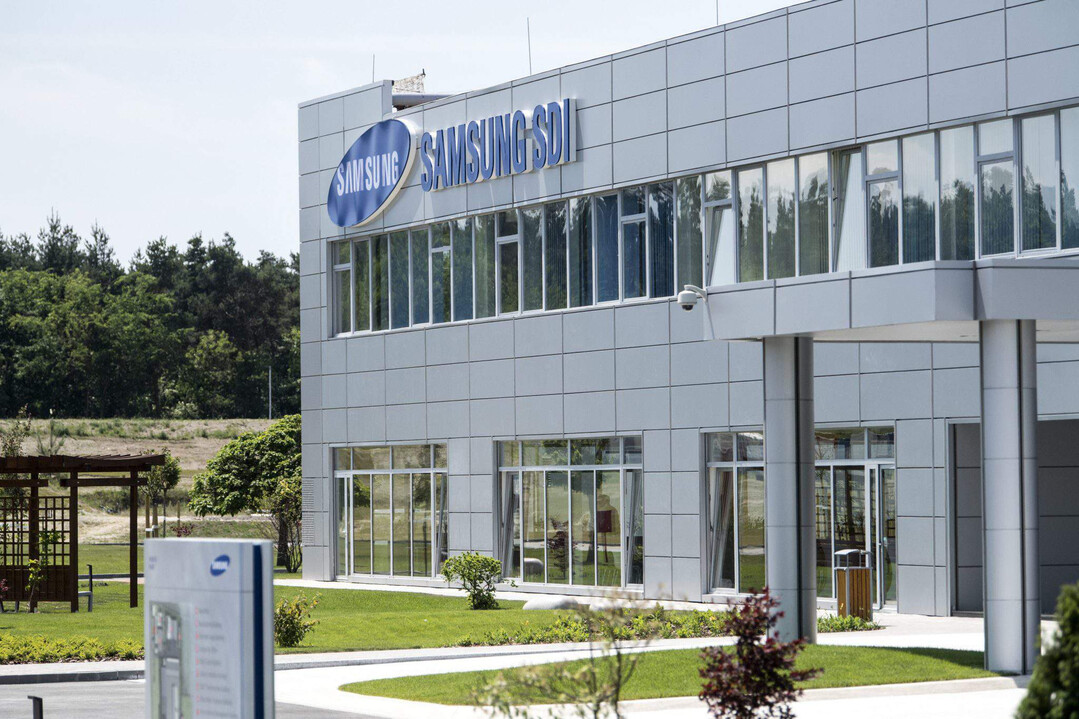
Korean firms have already encountered regulatory hurdles. Both SK On and Samsung SDI have incurred local penalties following environmental compliance checks over recent months. Meanwhile, battery material supplier EcoPro BM faced temporary partial-facility suspensions alongside fines for safety rule violations before resuming operations after addressing corrective steps. Global competitors, including Chinese battery giant CATL and separator manufacturer Semcorp, have faced similar operational halts and financial penalties due to waste management, worker safety, and environmental concerns.

Industry observers note that while the immediate financial impact of these fines is manageable, the broader concern lies in long-term predictability. Because battery manufacturing demands immense upfront capital with extended payback periods, stable regulatory environments are vital. Unpredictable compliance costs and recurrent production halts risk delaying future production line investments.

Collectively, South Korean enterprises have poured more than $8 billion (approx. 10.6 trillion won) into Hungary, establishing a comprehensive local supply chain spanning cell makers, material producers, and recycling businesses.

Economists warn that an ongoing regulatory clampdown could also backfire on Hungary. With the automotive and battery sectors driving at least 30% of the nation's manufacturing economy, any pullback in investment or relocation of facilities by Korean firms could deal a heavy blow to local employment and regional supply chains.

In response to mounting industry anxiety, South Korean trade officials stepped up diplomatic efforts. Senior trade representatives traveled to Budapest to meet with key Hungarian economic, energy, and regional development ministers, formally relaying the operational challenges faced by Korean corporations.

Industry stakeholders are now urging both governments to establish a permanent bilateral consultative channel. Securing policy transparency and predictable regulatory enforcement will be crucial to ensuring that Korean businesses can continue operating stably in Europe's primary battery manufacturing hub without having to reconsider their long-term investment roadmaps.

[Copyright (c) Global Economic Times. All Rights Reserved.]

  • #Cherry Garden
  • #HalalFood
  • #Halal
  • #Petlife
  • #Halalhorizone
  • #Hormuz Impasse
  • #Joseon
  • #globaleconomictimes
  • #micore
Graciela Maria Reporter

Popular articles

  • U.S. President Pledges to Keep Aggressive Tariff Stance Following Midterm Setback

  • K-Beauty’s New Frontier: Halal Certification Fuels Explosive Growth in Muslim Markets

  • Digital Wallet "Peanut" Lands in Paraguay, Opening a New Horizon for Borderless Crypto Payments

I like it
Share
  • Facebook
  • X
  • Kakaotalk
  • LINE
  • BAND
  • NAVER
  • https://globaleconomictimes.kr/article/1065601287426598 Copy URL copied.
Comments >

Comments 0

Weekly Hot Issue

  • Busan Showcases Smart City Innovations on the Global Stage at SCEWC 2026 in Barcelona
  • Jeonbuk Special Self-Governing Province and ASEAN Youth Shape Tomorrow Together
  • New Horizons for Yangyang Airport: Four-Way Partnership Sparks Regional Tourism Boost
  • Promoting Chungbuk in the Chinese Tourism Market... Introducing the Charm of New Inbound Tourist Destinations
  • "Weaving Regional Charms, Expanding the Stage for Tourism”National Tourism Organizations and Foundations Practitioners Gather in Chungju
  • Gyeongbuk Tourism Sees Post-Pandemic Fall Boom in Q3 2026

Most Viewed

1
South Korea and Ethiopia Sign Trilateral MOU to Introduce Liquid-Based Cytology (LBC) Technology for Cervical Cancer Diagnosis
2
From Kim Whanki to Pokémon Cards... Seoul Auction Opens the Floodgates
3
Meeting Christmas Early!… Busan Dessert Sales Event "Daldal The Market" Held
4
World Citizens are Flying Directly to Busan... The Era of 4 Million Foreigners is Just Around the Corner
5
Eating 100g of Baechu Kimchi Daily Linked to Lower High-Cholesterol Risks
체리가든 스토리
nutri huevos
로타리
동포저널

Hot Issue

Continuing U.S. Flight Disruption Crisis: 4,100 Flights Canceled on the 14th

US Explores 'Donbas for NATO' Proposal as Peace Talks Encounter Major Hurdles

Fixing the Flaws: Western Startups Clean Up Chinese AI for Global Corporate Use

Fashion Runway Show 2026

Let’s recycle the old blankets in Jeju Island’s closet instead of incinerating them.

Global Economic Times
korocamia@naver.com
CEO : LEE YEON-SIL
Publisher : KO YONG-CHUL
Registration number : Seoul, A55681
Registration Date : 2024-10-24
Youth Protection Manager: KO YONG-CHUL
Singapore Headquarters
5A Woodlands Road #11-34 The Tennery. S'677728
Korean Branch
Phone : +82(0)10 4724 5264
#304, 6 Nonhyeon-ro 111-gil, Gangnam-gu, Seoul
Copyright © Global Economic Times All Rights Reserved
  • News K
  • 반달곰 프로젝트
  • 광고문의
Search
Category
  • All articles
  • Synthesis
  • World
  • Business
  • Industry
  • ICT
  • Distribution Economy
  • Well+Being 
    • 전체
    • Pet Life
    • Halal Horizon
  • Travel
  • Eco-News
  • Education
  • Korean Wave News
  • Opinion
  • Arts&Culture
  • Sports
  • People & Life 
    • 전체
    • International Student Report
    • With Ambassador
  • Column 
    • 전체
    • Cho Kijo Column
    • Cherry Garden Story
    • Ko Yong-chul Column
    • Kim Bong-seon's Photo Column
    • Kim Seul-Ong Column
    • Lee Yeon-sil Column
    • Professor Lee Soo-young’s Life Essays
  • Photo News
  • New Book Guide
  • Overseas Koreans
  • Multicultural News