![[등록] 2026-09-01 15:48:31](/support/_updata/banner2/tl181982910_6749.png)


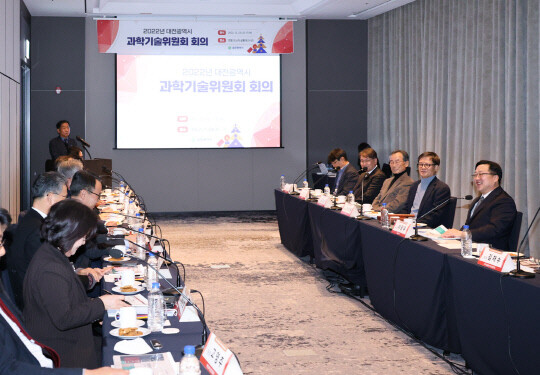
Daejeon, South Korea – Daejeon, a city renowned as South Korea’s “Silicon Valley” due to its prominent Daedeok Innopolis science and technology cluster, has solidified its commitment to advancing its strategic industries with the finalization of the 2025 implementation plan for its comprehensive science and technology promotion strategy (2023-2027). The ambitious plan, unveiled at a meeting of the Daejeon Metropolitan City Science and Technology Committee on Thursday, May 15th, earmarks a substantial investment of KRW 250 billion (approximately USD 185 million) to propel the city’s growth in key sectors.
The 2025 blueprint outlines four overarching strategies encompassing 16 key tasks and 80 meticulously detailed projects. These strategies are strategically designed to: nurture core strategic industries, cultivate a robust science industry ecosystem, establish Daejeon as a global convergence innovation hub, and foster a pipeline of skilled science and technology professionals while broadening public engagement with science.
A significant portion of the investment, totaling KRW 40.5 billion, will be directed towards the city’s six strategically prioritized industries, collectively known as ‘ABCDQR’: Aerospace, Biotechnology, Semiconductor, Defense, Quantum, and Robotics. This focused approach underscores Daejeon’s ambition to become a leader in these high-growth sectors. The funding will facilitate tailored support programs and strengthen collaborations between these industries and the existing local industrial base, aiming to elevate their national and international competitiveness.
Recognizing the importance of a fertile ground for innovation, the city will allocate KRW 50.6 billion towards building a thriving science industry ecosystem. This investment will focus on enhancing research and development capabilities, streamlining technology commercialization processes, and providing comprehensive support for startups. Synergies with the established Daedeok Innopolis will be a key focus, with initiatives aimed at further developing and integrating the cluster’s capabilities.
Furthermore, KRW 39.2 billion has been earmarked for establishing Daejeon as a global science industry convergence innovation hub. This initiative likely involves fostering international collaborations, attracting foreign investment, and developing infrastructure that supports cutting-edge interdisciplinary research and development. The focus on convergence suggests an intent to leverage the strengths of Daejeon’s diverse scientific community to drive novel innovations.
The largest budgetary commitment, amounting to KRW 119.7 billion, will be dedicated to cultivating science industry talent and promoting science culture. This substantial investment highlights the city’s understanding that a skilled workforce and a scientifically literate public are crucial for long-term sustainability and growth. Initiatives under this strategy are expected to include establishing governance structures for local talent development, implementing engaging science programs for youth, and expanding the infrastructure that supports public engagement with science and technology. This may involve supporting science museums, educational outreach programs, and initiatives to bridge the gap between the scientific community and the general public.
The 2025 implementation plan builds upon the successes and lessons learned from the previous year. In 2024, Daejeon invested KRW 310.7 billion, which yielded significant achievements. These include the successful selection for the national bio-specialized complex designation, the initiation of the Daejeon SAT project for satellite development, the groundbreaking of Merck’s Asia-Pacific Bioprocessing Production Center, and the preliminary feasibility study approval for the nano-semiconductor national industrial complex. Moreover, Daejeon played a pivotal role in the establishment of the Global Innovation Network of Intelligent Cities (GINI) and the launch of Daejeon Investment Finance, demonstrating its growing international influence and commitment to fostering investment.
While the overall budget for 2025 represents a decrease compared to 2024, primarily due to the completion of key infrastructure projects such as the Hannam University Innovation Park and the initial investment in Daejeon Investment Finance, the city administration emphasizes a strategic pivot towards maximizing the efficiency and impact of each allocated resource. This suggests a more targeted and results-oriented approach to investment in the coming year.
Daejeon Mayor Lee Jang-woo, who presided over the Science and Technology Committee meeting, underscored the significance of the 2025 plan, stating that it forms the “backbone for fostering the ABCDQR six major innovative strategic industries, creating a science industry innovation hub, and nurturing local talent.” He further affirmed the city’s commitment to accelerating policy implementation, particularly around the Daedeok Innopolis, to strengthen the link between science and technology and regional industrial development, ensuring that scientific advancements drive the city’s progress.
The meeting saw robust participation from key stakeholders across the science and technology ecosystem, including heads of prominent research institutions within Daedeok Innopolis, presidents of local universities, and representatives from businesses and the media. This inclusive dialogue underscores the collaborative spirit that underpins Daejeon’s ambitious science and technology agenda. The input gathered from these diverse voices will undoubtedly play a crucial role in the successful execution of the 2025 implementation plan and the continued advancement of Daejeon as a leading science and technology hub.
[Copyright (c) Global Economic Times. All Rights Reserved.]