• 2026.06.22 (Mon)
  • All articles
  • LOGIN
  • JOIN
Global Economic Times
fashionrunwayshow2026
  • Synthesis
  • World
  • Business
  • Industry
  • ICT
  • Distribution Economy
  • Well+Being
  • Travel
  • Eco-News
  • Education
  • Korean Wave News
  • Opinion
  • Arts&Culture
  • Sports
  • People & Life
    • International Student Report
    • With Ambassador
  • Column
    • Cho Kijo Column
    • Cherry Garden Story
    • Ko Yong-chul Column
    • Kim Seul-Ong Column
    • Lee Yeon-sil Column
  • Photo News
  • New Book Guide
MENU
 
Home > World

U.S. Marine Corps Officially Deploys Advanced Missile and Air Defense Systems to Okinawa

Yim Kwangsoo Correspondent / Updated : 2026-06-22 16:41:27
  • -
  • +
  • Print

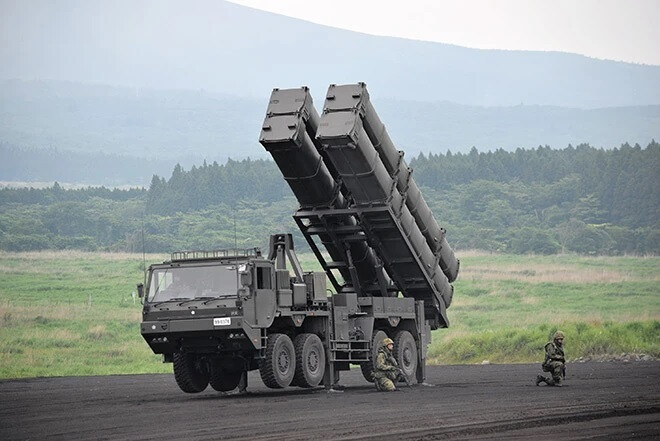
In a strategic move aimed at enhancing deterrence capabilities in the Indo-Pacific region, the U.S. Marine Corps has officially deployed its state-of-the-art ground-based anti-ship missile system, the Navy-Marine Expeditionary Ship Interdiction System (NMESIS), and the Marine Air Defense Integrated System (MADIS) to Okinawa, Japan. This development, reported by the Nihon Keizai Shimbun on June 22, 2026, marks a significant escalation in the modernization of U.S. forces stationed in Japan to address evolving security threats, particularly in the context of rising regional tensions.

The primary objective behind this deployment is to bolster the anti-surface and air defense capabilities of U.S. forces when operating within contested island environments. By strengthening these areas, the U.S. military intends to maintain a credible deterrent against potential adversaries. Central to this strategy is the 12th Marine Littoral Regiment (MLR) stationed in Okinawa, which will take on the responsibility of operating these advanced systems.

The NMESIS is a sophisticated, remotely operated, unmanned vehicle-based anti-ship missile system designed to strike enemy naval assets with high precision. Its integration into the Marine Corps' arsenal represents a shift toward more agile and lethal expeditionary capabilities. Complementing this is the MADIS, an advanced air defense system specialized in detecting, tracking, and neutralizing low-altitude threats, including enemy drones and aircraft. These systems are characterized by their exceptional mobility, allowing them to be rapidly transported via aircraft to remote islands across the Nansei Islands chain as operational requirements dictate.

This deployment aligns with the U.S. Marine Corps’ "stand-in force" concept. The strategy emphasizes the dispersion of small, highly mobile units across isolated islands during a contingency. By maintaining dispersed anti-ship and air defense capabilities, the U.S. aims to complicate an adversary’s planning and force them to contend with threats from multiple, unpredictable locations. The Marine Corps stated that the ability to rapidly deploy and operate these systems is essential for maintaining a high state of combat readiness and effectively addressing a diverse range of security threats.

The significance of these systems was previously demonstrated during joint drills last year, when they were temporarily deployed to the Ground Self-Defense Force base on Ishigaki Island. Their official integration into the Okinawa-based units marks a transition from testing and training to operational status.

To demonstrate the combined capabilities of these systems, the U.S. Marine Corps and the Japan Ground Self-Defense Force are scheduled to showcase them to the media at Camp Hansen in Okinawa on June 30. This event will coincide with the final day of "Resolute Dragon," a joint military exercise that commenced on June 20. Through such exercises, the U.S. and Japan continue to refine their interoperability and strategic coordination, reinforcing their commitment to regional stability.

This deployment is not merely a tactical upgrade but a clear signal of the strategic importance placed on the Okinawa theater. As the security environment in the Indo-Pacific continues to fluctuate, the induction of NMESIS and MADIS underscores the U.S. military's commitment to ensuring that its forces remain technologically superior, highly mobile, and fully prepared to counter modern maritime and aerial threats in any potential conflict scenario.

[Copyright (c) Global Economic Times. All Rights Reserved.]

  • #Hormuz Impasse
  • #globaleconomictimes
  • #micorea
  • #mykorea
  • #nammidonganews
  • #singaporenewsk
  • #Samsung
  • #Daewoo
  • #Hyos
Yim Kwangsoo Correspondent

Popular articles

  • "Countdown to Renewed Strikes on Iran?" At Least 50 U.S. Aerial Refueling Tankers Massed at Israeli Airport

  • Zeekr Targets 2,000 Sales for '7X' EV in South Korea This Year

  • Nvidia CEO Jensen Huang Lights Up Seoul with a 'GPU-Class' First Pitch at Jamsil Baseball Stadium

I like it
Share
  • Facebook
  • X
  • Kakaotalk
  • LINE
  • BAND
  • NAVER
  • https://globaleconomictimes.kr/article/1065598815293400 Copy URL copied.
Comments >

Comments 0

Weekly Hot Issue

  • Two South Korean-Operated Vessels Exit Strait of Hormuz Following U.S.-Iran Ceasefire Agreement
  • Korea's Exports Hit Record High in Mid-June, Driven by Semiconductor Surge
  • Early Summer Heat Waves Drive Surge in Convenience Store Sales at Coastal Locations
  • A New Era for the KOSPI: SK Hynix Surpasses Samsung Electronics as Top Market Cap Company
  • Taiwan Pro-China Journalist Indicted for Espionage: Leak of War Game and US-Taiwan Military Exchange Data
  • Azerbaijan and Uzbekistan Accelerate Joint Development of Gold and Critical Minerals

Most Viewed

1
[In-depth Report] The Islamic ‘Halal Barrier’ Just Around the Corner… The Silent Screams of K-Beauty SMEs
2
[Interview] From Radiant Actor to Warm Companion… Actor Han Ji-il’s Great Second Act of Life
3
SK Telecom Ramps Up AI Drive with New Investment in Anthropic
4
Asking about the Future of ‘Hangeul City Ulsan’… Special Lecture by Novelist Kim Jin-myung to be Held
5
'Hong Se-jin Medicine' Unveiled: Comprehensive Practical Guide on Bloodletting Therapy Published
광고문의
임시1
임시3
임시2

Hot Issue

NIOC Chief Announces Sharp Surge in Iranian Oil Exports Following Breakthrough Talks with the U.S.

Hallym University Sacred Heart Hospital Lowers Barriers to Alzheimer's Treatment with AI-Powered Diagnostics

K-Beauty Sets Its Sights on Southeast Asia: A Market Projected to Reach $11.1 Billion by 2035

KDCA Establishes New 6-Stage Prognostic System for Alzheimer’s Disease Progression

Fashion Runway Show 2026

Global Economic Times
korocamia@naver.com
CEO : LEE YEON-SIL
Publisher : KO YONG-CHUL
Registration number : Seoul, A55681
Registration Date : 2024-10-24
Youth Protection Manager: KO YONG-CHUL
Singapore Headquarters
5A Woodlands Road #11-34 The Tennery. S'677728
Korean Branch
Phone : +82(0)10 4724 5264
#304, 6 Nonhyeon-ro 111-gil, Gangnam-gu, Seoul
Copyright © Global Economic Times All Rights Reserved
  • 향기네무료급식
  • BCB부천방송
  • 반달곰 프로젝트
Search
Category
  • All articles
  • Synthesis
  • World
  • Business
  • Industry
  • ICT
  • Distribution Economy
  • Well+Being
  • Travel
  • Eco-News
  • Education
  • Korean Wave News
  • Opinion
  • Arts&Culture
  • Sports
  • People & Life 
    • 전체
    • International Student Report
    • With Ambassador
  • Column 
    • 전체
    • Cho Kijo Column
    • Cherry Garden Story
    • Ko Yong-chul Column
    • Kim Seul-Ong Column
    • Lee Yeon-sil Column
  • Photo News
  • New Book Guide
  • Multicultural News
  • Jobs & Workers