![[등록] 2026-09-01 15:48:31](/support/_updata/banner2/tl181982910_6749.png)


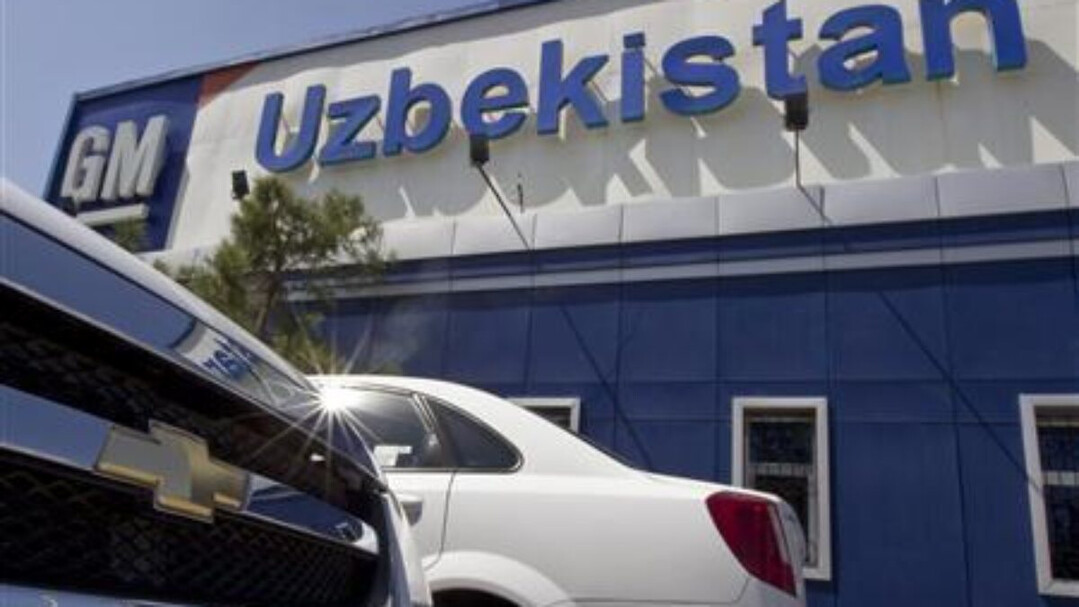
For decades, navigating Uzbekistan's roads meant encountering a sea of white Chevrolets. This automotive uniformity, a legacy of the nation's state-driven industrial policy, is now facing a dramatic transformation as the global electric vehicle (EV) revolution brings Chinese manufacturers into the heart of Central Asia.
"It's true," chuckled Alisher, a local driver, echoing the sentiment shared by many. "Ninety percent of the cars are Chevrolets, and eighty percent of them are white." This monochrome dominance, however, is being challenged by the rapid influx of Chinese EVs, marking a significant shift in Uzbekistan's automotive landscape.
A Legacy of Protectionism and Industrial Development
The story of Chevrolet's stronghold in Uzbekistan is rooted in the economic policies of the nation's first president, Islam Karimov. Committed to self-reliance, Karimov's government struck a deal with South Korean conglomerate Daewoo in 1996, establishing a manufacturing plant and imposing steep tariffs on imported vehicles. When Daewoo faced financial difficulties during the 1998 Asian Financial Crisis, General Motors acquired its automotive division in 2002, continuing to produce Daewoo models under the Chevrolet brand.
This strategic partnership provided Uzbekistan with a robust domestic automotive industry, creating jobs and fostering technological transfer. "I am very proud that Uzbekistan has built such an industry," stated Aziz Shukurov, CEO of A Group, a leading car dealership and service station network. "Today, over a hundred companies operate in the local automotive industry, producing parts for vehicles. A strong local automotive industry is a substantial asset for any country."
The Dawn of Market Liberalization and EV Adoption
The election of Shavkat Mirziyoyev in 2016 marked a turning point, ushering in an era of market liberalization. The government began to dismantle protectionist barriers, opening the door to foreign automakers. South Korean giants Kia and Hyundai, along with Chinese EV manufacturers BYD and Changan, have made significant inroads into the Uzbek market.
In 2019, the government further incentivized EV adoption by eliminating import duties and excise taxes on electric vehicles. This policy shift, coupled with the global surge in EV popularity, led to a strategic partnership between state-owned UzAuto Motors and BYD. The joint venture established a production facility in Jizzakh, Mirziyoyev's hometown, aiming to produce approximately 50,000 vehicles annually. This facility is one of only two operational BYD production sites outside of China, highlighting Uzbekistan's strategic importance in the company's global expansion.
Recent sales figures for 2024 underscore the changing dynamics. Out of 482,000 vehicles sold, 353,730 were Chevrolets. However, the remaining sales were distributed among domestically produced Kia and BYD models, as well as imported vehicles, indicating a growing diversification of the market. "You can even find Porsche here now!" exclaimed Farkhodjon Israilov, an expert in foreign investment. "But there are also Chinese cars whose brands I haven’t even heard of… so there is always choice."
Challenges and Opportunities in a Shifting Market
Despite the growing presence of foreign automakers, Chevrolet's dominance remains strong, particularly outside of Tashkent. In Andijan, near the Chevrolet factory in Asaka, a survey revealed that only 4.5% of vehicles were non-Chevrolet. This reflects the practical advantages of Chevrolet's established infrastructure, including widespread availability of spare parts and mechanics familiar with the brand.
"Electric cars are more expensive," explained Alisher, highlighting the initial cost barrier. "If I have the money, sure, it's a great idea. But the service is more expensive; the maintenance too." Additionally, the prevalence of propane and methane conversions for Chevrolet vehicles, due to high petrol costs, presents another challenge for EV adoption.
However, industry experts believe that these obstacles are temporary. Sherzod Yuldashev, Director of Business Development at Runking Motor Group, an EV importer, noted, "Year by year, the growing sales of electric vehicles in Uzbekistan are evidence that people are changing their minds."
The market is also adapting to the needs of EV owners. Israilov pointed out that servicing capabilities for EVs are rapidly improving, with established brands like BYD providing their own after-sales support. Furthermore, the affordability of EVs is expected to increase as economies of scale and infrastructure development drive down prices. Chinese EVs are already available for as low as $15,000, making them increasingly accessible to a wider range of consumers.
Chevrolet's own challenges, including a shrinking product portfolio and delayed new models, are also contributing to the shifting market dynamics. The company has been forced to lower its prices to remain competitive, a move that has further stimulated market competition.
Government Policies and the Future of Uzbekistan's Automotive Industry
The Uzbek government's policies play a crucial role in shaping the future of the automotive industry. While the liberalization of the market has facilitated the entry of foreign automakers, recent non-tariff barriers, such as compulsory electromagnetic compatibility checks on imported EVs, suggest a desire to protect domestic production.
Despite these measures, the rapid pace of Chinese EV industrialization and the relatively low domestic EV production capacity make it challenging to counter Chinese influence. "The scale and the pace of Chinese EV industrialization made it inevitable for Chinese EV products to come to many regions and compete with local products," said Shukurov.
As Uzbekistan's automotive landscape undergoes a profound transformation, consumers are benefiting from increased choice and competitive pricing. The market economy is at work, forcing both domestic and foreign automakers to adapt and innovate. The days of monochrome Chevrolet dominance may be numbered, as Uzbekistan embraces the global EV revolution.
[Copyright (c) Global Economic Times. All Rights Reserved.]