![[등록] 2026-09-01 15:48:31](/support/_updata/banner2/tl181982910_6749.png)


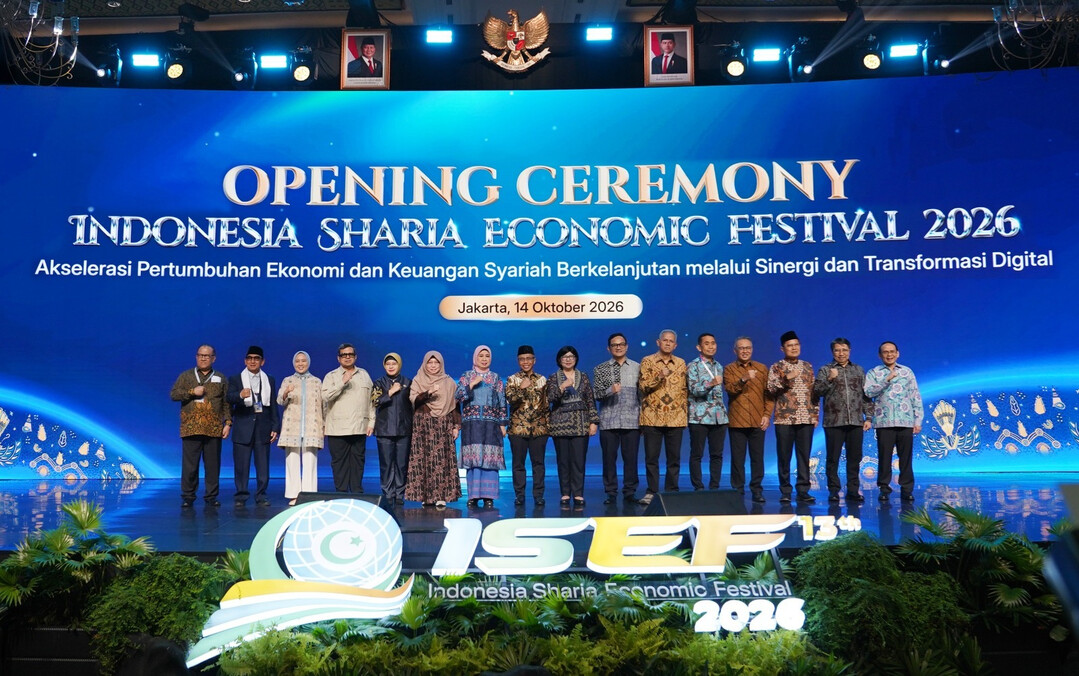
JAKARTA — Indonesia continues to cement its status as a global hub for Islamic economy and finance, emphasizing halal ecosystem development, deeper financial markets, and digital transformation.
The 13th Indonesia Sharia Economic Festival (ISEF) 2026 officially opened on October 14, 2026, at the Jakarta International Convention Center (JICC). Running through October 18, the flagship event is themed "Accelerating Sustainable Islamic Economic and Financial Growth through Synergy and Digital Transformation" and embraces the core spirit of "Goodness for All."
The grand opening was inaugurated by Bank Indonesia (BI) Governor Destry Damayanti and Deputy Coordinating Minister for Economic Affairs Dradjad Hari Wibowo. They were joined by prominent figures, including leaders from the House of Representatives, Indonesia Deposit Insurance Corporation Chairman Anggito Abimanyu, OJK Board Commissioners Agusman and Dicky Kartikoyono, BPS Head Amalia Adininggar Widyasanti, Indonesian Waqf Board Chairman Kamaruddin Amin, and BPKH Executive Board Head Fadlul Imansyah.
Strategic Three Flagship Programmes Launched
To reinforce Indonesia's national strategy—aligned with the Asta Cita priorities and the 2025–2029 National Medium-Term Development Plan (RPJMN)—Bank Indonesia launched three major programmes during ISEF 2026:
Islamic Financial Market Code of Conduct (ICoC): Developed by APUVINDO and IIGMA in cooperation with BI and OJK to enhance market integrity and transaction efficiency.
Updated Zakat Core Principles (ZCP) Index: Enhanced by BAZNAS and BI by integrating a risk management dimension to fortify zakat governance.
International Scholarship Programme: Utilising Islamic social funds (ZISWAF) to support international students, foster high-quality human resources, and elevate awareness of the Islamic economy.
Strong Growth and Global Competitiveness
Delivering remarks on behalf of Coordinating Minister for Economic Affairs Airlangga Hartarto, Deputy Minister Dradjad noted that the global Muslim consumer spending is projected to reach USD3.56 trillion by 2029, presenting immense potential for Indonesia's economic growth.
Indonesia's robust standing is already evident: the nation maintained its 4th-place global ranking in the State of the Global Islamic Economy (SGIE) Report 2025/2026. Domestically, the halal value chain grew by an impressive 5.5% year-on-year in Q2 2026, outpacing broader national economic growth. Furthermore, sovereign green sukuk issuances have reached USD7.7 billion internationally and IDR108.9 trillion domestically as of June 2026.
"These achievements provide a foundation, not a finishing line," remarked BI Governor Destry Damayanti. "Accelerating progress requires stronger synergy and digital transformation."
Event Highlights and Digital Innovations
The 13th ISEF brings together domestic and international partners, regulatory authorities, academia, and over 1,000 halal industry participants across more than 100 onsite and online activities. Key features include trade and traditional textile (wastra) business matching, the Islamic Boarding School Business Forum, and international forums on halal industries, zakat, waqf, and Muslim-friendly tourism.
This year’s edition introduces notable innovations to expand its outreach:
Strategic Collaboration: Partnered with Trade Expo Indonesia (TEI) 2026.
Immersive Tech & Youth Engagement: Utilising immersive digital tools, the Creative Islamic Economy Video Competition (VITRAH), and the ISEF World Island on Roblox to introduce Islamic economics to younger generations.
The road to the main festival began with regional Sharia Economic and Financial Festivals (FESyar) held across South Sumatra, West Nusa Tenggara, and East Java between June and September 2026.
Visitors can explore ISEF 2026 at the JICC or access further updates online via www.isef.co.id and the ISEFun app.
[Copyright (c) Global Economic Times. All Rights Reserved.]