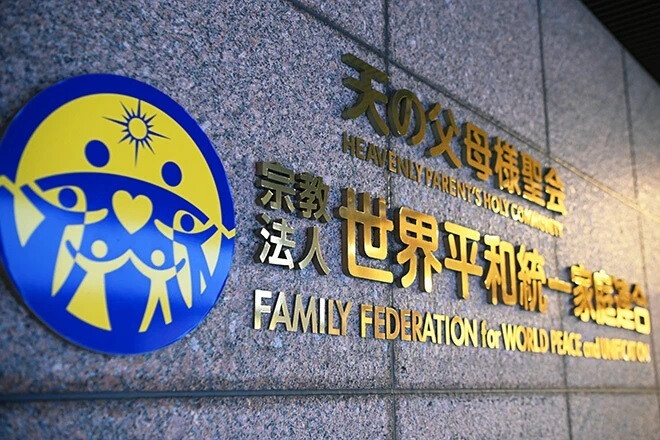
More than 400 victims have filed claims for donation refunds and damages against the former Unification Church (now the Family Federation for World Peace and Unification), which was ordered to dissolve by a Japanese court. Japan's Ministry of Foreign Affairs is also providing guidance on damage claim procedures in South Korea through the website of the Embassy of Japan in South Korea.
According to the "Family Federation for World Peace and Unification Liquidator" website established by liquidator Hisashi Ito (attorney), who is overseeing the liquidation proceedings of the former Unification Church, the number of people who filed creditor claims demanding the return of financial damages from donations reached 411 as of the 23rd.
Previously, in March of last year, the Tokyo District Court, the court of first instance, ordered the dissolution of the former Unification Church on the grounds that it had caused severe harm, including coerced donations, for over 40 years since the 1980s. At the time, the court ruled that "a significant number of people suffered severe, long-term impacts that seriously disrupted the livelihoods of themselves or their close relatives," adding that "the pattern was malicious and the consequences were serious." Subsequently, in March of this year, the Tokyo High Court upheld the dissolution of the religious corporation in its second-instance ruling, initiating full-scale liquidation procedures. The High Court stated that "securing revenue for the former Unification Church and operational funds for Sun Myung Moon (the founding leader) through illegal solicitation of donations constituted wrongful acts that inflicted immense financial loss and mental distress on the victims."
Under Japan's Religious Corporations Act, once a dissolution order is issued, liquidation proceedings begin immediately following the second-instance ruling, regardless of whether a special appeal is filed with the Supreme Court. In June of this year, Japan's Supreme Court dismissed the church's special appeal, concluding the relevant legal proceedings.
Liquidator Ito began accepting creditor claims from victims in May, and in just over six months, more than 400 victims have initiated legal steps. On the website, Ito stated that he is performing duties such as collecting claims, repaying debts, and transferring residual assets of the former Unification Church under the supervision of the Tokyo District Court. Victims of the former Unification Church can file creditor claims until May of next year. In its dissolution ruling, the Tokyo High Court estimated the organization's assets at approximately 181 billion yen (about 1.5267 trillion KRW) as of 2022.
To encourage victims to file claims, Liquidator Ito allocated 670 million yen (about 5.65 billion KRW) solely for advertising in newspapers, on television, and online. Around 400 lawyers have been deployed just to interview and investigate all victims who submitted creditor claims. In particular, through an interim report released on the 24th, Ito revealed that the Embassy of Japan in South Korea, along with the Consulates-General of Japan in Busan and Jeju, are providing guidance on the liquidation and creditor claim procedures to assist victims residing in South Korea. Indeed, notices are currently posted on the website of the Japanese Embassy in South Korea stating that "a decision upholding the Tokyo District Court's dissolution order against the former Unification Church has been made, initiating liquidation proceedings," and that "those seeking to claim damages must register their claims with the liquidator, with the filing deadline set for May 20 of next year."
[Copyright (c) Global Economic Times. All Rights Reserved.]