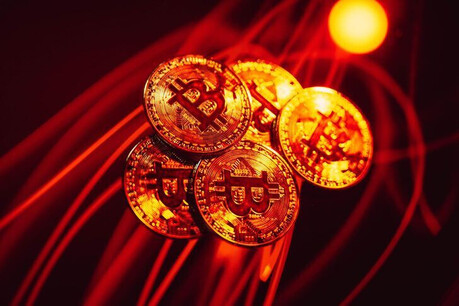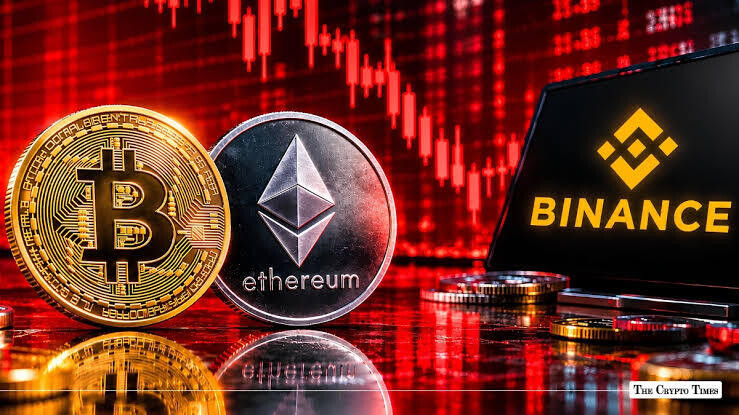
SEOUL — Nearly three weeks after a historic $6.4 billion cyberattack rocked Binance, the world’s largest cryptocurrency exchange, the broader digital asset market has avoided a systemic meltdown. However, the breach—which exploited internal artificial intelligence tools—has ignited urgent discussions in South Korea over regulatory blind spots and the need for stronger protections for domestic investors trading on overseas platforms.
According to blockchain analytics firm Chainalysis, attackers siphoned off approximately $6.4 billion in various cryptocurrencies—including Bitcoin, Ethereum, Solana, and stablecoins—on October 29. The breach began with a sophisticated social engineering scheme: hackers approached a Binance engineer on a job-hunting platform, conducted a fake interview, and tricked the employee into executing malicious code disguised as a coding test. Once inside the employee's work computer, the attackers leveraged Binance’s internal AI tools as a stepping stone to compromise wallet-signing systems and authorize massive outflows.
Swift Containment vs. Lingering Risks
Despite initial market jitters, Bitcoin price dips, and heavy capital outflows from Binance, the incident did not trigger exchange insolvency or a contagion of frozen withdrawals across the industry. Analysts attribute this relative stability to Binance’s immediate pledge to cover all user losses out of pocket—having replenished 98% of affected token reserves by October 31—alongside a phased resumption of withdrawals.
Major stablecoin issuers Tether (USDT) and Circle (USDC) also intervened swiftly by blacklisting wallets tied to the exploit. By early November, roughly $2.8 billion of the stolen assets had been frozen, with the U.S. Department of Justice securing court orders to seize over $1.2 billion.
Still, industry experts warn against complacency. "Freezing stolen funds is merely a measure to halt movement; actual recovery and legal restitution require lengthy judicial procedures," noted Ryan Kim, CEO of digital asset consultancy Tiger Research.
Furthermore, billions of dollars remain under the hackers' control. Some stolen assets have already been swapped into non-freezable tokens or funneled into decentralized finance (DeFi) protocols. If hackers use stolen funds as collateral for DeFi loans, subsequent freezes or sharp drops in token values could trigger bad debt and liquidity crunches across decentralized platforms. Market watchers also emphasize that surviving the immediate shock does not equate to a full restoration of user trust.
Lessons for South Korea’s Crypto Regulations
The breach serves as a stark warning for South Korea, where retail participation in global crypto markets is substantial. While Binance does not disclose country-specific metrics, web traffic and fund flow analyses suggest South Korean users account for an estimated 15% to 20% of the exchange’s roughly 90 trillion won ($65 billion) daily trading volume.
Domestically, South Korean exchanges are mandated to keep at least 80% of user assets in offline "cold wallets"—with current industry averages exceeding 95%—and maintain insurance or reserve funds. Yet, experts point out that cold storage alone cannot prevent breaches rooted in compromised employee credentials and internal governance failures. Exchanges must enforce strict access controls, multi-step verification for wallet management, and transfer limits at the wallet-signing level.
More pressingly, the incident highlights the vulnerability of South Korean investors using unregistered foreign exchanges. Because Binance is not registered as a Virtual Asset Service Provider (VASP) in South Korea, domestic authorities have limited jurisdiction to assist local users in the event of frozen accounts, withdrawal delays, or platform failures.
As South Korea's National Assembly deliberates on the proposed Digital Asset Basic Act, policy experts are urging lawmakers to address this gap. Recommendations include establishing formal cross-border channels to assist domestic users facing disputes with foreign exchanges, while simultaneously expanding regulated domestic derivatives and financial products so retail traders are not forced offshore in search of diverse trading options.
[Copyright (c) Global Economic Times. All Rights Reserved.]