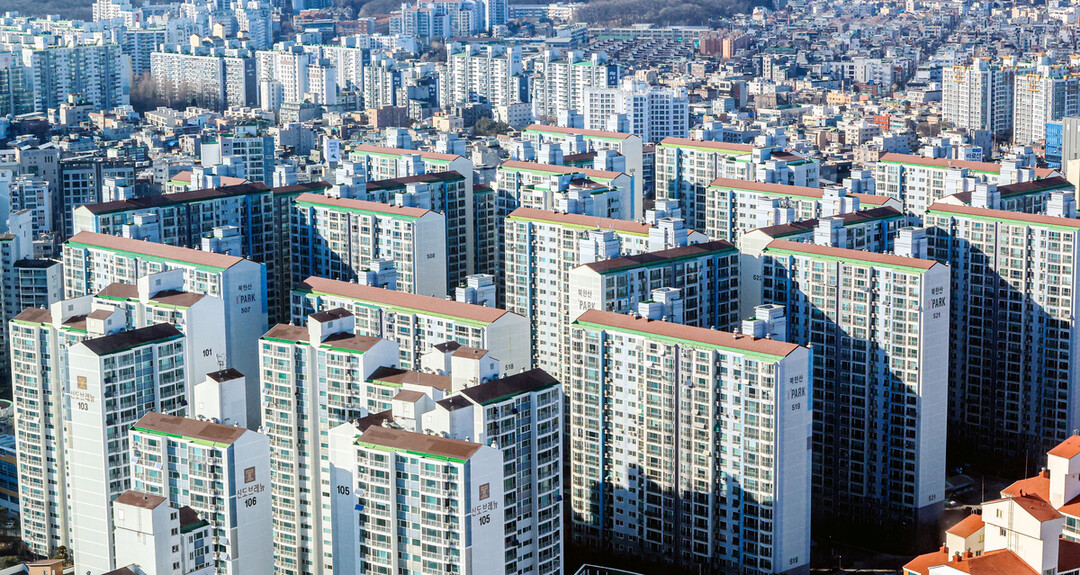
SEOUL, South Korea — While apartment sale prices in Seoul are showing signs of stabilization, led by declines in affluent districts, a sharp surge in jeonse (lump-sum deposit leases) across the capital region is placing a heavy financial burden on tenants.
According to weekly data released by the Korea Real Estate Board for the fourth week of November, Seoul’s overall apartment sale prices edged up by just 0.01%—the smallest increase in 94 weeks. Notably, downward trends that began in the high-priced Gangnam area—including Songpa (-0.50%), Gangnam (-0.34%), and Seocho (-0.30%)—have spread to key neighborhoods along the Han River, such as Seongdong, Yongsan, and Gwangjin. In total, nine out of Seoul’s 25 districts recorded price drops.
Speaking at a regular housing supply briefing on November 26, First Vice Minister of Land, Infrastructure and Transport Kim Yi-tak noted that active apartment listings in Seoul have climbed 45.6% since the beginning of the year to roughly 83,000 units. He expressed confidence that the market is entering a phase of downward stabilization and pledged to accelerate housing supply measures.
However, the cooling trend has not reached all areas. More affordable outer districts in northern Seoul—such as Seongbuk (0.33%), Nowon (0.27%), and Seodaemun (0.25%)—continued to see modest price gains.
In stark contrast to the sluggish sales market, the rental sector is experiencing intense upward pressure. Cumulative jeonse prices across the Seoul metropolitan area have jumped 7.52% so far this year, more than quadrupling last year's growth rate for the same period. Seoul itself saw a 9.58% spike, with northern districts favored by budget-conscious renters bearing the brunt: Seongbuk soared by 16.92%, followed closely by Nowon (16.03%) and Dobong (12.89%).
Surrounding regions are facing a similar squeeze. In Gyeonggi Province, jeonse prices rose 7.04% overall, driven by steep hikes in commuter cities and tech hubs like Gwangmyeong (16.65%), Dongtan in Hwaseong (16.54%), and Giheung in Yongin (14.64%). Incheon also reversed last year's decline, posting a 4.97% increase.
Real estate analysts attribute this divergence between sales and rentals to shifting demand dynamics. While prospective homebuyers have moved to the sidelines due to tighter lending rules and price uncertainties, actual housing demand from tenants remains inelastic. Furthermore, strict land transaction permit zones and tax policies favoring single-homeowner residency have reduced the supply of rental properties, creating a spillover effect into neighboring Gyeonggi and Incheon areas.
To ease market anxiety, the government announced plans to recruit residents for 56,000 public housing units across the metropolitan area next year—35,000 for public sale and 21,000 for public rental. This volume represents roughly double the five-year annual average and includes major developments in third-generation new towns like Namyangju Wangsuk and Suwon Dangsu, alongside 3,800 units from urban public housing complex projects.
[Copyright (c) Global Economic Times. All Rights Reserved.]