![[등록] 2026-09-01 15:48:31](/support/_updata/banner2/tl181982910_6749.png)



Recent months have witnessed a noticeable shift in the acoustic atmosphere of cafes, restaurants, and public spaces across South Korea. Patrons are increasingly noticing background tracks featuring eerily repetitive melodies and formulaic lyrics that sound strangely familiar yet unsettling. Often untraceable via music recognition apps like Shazam, these tracks are the product of generative AI tools such as Suno, which allow users to effortlessly mass-produce hundreds or thousands of songs with just a few text prompts. Driven by the desire to bypass hefty music copyright and licensing fees, a growing number of commercial establishments are turning to these AI-generated playlists.
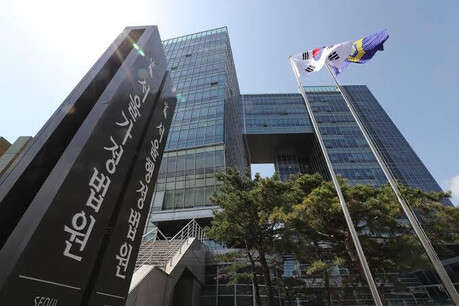
This proliferation has underscored an urgent need to establish clear copyright regulations for AI-assisted music. However, relevant policies remain caught in a bureaucratic and legislative deadlock. Last July, the Korea Music Copyright Association (KOMCA) made headlines by becoming the first cultural arts organization in the country to introduce guidelines for accepting copyright trusts for AI-assisted music. Yet, following intense pushback from lawmakers and the Ministry of Culture, Sports and Tourism (MCST), KOMCA was forced to scrap the policy just 22 days after its implementation, suspending it on September 4.
As a copyright collective management organization under the MCST, KOMCA acts as a fiduciary, handling royalty collection and distribution. Under South Korea’s "systemless" copyright principle, creative works acquire copyright protection automatically upon creation, without mandatory registration. However, because individual creators cannot realistically collect performance and broadcasting royalties on their own, they entrust this monetization process to associations like KOMCA. While registering a work with KOMCA does not automatically grant legal copyright status to an AI creation, the association's policy served as a critical bellwether as the broader art, publishing, and music industries grapple with generative AI.
KOMCA’s attempt to introduce the guidelines was a response to an existing reality: AI-crafted music had already begun slipping into its registry. During a Board of Audit and Inspection (BAI) review of AI readiness, authorities discovered that numerous registered tracks were suspected of being generated by AI. Consequently, the MCST demanded that KOMCA formulate countermeasures. KOMCA officials explained that the rule was intended precisely to filter out 100% pure AI creations. By requiring creators to explicitly disclose AI usage upon registration, the association hoped to regulate rather than ignore the phenomenon. The policy permitted AI strictly as an auxiliary tool, though misunderstandings arose, suggesting a total blanket approval.
Under the repealed rules, KOMCA stipulated that if a human creator actively and predominantly participated in the lyric writing, composing, or arranging phases, copyright trusts could be granted strictly for the human-contributed portions. KOMCA defined "predominant participation" as at least 50% human creative intervention, adhering to current copyright law which recognizes only humans as legal authors.
Nevertheless, because current technology cannot perfectly distinguish the exact extent of AI involvement, registration heavily relies on the honesty of the applicant. To prevent "click-and-generate" loopholes, KOMCA's scrapped framework included punitive measures, such as penalties up to three times the standard amount for fraudulent registrations.
The policy faced sudden political brakes when Rep. Jae-won Kim of the Rebuilding Korea Party held a press conference objecting to the move. Kim argued that no societal consensus or legislative conclusion had been reached regarding AI music copyrights, asserting that a collective should not unilaterally set management criteria. Although copyright law revision is not strictly mandatory for internal trust rules, because KOMCA operates under MCST oversight, its collection scopes and fee schedules require governmental approval.
Amid mounting controversy, the MCST instructed KOMCA on August 18 to suspend the guidelines, emphasizing the need for broader societal consensus. The ministry noted that the abrupt implementation lacked sufficient public discourse, particularly given the multitude of stakeholders involved, including streaming platforms, broadcasters, and OTT services. The MCST stated it will collaborate with KOMCA to refine the framework through public hearings and expert consultations.
Globally, countries like the United States are managing generative AI works within existing legal frameworks by recognizing copyright only when human creative contribution is present. Major foreign collective societies—such as ASCAP and BMI in the US and SOCAN in Canada—allow trust registration if a human adds original lyrics or melodies, even if AI was used for chord structures or backing tracks. Pure prompt-based generation, however, is firmly excluded.
As the debate continues, KOMCA is actively gathering opinions from academia, association members, and creators across various fields. With local artists increasingly demanding clarity, the association plans to formulate a more robust, widely consulted framework to address the inevitable wave of AI in the modern music ecosystem.
[Copyright (c) Global Economic Times. All Rights Reserved.]