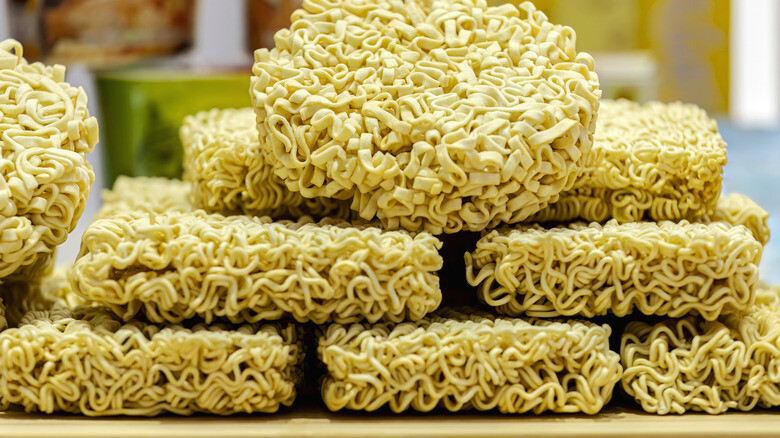
Since the introduction of Korea’s first instant noodles in 1963, they have captured the hearts of Koreans for over 60 years. Koreans hold a deep affection for instant noodles, holding the world’s highest per capita consumption rate—consuming an average of 79 packages per person in 2025.
Amid this cultural backdrop, the Korean instant noodle industry has experienced fierce competition and remarkable growth. According to the Ministry of Agriculture, Food and Rural Affairs, instant noodle exports reached approximately $1.521 billion in 2025, claiming the top spot among single agricultural and food export items and leading the charge of the "K-Food" wave. Today, Korean instant noodles are recognized as the world's best, with manufacturers globally—including in Japan, the birthplace of instant noodles—benchmarking Korean products.
The ability to enjoy delicious, high-quality instant noodles at an affordable price is thanks to the tireless efforts of countless industry workers, coupled with advancements in science and food technology. Here is a look at the science hidden inside a single packet of Korea’s ultimate "soul food."
Why "Freshly Fried" Noodles Taste Better: Preventing Rancidity
Many misconceptions surround instant noodles, most notably the belief that they contain heavy amounts of preservatives to remain edible over long periods. In reality, preservatives are neither used nor necessary. The food itself was invented to be distributed without them.
In 1957, Japanese entrepreneur Momofuku Ando sought a way to make traditional ramen easily accessible. Inspired while watching his wife fry tempura, he realized that frying noodles in oil drastically reduces moisture, preventing spoilage. Furthermore, he discovered that adding hot water restored the fried noodles to their pre-fried state. Using this principle, he launched the world's first instant noodles, "Chicken Ramen," in 1958.
Because frying removed moisture, instant noodles could be stored at room temperature for long periods—a revolutionary food science innovation during an era without widespread refrigeration.
Today, "freshness" has become a competitive edge. Gumi, North Gyeongsang Province—home to South Korea's largest noodle factory producing 6.65 million packets a day—hosts the popular Gumi Ramen Festival, where visitors can taste freshly fried noodles.
However, there is a scientific reason why "freshly fried" noodles taste better. Over time, residual oil in the noodles reacts with oxygen inside the packaging, causing rancidity that diminishes flavor and quality. This is why instant noodles have an expiration date; enjoying them before that date—and closer to their production—ensures optimal taste.
The curly shape of the noodles also serves a purpose. It prevents them from sticking together, allows water to penetrate evenly during boiling, and provides spaces for soup to circulate. Structurally, the curls absorb external shocks during distribution, preventing the noodles from easily breaking.
From Animal Fat to Palm Oil: The Harmony of Spices
What kind of oil is used to fry noodles? While Japan’s original Chicken Ramen used lard (pig fat), Korean manufacturers initially used lard or beef tallow before transitioning to palm oil in the early 1970s. Following a major controversy regarding tallow in 1989, palm oil became the industry standard.
Extracted from oil palm fruits, palm oil has a high saturated fat content unlike typical plant-based oils, giving it a solid texture at room temperature similar to animal fat. Oils high in unsaturated fats (like soybean or sesame oil) oxidize quickly and turn rancid, making them unsuitable for ramen. Palm oil’s high saturated fat content slows down rancidity, making it ideal for snacks, chocolates, and instant noodles.
Another defining trait of Korean ramen is its spiciness. Starting with chili powder in soup bases in the mid-1960s, and amplified by iconic hits like Shin Ramyun (1986) and Buldak Bokkeummyeon (2012), spicy flavors have become a global phenomenon. Scientifically, capsaicin—a non-polar molecule—blends harmoniously with the frying oil, effectively masking the greasy feeling and creating an appealing flavor profile.
Dehydration Technologies: Freeze-Drying vs. Hot-Air Drying
To ensure long-term preservation, noodle flakes and seasonings also undergo dehydration through freeze-drying or hot-air drying.
Freeze-drying involves rapidly freezing ingredients and lowering atmospheric pressure to sublimate the moisture, preserving flavor and texture. Although energy-intensive and complex, it ensures high quality.
Hot-air drying uses heated air to remove moisture. While less effective at preserving original flavors and nutrients, it is much more economical, prompting manufacturers to use both methods depending on the situation.
As a pillar of the K-Food wave, Korean instant noodles are the culmination of advanced food engineering. Behind every inexpensive, convenient package lies continuous research, precise moisture and oil management, and cutting-edge food science.
[Copyright (c) Global Economic Times. All Rights Reserved.]