![[등록] 2026-09-01 15:48:31](/support/_updata/banner2/tl181982910_6749.png)


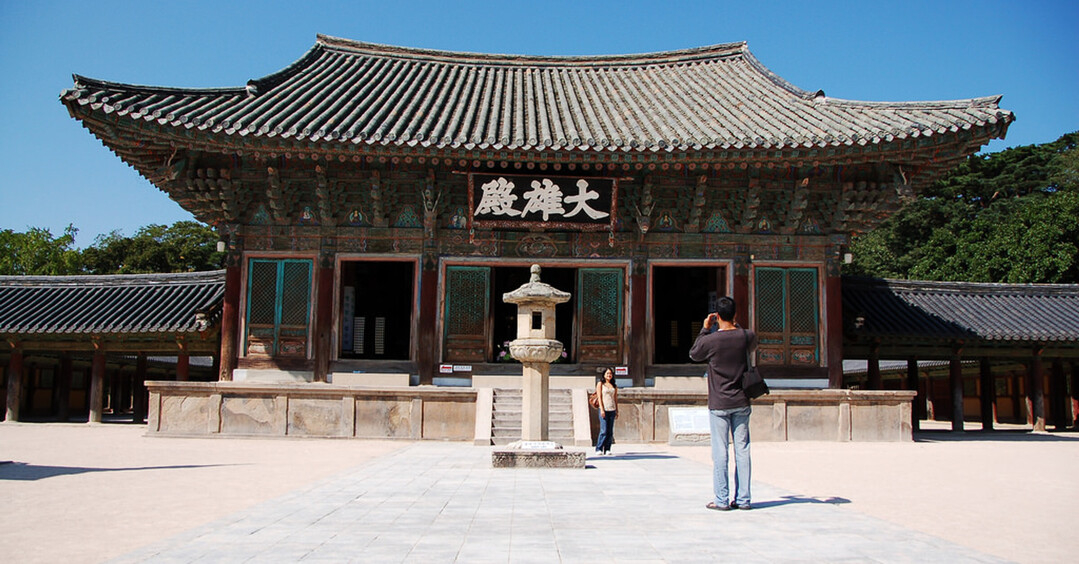
The National Heritage Administration of South Korea has announced the official designation notice for two historically significant Buddhist main halls, the Daeungjeon Hall of Unheungsa Temple in Goseong, Gyeongsangnam-do, and the Daeungjeon Hall of Geodongsa Temple in Yeongcheon, Gyeongsangbuk-do, elevating them to the status of National Treasures (Treasures). These structures serve as exceptional testaments to the architectural style, craftsmanship, and socio-economic realities of 17th-century Korea following the turbulent Japanese invasions.
Goseong Unheungsa Daeungjeon: A Rare 5-Bay Gabled Masterpiece
According to historical traditions, Unheungsa Temple was originally founded in 676 (the 16th year of King Munmu's reign) by the esteemed monk Uisang (625–702). During the Imjin War (Japanese invasions of Korea in the late 16th century), the temple served as a primary base for monk soldiers led by the revered Master Samyeong (1544–1610). Although the original complex was completely burned down during the battles, it was subsequently reconstructed.
Historical literature confirms that the current Daeungjeon Hall was built in 1682. Tree-ring (dendrochronological) analysis of the major structural wood components revealed that the timber used for the building was harvested between the late autumn of 1681 and the early spring of 1682, corroborating the written records.
Architecturally, the Daeungjeon Hall features a five-bay front and a three-bay side multi-cluster (dapo-style) gabled roof structure. The dapo style is characterized by placing decorative bracket sets (gongpo) not only directly above the pillars but also in the spaces between them, distributing the roof's weight uniformly. A gabled roof slopes downward on only two sides (front and back). While most main temple halls built immediately after the Imjin War were restricted to a smaller scale of three bays wide, Unheungsa Daeungjeon boasts an expansive five-bay front, making it the sole surviving five-bay gabled temple hall in Gyeongsangnam-do.
Furthermore, the structure reflects the pragmatic economic conditions and societal demands of the late 17th century: the front bracket sets are elaborately ornamented, while the rear bracket sets are designed with restrained simplicity. The hall also preserves high-quality decorative paintings (dancheong) from its 17th- and 18th-century reconstruction periods, offering vital insights into historical artistic evolutions.
Yeongcheon Geodongsa Daeungjeon: A Symbol of 17th-Century Wooden Craftsmanship and Independence History
Geodongsa Temple is similarly tradition-bound to a founding by Master Uisang. Beyond its religious lineage, the temple holds a profound place in modern Korean independence history as the birthplace of the "Sannam Uijin" (Mountain South Righteous Army), an organized anti-Japanese militia formed in 1906 that actively operated throughout the Yeongcheon, Daegu, and Hyeonpung regions.
The Daeungjeon Hall of Geodongsa is a three-bay wide and three-bay deep structure. Through architectural analysis, building styles, and wood dating techniques, it is estimated to have been constructed in the late 17th century. The sophisticated timber-shaping methods (chimok) and intricate ornamentation of its bracket sets possess immense academic and research value. The hall's interior features masterfully carved dragon heads and elephant motifs, alongside traditional bracket details that embody the unique regional characteristics of Gyeongsang-region temple architecture.
Broader Heritage Preservation Context
Alongside the two Daeungjeon halls, the National Heritage Administration also designated the "Baekseoktan Potholes in Gowari, Cheongsong" as a Natural Monument. Formed along the middle reaches of the Gilancheon Stream, these unique cylindrical erosion cavities—developed typically in igneous or metamorphic rocks—are exceptionally rare here because they formed within sedimentary bedrock, providing crucial geological insights into the Cretaceous period.
Following a 30-day public notice period to gather opinions from various sectors, the National Heritage Administration will review the deliberations of the Heritage Committee to officially and finally confirm the designation of these invaluable cultural assets.
[Copyright (c) Global Economic Times. All Rights Reserved.]