SEOUL — Nearly a year after South Korea secured a landmark framework agreement to supply K2 Black Panther tanks to Peru, the absence of a finalized implementation contract has prompted Seoul to intensify its diplomatic and industrial outreach to Lima. By expanding cooperation across land, sea, and air platforms—and emphasizing local production—South Korea aims to solidify Peru as its strategic gateway to the broader Latin American defense market.
During the ninth bilateral high-level policy consultation held virtually on November 27, South Korean First Vice Foreign Minister Park Yoon-joo and Peruvian Vice Foreign Minister Eric Anderson Machado reviewed ongoing defense and shipbuilding initiatives. Park urged continued momentum on ground vehicle and light combat aircraft acquisitions while expressing hope for a smooth transition toward a joint submarine construction contract, building on successful surface warship collaborations.
Ground Forces: Budget Hurdles Stall K2 Deal
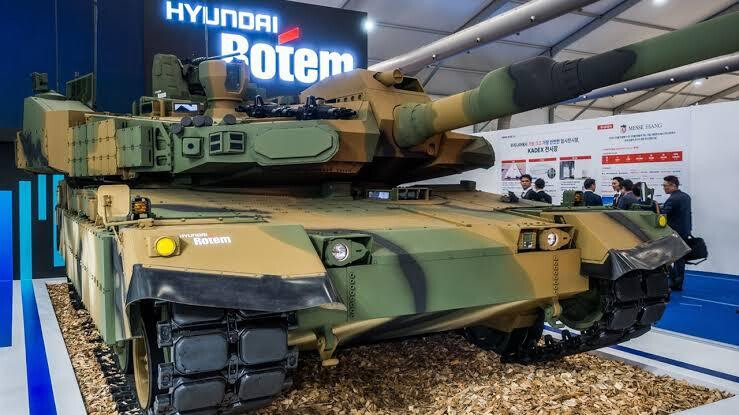
In December of last year, South Korean defense contractor Hyundai Rotem signed a framework agreement with the Peruvian Army and state-run munitions factory FAME to supply 195 armored vehicles, comprising 54 K2 tanks and 141 K808 White Tiger wheeled armored personnel carriers. Although South Korea’s Defense Acquisition Program Administration initially targeted a binding contract by the end of this year, fiscal and procedural obstacles in Lima have slowed progress.
According to Peruvian daily La República, Defense Minister Rafael Belaúnde noted last month that investment plans for the K2 procurement had not yet been submitted and were omitted from next year's national budget draft, adding that an international tender would be required for new tank acquisitions. While military modernization funds for armored vehicles appeared in the defense budget presented to Peru's Congress on November 18, the K2 purchase was not explicitly itemized. Reflecting these delays, Seoul-based DS Investment & Securities recently pushed its forecast for the binding contract from the fourth quarter of this year to the first quarter of next year.
For both nations, the stakes extend beyond a single transaction. FAME has been pursuing local assembly and technology transfer with Hyundai Rotem, which would in turn provide South Korean firms with a regional manufacturing and maintenance, repair, and overhaul (MRO) base to target neighboring markets.
Naval and Aerospace: Local Co-Production Takes Root
While ground deals await funding, South Korea’s localization strategy is already yielding tangible results in the maritime domain. Following an April 2024 contract to build four vessels for the Peruvian Navy, HD Hyundai Heavy Industries and Peru’s state-owned SIMA shipyard launched the first jointly built landing platform dock, BAP Chimbote, this past August. The partnership relies on South Korean design and technical support to bolster Peru's domestic shipbuilding sector. Attention is now focused on whether a December 2024 joint development agreement for a 1,500-ton next-generation submarine will advance to a full construction contract following an 11-month design phase.
Military diplomacy has accompanied these industrial efforts. The South Korean Navy training ship ROKS Hansando—equipped with an onboard defense exhibition showcasing domestic weaponry—docked at Peru's Port of Callao from November 24 to 27, coinciding with the high-level diplomatic talks.
A similar co-production model is unfolding in aerospace. Korea Aerospace Industries (KAI), which previously oversaw the local assembly of 16 out of 20 KT-1P basic trainers sold to Peru under a 2012 deal, signed consecutive memorandums of understanding in 2024 with Peruvian state aerospace firm SEMAN to co-produce components for the FA-50 light combat aircraft and the KF-21 Boramae fighter. However, with Lima currently pursuing U.S.-made F-16 Block 70 jets as its primary frontline fighter, Seoul's Foreign Ministry has not disclosed which specific light combat aircraft was discussed during the recent talks.
Ultimately, whether South Korea can convert its diplomatic backing, military exchanges, and technology-transfer pledges into binding contracts for tanks, submarines, and aircraft will determine the trajectory of its defense expansion across Latin America.
[Copyright (c) Global Economic Times. All Rights Reserved.]