![[등록] 2026-09-01 15:48:31](/support/_updata/banner2/tl181982910_6749.png)


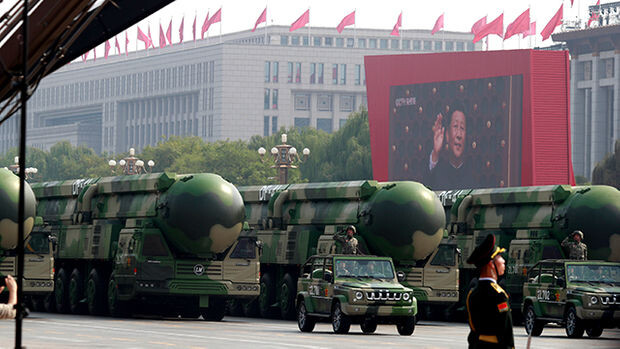
Alarming assessments from top US military officials indicate that the People's Liberation Army (PLA) of China is rapidly modernizing and expanding its capabilities with a clear objective: to be fully prepared for a potential invasion of Taiwan by the year 2027. These warnings, delivered by high-ranking commanders, underscore the escalating tensions in the Indo-Pacific region and the growing strategic challenge posed by Beijing's ambitions towards the self-governing island democracy.
Admiral Samuel Paparo, the current commander of the US Indo-Pacific Command, delivered a stark assessment at a recent forum in Arizona, highlighting the shifting military balance in the region. He cautioned that while the United States currently holds an advantage in a potential conflict over Taiwan, China's military advancements are quickly eroding this lead. His remarks, reported by the Financial Times, pointed to concerning trends in key areas of military power.
A significant point of concern raised by Admiral Paparo is the disparity in naval shipbuilding capacity. He stated that China is currently producing warships at a rate of six per year, significantly outpacing the US output of just 1.8 vessels annually. This stark contrast underscores the rapid expansion of China's naval power, a crucial element in any potential amphibious assault on Taiwan. While the US maintains a qualitative edge in certain advanced technologies, the sheer volume of China's shipbuilding program cannot be ignored.
Despite acknowledging the US's current superiority in domains such as space and submarine warfare, Admiral Paparo emphasized China's accelerating progress across a broad spectrum of military capabilities. The PLA's advancements in missile technology, cyber warfare, and electronic warfare are also areas of intense scrutiny by US defense planners. The live-fire exercises conducted by Chinese warships near Australia in February further illustrate Beijing's growing naval reach and its ambition to project power beyond its immediate periphery, signaling its evolution into a truly global military force.
The timeline of 2027 as a critical benchmark for China's Taiwan invasion readiness has been consistently highlighted by US intelligence and military leaders. This assessment originates from intelligence indicating that President Xi Jinping has instructed the PLA to be prepared to undertake such an operation by that date. While Admiral Paparo clarified that 2027 is not necessarily an invasion schedule but rather a target for achieving full preparedness, the implication remains deeply concerning. He noted that in certain critical areas, such as rocket forces and satellite-based surveillance and reconnaissance systems, the PLA has already achieved significant milestones.
These warnings are not new. As early as 2023, then-CIA Director William Burns publicly stated that intelligence suggested President Xi had directed the PLA to be ready to invade Taiwan by 2027. This assessment was echoed last year by Admiral John Aquilino, Admiral Paparo's predecessor as Indo-Pacific Commander, who emphasized that despite economic headwinds, China's military modernization and expansion continued unabated, aligning with Xi's stated timeline.
The strategic calculus surrounding a potential Chinese invasion of Taiwan is complex and fraught with risk. Taiwan, officially the Republic of China, is a self-governing democratic entity with a strategically vital location in the first island chain. Its advanced semiconductor industry also holds immense global economic significance. Beijing views Taiwan as a renegade province that must eventually be reunified with the mainland, by force if necessary.
The implications of a military conflict across the Taiwan Strait would be catastrophic, with profound global economic and geopolitical consequences. The United States maintains a policy of "strategic ambiguity" regarding its response to a Chinese attack on Taiwan, but it has also consistently provided Taiwan with defensive military capabilities. Any military intervention by the US would likely trigger a major power conflict with unpredictable and devastating outcomes.
The ongoing military buildup and the stated readiness timeline of 2027 underscore the urgent need for proactive measures to deter conflict and maintain stability in the Indo-Pacific. This includes strengthening US military capabilities in the region, bolstering alliances with key partners such as Japan, South Korea, and Australia, and enhancing Taiwan's self-defense capabilities. Diplomatic engagement and clear communication of resolve are also crucial in managing the delicate balance of power and reducing the risk of miscalculation.
The international community remains deeply concerned by China's growing assertiveness towards Taiwan. Any unilateral attempt by Beijing to alter the status quo by force would be met with widespread condemnation and would likely trigger a significant realignment of global power dynamics. The focus on the 2027 timeline serves as a stark reminder of the urgency of addressing this complex and potentially volatile situation before it reaches a point of no return. The coming years will be critical in determining whether diplomatic efforts and credible deterrence can prevent a catastrophic conflict in the Taiwan Strait.
[Copyright (c) Global Economic Times. All Rights Reserved.]