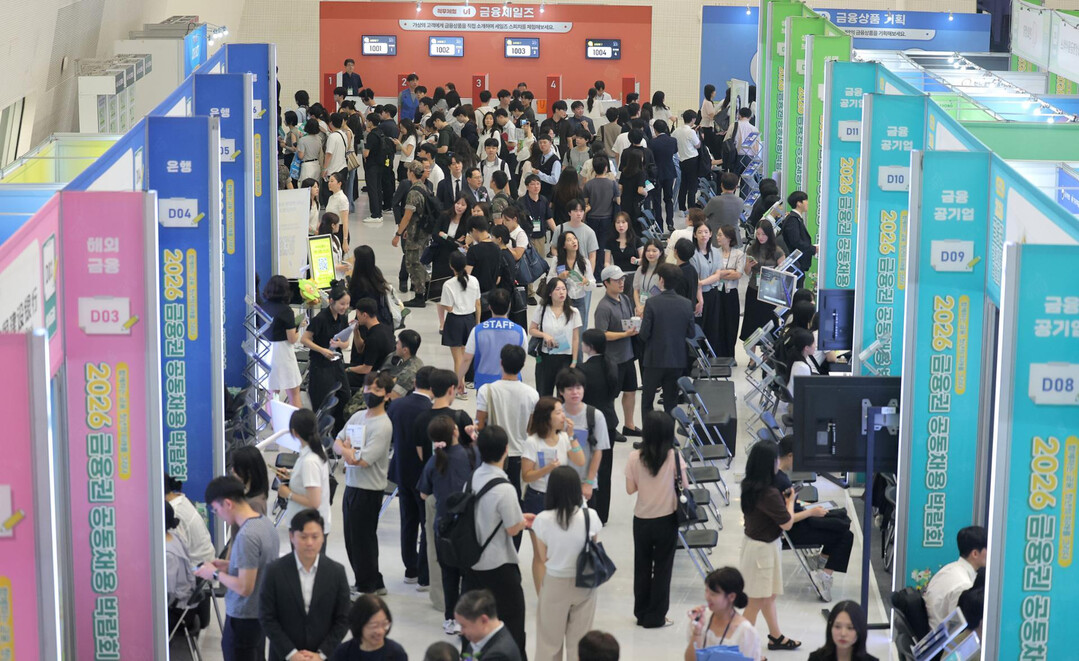
SEOUL — South Korea’s youth labor market faced a grim milestone in October 2026, recording its lowest October employment rate in six years. According to the National Data Agency’s latest employment trend report released Wednesday, the job count for young adults aged 15 to 29 dropped for the 48th consecutive month, deepening anxieties over structural shifts in the economy.
The youth employment rate slid 1.7 percentage points from a year earlier to 42.9%—the lowest for any October since 2020. The total number of employed youth contracted by 196,000, accelerating from a decline of 147,000 the previous month.
Government officials attribute the prolonged slump to a combination of corporate preferences for experienced workers over fresh graduates, a growing trend toward open, as-needed recruitment, and sluggishness in major consumer-facing sectors like hospitality and dining.
Notably, economic policymakers have begun officially factoring artificial intelligence into the equation. Ministry of Economy and Finance officials noted that high-exposure AI industries—such as professional, scientific, technical, and knowledge-based services—have accounted for over 90% of the decline in youth employment over the past three years. Authorities warn that rapid AI adoption appears to be eroding entry-level and junior positions that historically served as stepping stones for young job seekers.
Broader Labor Market Divergence
While the youth segment continues to struggle, South Korea’s broader employment landscape presents a mixed picture. The total number of employed citizens aged 15 and older rose by 139,000 year-on-year to 29.17 million, marking four consecutive months of gains in the 100,000 range. The overall employment rate for prime-working-age adults (15–64) climbed to 70.4%, setting a record high for the month of October.
Job growth was heavily concentrated among older demographics. Employment for individuals aged 60 and older surged by 196,000, and the 30s bracket saw an increase of 128,000. Conversely, industries heavily reliant on face-to-face consumer spending suffered; accommodation and food service jobs plunged by 137,000, marking the sharpest drop in nearly six years, driven by waning domestic dining trends and structural adjustments among self-employed business owners.
Meanwhile, the manufacturing sector reversed course, contracting by 7,000 jobs just a month after a brief 16,000-job rebound. Construction and agriculture also extended long-term downward trends.
Policy Shifts on the Horizon
In response to the deepening employment polarization, the South Korean government announced plans to unveil a comprehensive "National Job Project." Moving beyond youth-centric programs, the upcoming initiative aims to expand support across broader demographics, including middle-aged early retirees and older adults.
To combat technological displacement, authorities intend to scale up AI-literacy and foundational skills training programs ahead of winter, while continuing direct job creation efforts to protect vulnerable lower-income groups through the end of the year.
[Copyright (c) Global Economic Times. All Rights Reserved.]