![[등록] 2026-09-01 15:48:31](/support/_updata/banner2/tl181982910_6749.png)


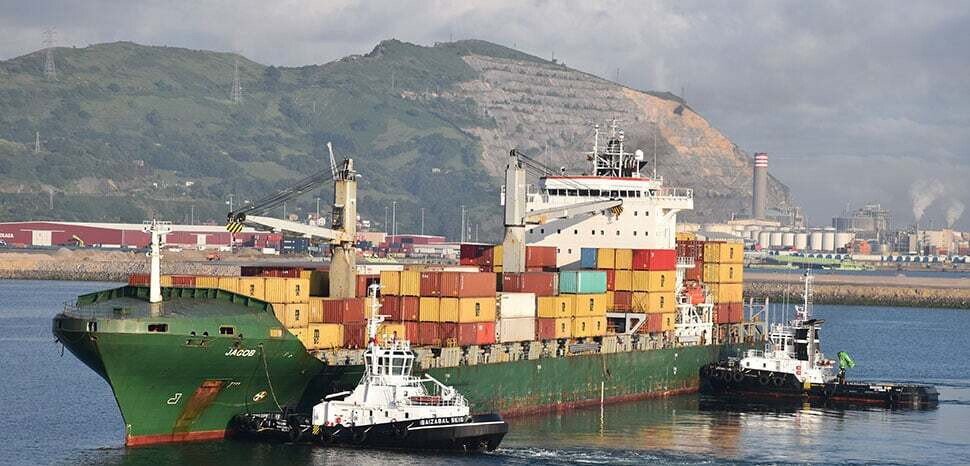
SEOUL — The recent blockade of the Strait of Hormuz, triggered by escalating Middle East conflicts, has sent shockwaves through global maritime logistics. While a dramatic ceasefire agreement between the U.S. and Iran has sparked hopes for a resumption of shipping, the underlying instability remains a permanent threat to supply chains.
In response, the Korea Institute for Industrial Economics and Trade (KIET) released a report on Wednesday titled "U.S.-Iran Conflict and the Potential Reorganization of Global Logistics Routes." The report emphasizes that South Korea must urgently consider participating in the India-Middle East-Europe Economic Corridor (IMEC) as a strategic hedge against "choke point" risks.
The Fragility of the Five Choke Points
South Korea’s export-driven economy is uniquely vulnerable to disruptions at five key maritime checkpoints: the Strait of Hormuz, the Malacca Strait, the Suez Canal, the Bab-el-Mandeb Strait, and the Panama Canal.
The impact of the recent conflict has been stark. According to KIET, daily vessel traffic through the Strait of Hormuz plummeted from an average of 135 ships to a mere four following the outbreak of hostilities. This scarcity drove the Middle East-Asia Very Large Crude Carrier (VLCC) freight index from 225 to a staggering 465.5, more than doubling transportation costs for energy imports in a matter of weeks.
IMEC vs. Belt and Road: A New Opportunity for Korea
The IMEC is emerging as a formidable alternative to China’s Belt and Road Initiative (BRI). However, the report highlights a fundamental structural difference that favors South Korean industry.
While the BRI is characterized by a closed ecosystem—where Chinese companies secure 89% of infrastructure projects and third-country participation is limited to just 3.4%—the IMEC is designed as a multilateral cooperation framework. Because it relies on international competitive bidding, South Korean construction, engineering, and logistics firms have a genuine opportunity to secure high-value contracts.
"The IMEC is not just a logistical route; it is a geopolitical realignment," the report notes. "Unlike the BRI, which often leads to 'debt traps' and unilateral influence, IMEC offers a collaborative platform where Korean technological prowess in smart ports and rail can be leveraged."
Strategic Shift: From Bulk Energy to High-Value Cargo
KIET acknowledges that the IMEC currently has limitations. Due to the complexities of multi-modal transport (shifting between sea and rail) and the massive scale of energy demands, it cannot yet fully replace the bulk transport of crude oil and liquefied natural gas (LNG) that currently flows through the Strait of Hormuz.
However, the corridor is a "game-changer" for high-value logistics. For South Korea’s core exports—such as semiconductors, automotive parts, and high-tech electronics—the IMEC provides a faster, more secure overland-sea hybrid route that bypasses volatile maritime bottlenecks. In times of crisis, this "Alternative Path" becomes the primary lifeline for maintaining just-in-time manufacturing schedules in Europe and Asia.
A Call for Long-term Structural Redesign
The industrial think tank warns that Korean companies must move beyond short-term fixes. Currently, most firms respond to Middle East risks by simply adjusting charter contracts, seeking temporary alternative procurement, or dipping into emergency stockpiles.
KIET argues that this is no longer sufficient. "Companies must shift from viewing existing maritime routes as a constant," the report states. "They must redesign their global production portfolios and regional hubs with the IMEC and other emerging corridors in mind."
The report concludes with a series of recommendations for the South Korean government:
-Investment Expansion: Actively seek bilateral infrastructure investment agreements with IMEC member nations.
-Market Entry: Support Korean firms in entering the Middle Eastern and Indian infrastructure markets to build the very rails and ports the corridor requires.
-Diversification: Accelerate the diversification of energy import sources to reduce dependency on the Strait of Hormuz.
As the "choke point" risks transition from temporary hiccups to structural threats, the IMEC represents more than just a backup plan—it is becoming an essential component of South Korea’s future economic security.
[Copyright (c) Global Economic Times. All Rights Reserved.]