![[등록] 2026-09-01 15:48:31](/support/_updata/banner2/tl181982910_6749.png)


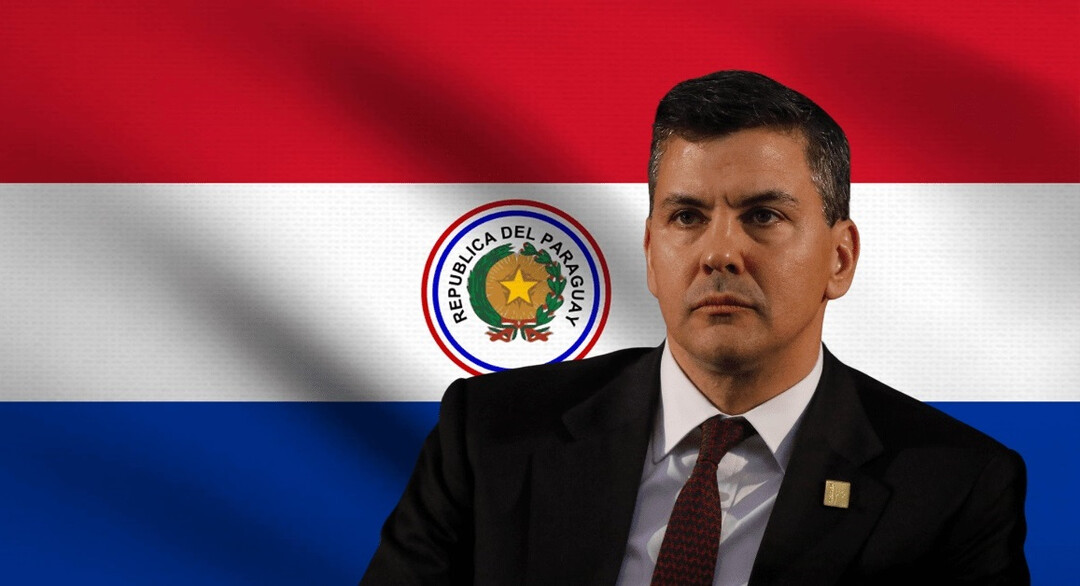
Every July 1st, the President of Paraguay fulfills the constitutional duty of reporting on the state of the nation during the opening of the legislative session. While this is a crucial democratic ritual, in recent years, there have been criticisms that its significance is waning. President Santiago Peña's second state of the nation address in 2025 was no exception to these criticisms. Although adorned with numerous mentions of "democracy," it was largely seen as detached from reality, undermining democratic principles.
The Rhetoric of 'Democracy' and Controlled Reality
President Peña began his speech by emphasizing that this state report was "a sacred ritual in constitutional practice" and a "transparent and open reporting of state management to Congress, the resonance chamber of democracy." However, simultaneously, the National Doctors' Union's attempt to stage a protest in front of the Congress was blocked by the police. This dualistic attitude—professing public accountability while suppressing expressions of social discontent—raises questions about the true nature of democracy.
The President's "caustic message" regarding the role of the press was also criticized as a statement that seemed to forget the fundamental principle that the media should act as a watchdog in a democratic society. George Orwell's quote, "Journalism is printing what someone else does not want printed; everything else is public relations," seems to sharply criticize the current situation.
In this address, President Peña was described as having "put on his spikes," a football metaphor, indicating an aggressive stance similar to his first speech last year, which was full of criticism of his predecessor, Mario Abdo Benítez. Peña described the previous administration as a "disastrous government," blaming it for debt and corruption. However, he failed to mention that Abdo Benítez belonged to the same party as himself, a party that has governed Paraguay almost uninterrupted for the past 70 years. This selective criticism gave the impression of focusing on political infighting rather than genuine introspection on state governance.
Empty Listing of Achievements and Missing Voices of the People
In his speech, President Peña announced various policy achievements, but it faced criticism for lacking specific details and being merely a list.
Transportation and Law: President Peña announced that "a public transport transition law will be submitted in the coming days" and that he had sent a bill to Congress to designate June 22, the anniversary of the 1992 Constitution, as a public holiday. He emphasized that June 22 is "a day based on republican democracy, pluralism that respects differences, and sovereignty." However, it remains uncertain whether the designation of such a commemorative day will lead to a substantive deepening of democracy.
Security and Defense: In the security sector, he claimed that the amount of Paraguayan cocaine seized in European ports was "zero," mentioning reinforcement of police personnel and equipment, and the introduction of new Super Tucano aircraft. However, questions were raised about the reliability of these claims, along with criticism that he might be focusing solely on statistical figures rather than the eradication of drug trafficking.
Society and Education: In education, he mentioned scholarship support, school construction, remodeling and reconstruction of the National Technological University and the National University of Asunción, and the construction of the Paraguay-Taiwan Polytechnic University. In healthcare, he listed the imminent opening of Itapúa General Hospital, San Lorenzo National Diagnostic Center, the construction of Incan infrastructure, and hospital construction projects in Concepción, Curuguaty, and Chaco regions. While these infrastructure projects are undoubtedly important, there was a lack of specific explanations on how they would genuinely lead to improved quality of medical services for ordinary citizens.
Economy and Poverty: President Peña highlighted achievements such as Moody's credit rating, an increase in the general budget, reduced inflation, successful foreign policy, poverty reduction, the 'Zero Hunger' policy, and social housing. However, concrete evidence was not presented on how these macroeconomic indicators actually improved the lives of the poor, or how effective policies like 'Zero Hunger' have been. In particular, criticisms followed that practical measures to address Paraguay's chronic issues of wealth inequality and job creation were insufficient.
The Crisis of Democracy and the Role of the Press
Overall, this state of the nation address lacked persuasiveness, and the President's authoritarian demeanor was particularly criticized. It was pointed out that the fundamental principle that all power in a democratic society must be subject to media scrutiny and that minority opinions must also be respected was overlooked. Otherwise, it cannot be called a true democracy. At the end of his speech, President Peña argued that efforts to deepen democracy must continue and that the "evil twins" of "populism and an anachronistic left" must be avoided. However, his own style of governance seems to find it difficult to avoid criticism of being populist and authoritarian.
Paraguayan democracy stands at a critical juncture. For the President's speech to truly represent the lives of the people and serve as an opportunity to practice democratic values, the government must accept criticism and listen to diverse voices. Otherwise, the word 'democracy' will remain nothing more than empty rhetoric.
[Copyright (c) Global Economic Times. All Rights Reserved.]