![[등록] 2026-09-01 15:48:31](/support/_updata/banner2/tl181982910_6749.png)


The protracted and increasingly acrimonious trade dispute between the United States and China has taken a significant and potentially transformative turn, escalating into a full-blown conflict over artificial intelligence (AI) semiconductors. The latest salvo in this technological cold war comes from the administration of US President Donald Trump, which has unexpectedly broadened its export restrictions to include Nvidia's H20, a lower-specification AI chip specifically engineered to comply with previous US regulations for the Chinese market. This move signals a clear intent to stifle China's burgeoning ambitions in AI development and further tighten the technological chokehold on its burgeoning tech sector.
On the 15th of April (local time), global financial news outlets, including Bloomberg, reported that Nvidia, the leading designer of graphics processing units (GPUs) crucial for AI and machine learning, had received notification from the US government mandating a license for the export of its H20 series chips to mainland China. US officials, speaking under the condition of anonymity, justified the new restrictions by expressing concerns that these semiconductors, despite their reduced processing power compared to Nvidia's top-tier offerings, could still be utilized or repurposed to bolster China's supercomputing capabilities, thereby posing a potential threat to US national security and technological dominance.
The Nvidia H20 series represents a strategic pivot by the American chip giant to navigate the initial waves of US export controls on advanced AI silicon. Following the earlier restrictions that targeted high-performance GPUs like the H100, Nvidia developed the H20 as a less potent alternative tailored for the Chinese market, with its computational capacity estimated to be roughly 20% of its flagship counterpart. This adaptation was seen as a pragmatic approach to retain a foothold in the lucrative Chinese AI market while adhering to the regulatory framework.
The timing of this regulatory shift is particularly noteworthy. It occurred merely a day after Nvidia publicly committed a staggering $500 billion over the next four years towards establishing cutting-edge AI production facilities within the United States. This substantial investment was widely interpreted as a gesture of goodwill and a commitment to bolstering domestic technological infrastructure. Furthermore, just days prior, on April 9th, National Public Radio (NPR) had reported a potential rollback of restrictions on the H20 chip by the Trump administration, fueling speculation of a possible easing of tensions in this critical technological domain. However, Nvidia's significant domestic investment proved insufficient to sway the US government's resolve to impede China's ascent in the AI arena.
The immediate financial repercussions of this policy reversal were palpable. Nvidia issued a warning to investors, projecting a substantial revenue shortfall of approximately $5.5 billion for its first fiscal quarter (spanning February to April), directly attributable to the newly imposed export limitations. The market reacted swiftly and negatively, with Nvidia's stock price plummeting by 6.31% in after-hours trading. The ripple effect extended to other key players in the AI semiconductor landscape, with shares of Advanced Micro Devices (AMD), a major competitor, also experiencing a sharp decline of 7.07%. This market reaction underscores the profound interconnectedness of the global semiconductor supply chain and the sensitivity of tech stocks to geopolitical tensions and regulatory uncertainties.
This latest move by the US government underscores its escalating anxiety regarding China's rapid advancements in the realm of AI semiconductors. The emergence of domestic Chinese chip manufacturers, most notably Huawei, and their ability to produce increasingly sophisticated AI silicon, has rattled Washington. The success of Chinese AI models like DeepSeek, which reportedly leveraged Huawei's indigenous AI chips to achieve performance comparable to Western models at a lower cost, has been likened to a 'Sputnik moment' for the Western technological establishment, signaling a potential erosion of its long-held dominance.
Following DeepSeek's breakthrough, major Chinese technology conglomerates, including Tencent, ByteDance, and Alibaba, have significantly amplified their investments in AI research and development. This surge in demand has led to a scramble for available AI chips, including Nvidia's H20, resulting in reports of supply shortages within China. Just last month, Reuters reported that H3C, a prominent Chinese server manufacturer, had issued a notification indicating that its inventory of H20 chips was nearing exhaustion, highlighting the intense demand for these semiconductors within the Chinese AI ecosystem.
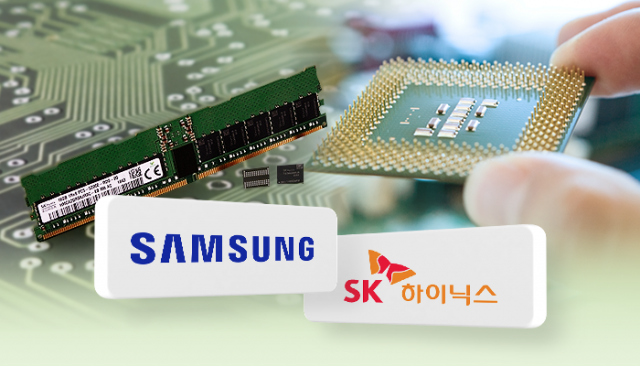
The widening scope of US export controls is also poised to negatively impact South Korean memory chip giants Samsung Electronics and SK Hynix. Both companies are key suppliers of High Bandwidth Memory (HBM), specifically the fourth-generation HBM3, which is a crucial component in Nvidia's H20 series. The restrictions on H20 exports to China are expected to lead to a decrease in demand for HBM3, thereby jeopardizing the anticipated revenue growth for the South Korean firms from the burgeoning Chinese AI market in the first half of the year.
Industry analysts and insiders are closely monitoring the evolving situation. One semiconductor industry representative commented on the inherent policy volatility surrounding Nvidia's H20 exports to China, noting that "there has been policy uncertainty from both sides regarding Nvidia's H20 exports to China. The recent rapid shifts in policy direction are causing significant market fluctuations, and we will be keeping a close watch on developments." The unpredictable nature of these regulations poses significant challenges for companies operating in the global semiconductor supply chain, forcing them to navigate a complex and ever-changing geopolitical landscape.
The expansion of the US-China trade war into the critical domain of AI semiconductors signifies a deepening of the technological rivalry between the two global powers. The US government's willingness to restrict even lower-end AI chips underscores its determination to impede China's technological self-sufficiency and maintain its lead in this strategically important sector. This escalation raises concerns about further disruptions to the global technology supply chain and the potential for retaliatory measures from China, further fueling the tech cold war and creating an environment of uncertainty for businesses worldwide. The long-term implications of this AI chip battleground for global technological innovation and economic growth remain a subject of intense debate and scrutiny.
[Copyright (c) Global Economic Times. All Rights Reserved.]