![[등록] 2026-09-01 15:48:31](/support/_updata/banner2/tl181982910_6749.png)


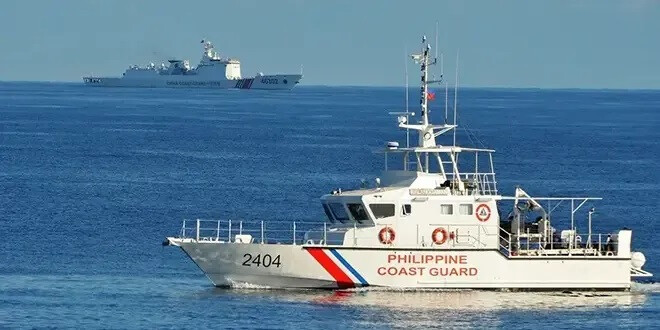
Manila, Philippines – The Philippines' maritime security capabilities are set for an unprecedented enhancement. The Philippine Department of Transportation has officially announced the signing of a contract with French shipbuilder OCEA for the acquisition of 40 new fast patrol boats. This move is part of a large-scale effort to modernize and expand the Philippine Coast Guard's (PCG) capacity, seen as a strategic decision to effectively address complex maritime issues in the waters surrounding the Philippines.
President Marcos Jr.'s Strong Resolve: Strengthening Maritime Security
Philippine President Ferdinand Marcos Jr. recently directed the PCG to expand its operations to counter "complex maritime challenges." The President cited increasing maritime traffic, a rise in illegal activities at sea, and particularly heightened tensions due to territorial disputes with China in the South China Sea, as key reasons for bolstering maritime security. In this context, international support for strengthening the Philippines' security has been ongoing, with France and Japan pledging active cooperation in expanding the PCG's capabilities. France and the Philippines had already reached an agreement on the acquisition of new patrol vessels in November 2024.
Currently, the Philippine Coast Guard operates 13 offshore patrol vessels. Government officials have pointed out that the current capacity is severely insufficient to cover the vast maritime domain of the Philippines, which consists of over 7,600 islands. With the support of the international community, the Philippines plans to address these shortcomings and significantly boost the efficiency of its Coast Guard.
OCEA's Proven Expertise and Strategic Collaboration
The contract was officially signed in Manila on May 22 and includes the construction of 40 fast patrol boats based on the successful FPB 110 MKII design of the French OCEA Group. These vessels will be constructed from aluminum, measuring 35 meters (115 feet) in length and weighing approximately 110 tons. According to OCEA, these patrol boats will operate at a top speed of 28-35 knots, with a cruising speed of 12 knots and a range of 700 nautical miles. Each vessel is designed to be operated by a crew of 17.
OCEA has stated that the total value of this contract exceeds 400 million Euros (approximately 454 million USD). Notably, under the terms of the agreement, the first 20 vessels will be built in France, while the remaining 20 will be constructed in the Philippines through the establishment of a local joint venture shipyard. This is expected to contribute not only to the acquisition of vessels but also to the enhancement of the Philippines' own shipbuilding capabilities. This contract is strongly backed by an agreement between the governments of France and the Philippines.
The Philippines and OCEA have maintained a long-standing cooperative relationship. OCEA previously built four smaller 24-meter (79-foot) patrol boats (based on the FPB 72 design) that began delivery to the Philippines in 2017. These vessels are currently playing a crucial role in the Philippines' coastal operations. Furthermore, OCEA has established a maintenance office in the Philippines and recently extended its maintenance contract with the Coast Guard for another five years.
OCEA also constructed the 84-meter (275-foot) BRP Gabriela Silang, which was the largest and most capable vessel in the Philippine Coast Guard fleet when it was delivered in 2019. OCEA also holds a contract for integrated logistics support and maintenance services for this patrol vessel, continuously contributing to the operation of a key asset for the Philippine Coast Guard.
Role of the New Patrol Boats: A Key Pillar of Maritime Security
The Philippine Coast Guard anticipates that the newly acquired vessels will significantly enhance its maritime presence and rapid response capabilities. These vessels will be utilized to counter maritime threats such as illegal fishing, smuggling, piracy, and maritime terrorism. They are also expected to be deployed for emergency response and relief operations during natural disasters and maritime accidents. Additionally, the new patrol boats are projected to play a vital role in strengthening interoperability with the Philippine Armed Forces, the Bureau of Fisheries and Aquatic Resources, and international partners.
Japan's Continued Support and Multilateral Cooperation
Japan is also expanding its support for the Philippine Coast Guard. Japan previously provided 12 patrol vessels to the Philippines and supported the construction of the 97-meter (318-foot) BRP Teresa Magbanua, which entered service in 2022 and is currently the largest vessel in the PCG fleet. Japan is slated to provide five additional vessels to the Philippines between 2027 and 2028.
This ongoing support from France and Japan will be crucial in enabling the Philippines to enhance its maritime security capabilities and effectively safeguard its sovereignty in surrounding waters, including the South China Sea. Particularly, this large-scale contract with OCEA demonstrates that the Philippines recognizes maritime security as a top national priority and is actively seeking international cooperation to achieve it. With the acquisition of these new patrol boats, the Philippines is expected to foster a safer and more stable maritime environment and solidify its position as a key pillar of regional security cooperation.
[Copyright (c) Global Economic Times. All Rights Reserved.]