![[등록] 2026-09-01 15:48:31](/support/_updata/banner2/tl181982910_6749.png)


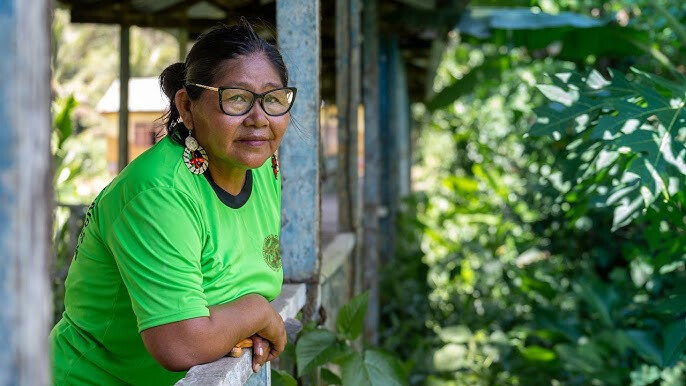
An Indigenous woman leader from the Peruvian Amazon has been honored with the Goldman Environmental Prize, the most prestigious award in the field of environmental activism, after a persistent legal battle granted legal personhood to the Marañón River, where she lives.
The protagonist is 57-year-old María Luz Canaquiri Murayari, from the Shapajilla community along the Marañón River. Leading the Huaynakana Kamatahuara Kana (HKK), a Kukama women's organization, and with the support of the Legal Defense Institute of Peru, she spearheaded a three-year campaign to protect the Marañón River. As a result, in March 2024, the Superior Court of Loreto, Peru's largest Amazonian region, issued a landmark ruling recognizing the Marañón River's right to flow freely and without pollution, and mandating respect for the Indigenous worldview that considers the river a living entity.
This was a monumental decision in Peruvian history. The Loreto court in Iquitos found that the Peruvian government had violated the Marañón River's inherent rights and ordered immediate measures to prevent future oil spills. Furthermore, the court ruled that the government must develop a protection plan for the entire river basin and recognize the Kukama communities as guardians of the river. The government appealed this decision, but in October 2024, the court rejected the appeal and upheld the original ruling.
"She is the 'mother of the rivers,' and the Marañón River, originating in the Andes, flows downstream to become the Amazon River," said Canaquiri. The Kukama people consider this river sacred, believing that the spirits of their ancestors reside in its depths. However, over the past four decades, the Kukama have suffered from dozens of oil spills that have depleted fish stocks, destroyed the ecosystem, and contaminated their water with heavy metals.
The Peruvian state oil company, Petroperú, began constructing the North Peruvian Pipeline in the 1970s, and the area around the Marañón River became a hub for oil development, accounting for 40% of Peru's total oil production by 2014. This led to more than 60 oil spills since 1997, some of which were near catastrophic in scale.
"My grandmothers and grandfathers taught me that a giant boa, 'Purahua,' the 'mother of the river,' lives in the river," Canaquiri recalled. According to the Kukama worldview, this spirit symbolizes the river's health and personhood.
Practically, the Kukama people depend on the river for transportation, agriculture, drinking water, and fish, their primary source of protein. However, oil drilling has left them highly vulnerable to severe water contamination.
Following oil spills, local residents have suffered from fevers, diarrhea, skin rashes, and miscarriages. A 2021 study also found high levels of harmful substances such as lead, mercury, arsenic, and cadmium in the blood of people in riverside communities.
Canaquiri, a mother of four and grandmother of six, remembers a happy childhood filled with abundant fish and animals before oil drilling began. "There was plenty to eat, and we shared everything, working in each other's fields and enjoying festivals together," she said.
Despite this historic ruling, the Marañón River is not yet entirely out of danger. Canaquiri and HKK are urging the Peruvian government to immediately implement the court's decision. Their fight is not over.
Meanwhile, last month, the Peruvian Congress passed an anti-NGO bill that restricts civil society organizations from filing human rights lawsuits against the state or providing legal counsel, and President Dina Boluarte signed the bill into law last week.
Canaquiri fears that this bill could paralyze their legal battles, saying, "It worries me because it means lawyers won't be able to take on cases to enforce our fundamental rights."
"This is not just for us, but for the country and the whole world," she emphasized. "Who can live without breathing? Without the Amazon, the forests, the rivers, we won't have clean air. How will we get food, fruits, vegetables, animals, fish to eat every day?"
Canaquiri and HKK say they are motivated by the future of their children and grandchildren. "The government needs to understand that they should not destroy nature, but protect it. Otherwise, what hope will our children, the next generation, have?" she appealed.
[Copyright (c) Global Economic Times. All Rights Reserved.]