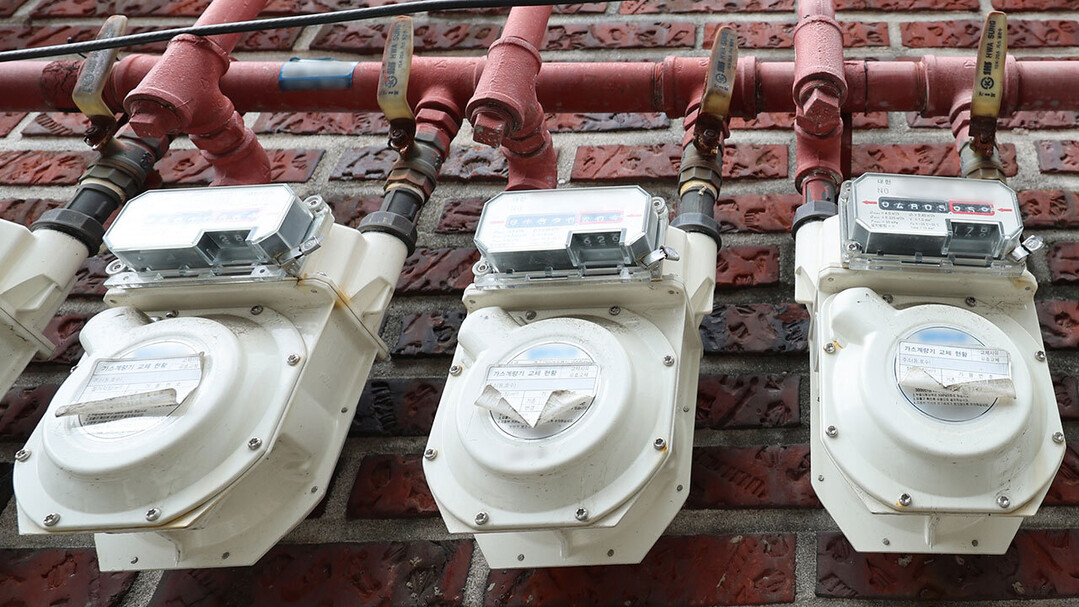
Local public utility charges, which had been frozen for some time due to price stabilization and economic sluggishness, are rising one after another starting at the end of the year. As rising costs such as labor and fuel overlap with accumulated deficits from prolonged rate freezes, rate hikes are spreading to sectors closely tied to daily life, including transportation, water and sewage, and city gas.
While local governments maintain that rate realization is inevitable to secure fiscal soundness and provide stable public services, the household burden on ordinary citizens suffering from high inflation and an economic downturn is expected to grow even heavier.
According to Yonhap News on the 29th, North Chungcheong Province will raise the base taxi fare from the current 4,000 won to 4,700 won starting next month, marking the first hike in three years.
Daejeon City and Goseong County in South Gyeongsang Province will also increase their base taxi fares next month from 4,300 won to 4,800 won, and from 5,000 won to 5,500 won, respectively. The Jeonnam-Gwangju Integrated Special City is pushing forward a plan to raise base taxi fares across 22 cities and counties in the Jeonnam region from 4,300 won to 4,800 won.
Water and sewage rate hikes have also been announced in succession.
Starting with next month's billing, Yongin City in Gyeonggi Province will raise residential water rates from 460 won to 480 won per ton, and sewage rates from 700 won to 780 won.
Anseong City in Gyeonggi Province decided to raise sewage rates by an average of 12.9% starting with next January's bills, and Sejong City also plans to increase residential water rates next year from 710 won to 750 won per ton.
In North Jeolla Province and Daegu, city gas rates rose in September and August, respectively, and a city gas rate hike is also being pursued in Jeonnam-Gwangju.
Prices for volume-based garbage bags and public parking fees have also joined the wave of increases.
Pyeongtaek City in Gyeonggi Province, which raised garbage bag prices this year for the first time in 20 years, plans to raise them further next year. Jeonju City in North Jeolla Province, Asan City in South Chungcheong Province, and Jecheon City in North Chungcheong Province are also reviewing price hikes.
In Ulsan, public parking fees—frozen for 29 years—are scheduled to increase, and Jeju Island has also moved to overhaul its public parking fee system.
Local governments have embarked on consecutive public utility rate hikes because they can no longer bear the long-accumulated deficits and financial burdens. Although costs such as labor, fuel, and facility maintenance have risen, suppressing rate hikes for price stabilization widened the gap between supply costs and actual rates.
Consequently, local financial burdens have worsened as municipalities had to cover operating deficits with local budgets or delay necessary facility investments.
In fact, Haman County in South Gyeongsang Province noted that its current water rate is only 42.9% of the production cost—less than half—stating that raising water and sewage rates by 15% annually from March next year through 2029 is unavoidable to stably secure funds for repairing aging water pipes.
Jecheon City in North Chungcheong Province is struggling to secure commissioned operators as public parking fees remain at the 20-year-old level of 200 to 300 won per 10 minutes. The city faces a situation where fees must be raised by 30% to 50% just to cover minimum labor costs.
Five basic local governments in Ulsan are also demanding the normalization of parking fees, citing growing financial burdens such as the roughly 120 million won required to construct a single public parking space.
Management difficulties in related industries are also fueling rate increases.
North Chungcheong Province, which is raising taxi fares next month, stated that the hike was made as worsening management difficulties in the taxi industry—caused by rising fuel and labor costs combined with a driver shortage—intensified.
The city gas supply industry is also demanding rate hikes, citing growing difficulties from declining sales volume and rising labor costs.
Considering that simultaneous increases in public utility rates could heavily burden residents, local governments are preparing supplementary measures such as reducing the margin of increase or staggering the timing of hikes.
Goseong County in South Gyeongsang Province lowered its taxi surcharge from 1,000 won to 900 won, reducing the actual fare hike from 600 won to 500 won. North Chungcheong Province raised its base taxi fare by 17.5% while adjusting the fare structure so that the rate of increase decreases over longer travel distances.
Sacheon City in South Gyeongsang Province postponed its residential sewage fee hike, originally scheduled for July this year, by one year to July next year.
Chungju City in North Chungcheong Province changed its water rate hike cycle to every two years, raising residential water rates from 650 won to 700 won per ton this year, with plans to raise them to 750 won in 2028.
Anseong City in Gyeonggi Province will also phase in sewage rate hikes over five years starting next year, while Pyeongtaek City decided to raise garbage bag prices by an average of 8% annually over three years from this year through 2028.
Jeju Island prepared a plan to subdivide public parking lots into three tiers based on parking demand, raising base fees in downtown commercial areas by 40% while lowering fees in residential areas by 40%.
[Copyright (c) Global Economic Times. All Rights Reserved.]