• 2026.11.29 (Sun)
  • All articles
  • LOGIN
  • JOIN
Global Economic Times
한인동포뉴스(상단)
  • Synthesis
  • World
  • Business
  • Industry
  • ICT
  • Distribution Economy
  • Well+Being
    • Pet Life
    • Halal Horizon
  • Travel
  • Eco-News
  • Education
  • Korean Wave News
  • Opinion
  • Arts&Culture
  • Sports
  • People & Life
    • International Student Report
    • With Ambassador
  • Column
    • Cho Kijo Column
    • Cherry Garden Story
    • Ko Yong-chul Column
    • Kim Bong-seon's Photo Column
    • Kim Seul-Ong Column
    • Lee Yeon-sil Column
    • Professor Lee Soo-young’s Life Essays
  • Photo News
  • New Book Guide
MENU
 
Home > Distribution Economy

South Korea’s New Digital Asset Bill Sparks Race Among Banks and Fintechs to Break Crypto Exchanges’ Monopoly

KO YONG-CHUL Reporter / Updated : 2026-11-29 10:34:42
  • -
  • +
  • Print

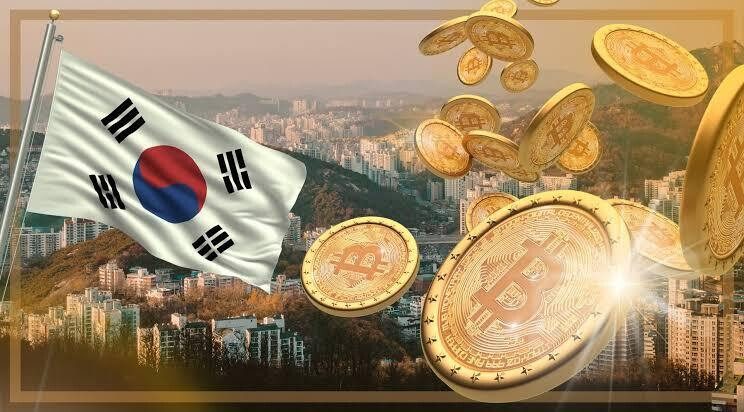
SEOUL — South Korea’s traditional financial institutions and payment providers are gearing up to challenge the long-standing dominance of cryptocurrency exchanges, following the government's unveiling of a comprehensive regulatory overhaul for the digital asset sector.

The Financial Services Commission (FSC) recently introduced the proposed Act on the Innovation of the Digital Asset Industry and User Protection, a legislative framework designed to transition the nation's crypto market away from retail-driven speculation toward institutional finance, corporate fundraising, and everyday payments.

Unbundling the Exchange Model

Historically, South Korean crypto exchanges have operated as all-in-one platforms handling trading, brokerage, and asset custody—relying heavily on retail transaction fees. Under the new legislation, regulators will unbundle these functions into distinct sectors: trading, brokerage, custody, and asset management, each subject to tailored licensing requirements.

Industry observers expect this structural shift to pave the way for institutional-grade services common in Western markets, such as over-the-counter (OTC) trading desks and prime brokerage. Furthermore, the bill’s move to lift the ban on domestic Initial Coin Offerings (ICOs) opens a lucrative avenue for financial firms to act as underwriters for corporate token issuances, mirroring the role investment banks play in traditional IPOs. Regulators, however, are expected to enforce strict guardrails to prevent conflicts of interest between token issuance and secondary market distribution.

The Stablecoin Ecosystem: Banks Issue, Fintechs Distribute

The legislation also sets the stage for a complex tug-of-war in the emerging stablecoin market. While regulators intend to initially restrict Korean won-pegged stablecoin issuance to bank-led consortiums, analysts point out that commercial success will heavily depend on payment gateways and merchant networks controlled by non-bank fintechs.

Domestic payment processors are already positioning themselves for this rollout. Galaxia Moneytree, a local electronic payment firm, recently concluded a proof-of-concept trial integrating stablecoin payments directly into the point-of-sale terminals of major convenience store chain CU. The firm also partnered with regional lender Kwangju Bank to successfully test cross-border trade settlements using stablecoins. Meanwhile, new rules requiring foreign stablecoin issuers to hold a portion of their reserves in local banks are expected to create fresh custody and asset management mandates for South Korean lenders.

Regulatory Hurdles Remain

Despite the optimism surrounding new revenue streams, market analysts caution that widespread adoption by traditional finance faces significant bottlenecks. Crucial prerequisites—such as lifting the de facto ban on corporate crypto accounts and clarifying the strict separation between traditional banking and virtual asset operations—remain unresolved.

Additionally, while the new bill establishes legal frameworks for crypto custody, the launch of spot cryptocurrency exchange-traded funds (ETFs) remains stalled until lawmakers amend the Capital Markets Act to recognize digital assets as eligible underlying instruments. Until these complementary regulations are finalized, experts note that South Korea's financial giants may find themselves with new licenses to operate, but few institutional clients able to participate.

[Copyright (c) Global Economic Times. All Rights Reserved.]

  • #Cherry Garden
  • #HalalFood
  • #Halal
  • #Petlife
  • #Cats
  • #Dogs
  • #Halalhorizone
  • #Hormuz Impasse
  • #Joseon
  • #globaleconomicti
KO YONG-CHUL Reporter
Reporter Page

Popular articles

  • Culinary Mashups and Nostalgia with a Twist: South Korea’s F&B Giants Vie for Consumer Attention

  • Japanese Hotel Prices Surge Nearly 9% Amid Booming Korean Tourism

  • NVIDIA Expands Local AI Horizons with RTX Spark Laptops for Offline Creators

I like it
Share
  • Facebook
  • X
  • Kakaotalk
  • LINE
  • BAND
  • NAVER
  • https://globaleconomictimes.kr/article/1065576791071264 Copy URL copied.
Comments >

Comments 0

Weekly Hot Issue

  • The Wisdom of Earning and Sharing Wealth
  • Pentagon’s Cloud One Suffers Major Cyber Breach, Raising Alarm Over Military Logistics
  • Nvidia’s Jensen Huang Expected to Skip GTC DC Keynote Amid Packed Congressional Hearing Schedule
  • GOP Fractures Over Trump’s Tariff Agenda Following Midterm Losses, Sparking 2028 Policy Debate
  • Magnitude 5.0 Quake Rattles Los Angeles, Disrupting LAX Flights and Damaging Infrastructure
  • Chinese School Disciplined Over Punishing Student for Speaking Local Dialect

Most Viewed

1
Memory Chip Rout Deepens as Wall Street Questions AI Spending and DRAM Pricing
2
Exercise Beats Diet in Extending Lifespan, Major Review Finds
3
South Korean Burger Chain Lotteria Expands Singapore Footprint with Halal Certification and New Teriyaki Lineup
4
AI Semiconductor Stocks Plummet: Philadelphia Index Drops 5.28% and Micron Plunges 7.59% Amid Executive Shakeup and Export Restrictions
5
"Stay Out, Get Paid, or Have Police Stay With You": Shenzhen Imposes Strict Security Ahead of APEC Summit
체리가든 스토리
nutri huevos
로타리
동포저널

Hot Issue

Magnitude 5.0 Quake Rattles Los Angeles, Disrupting LAX Flights and Damaging Infrastructure

IDF Faces Backlash Over Allegations of Using Gaza Civilians to Clear Booby-Trapped Sites

South Korea’s Chip-Fueled 4% Growth Masks Deepening Domestic Divide

Fashion Runway Show 2026

Let’s recycle the old blankets in Jeju Island’s closet instead of incinerating them.

Global Economic Times
korocamia@naver.com
CEO : LEE YEON-SIL
Publisher & Editor : KO YONG-CHUL
Registration number : Seoul, A55681
Registration Date : 2024-10-24
Youth Protection Manager: KO YONG-CHUL
Singapore Headquarters
5A Woodlands Road #11-34 The Tennery. S'677728
Korean Branch
Phone : +82(0)10 4724 5264
#304, 6 Nonhyeon-ro 111-gil, Gangnam-gu, Seoul
Copyright © Global Economic Times All Rights Reserved
  • News K
  • 반달곰 프로젝트
  • 광고문의
Search
Category
  • All articles
  • Synthesis
  • World
  • Business
  • Industry
  • ICT
  • Distribution Economy
  • Well+Being 
    • 전체
    • Pet Life
    • Halal Horizon
  • Travel
  • Eco-News
  • Education
  • Korean Wave News
  • Opinion
  • Arts&Culture
  • Sports
  • People & Life 
    • 전체
    • International Student Report
    • With Ambassador
  • Column 
    • 전체
    • Cho Kijo Column
    • Cherry Garden Story
    • Ko Yong-chul Column
    • Kim Bong-seon's Photo Column
    • Kim Seul-Ong Column
    • Lee Yeon-sil Column
    • Professor Lee Soo-young’s Life Essays
  • Photo News
  • New Book Guide
  • Overseas Koreans
  • Multicultural News