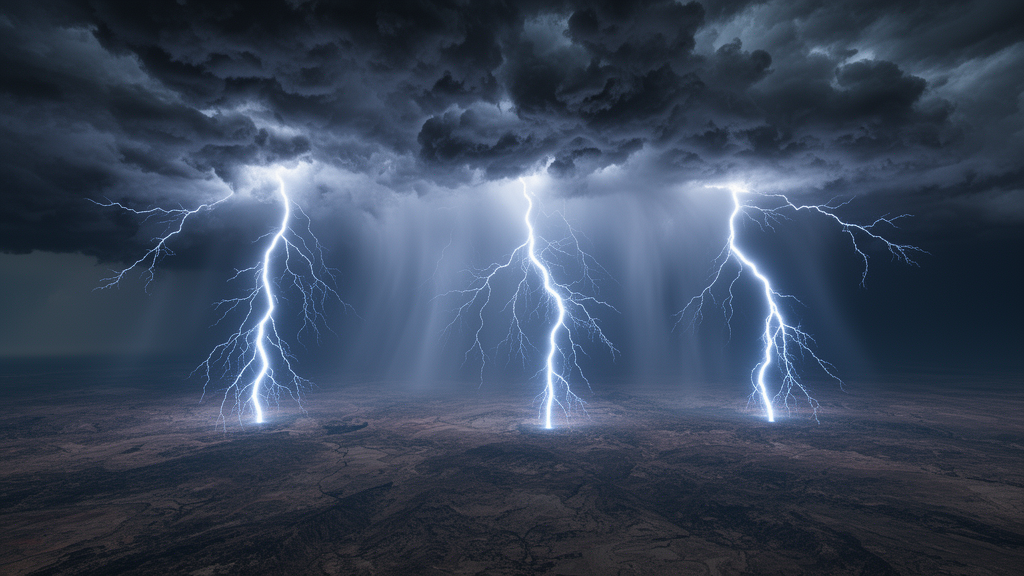
MUNICH — Driven by rapid global warming, high-latitude regions like Alaska could face up to seven times more lightning strikes by the end of the century, posing severe threats to Arctic ecosystems, infrastructure, and public safety, according to new scientific modeling.
In a study published in the journal Earth’s Future, researchers from the Technical University of Munich and Vrije Universiteit Amsterdam utilized artificial intelligence to project future global lightning activity. Comparing future estimates against baseline data from 1995 to 2014, the team found that global lightning strikes could rise by 76% to 140% by 2100 under a high-emissions scenario.
The research utilized the Intergovernmental Panel on Climate Change (IPCC) "SSP3-7.0" pathway, which models a future marked by fragmented international policies and a 3.6°C global temperature increase above pre-industrial levels.
While lightning is expected to increase worldwide, the Arctic and sub-Arctic regions face the most drastic shifts. Alaska, which currently records fewer than one strike per square kilometer per year, is projected to see a 116% to 594% jump in lightning frequency. Neighboring Canada is also forecast to experience an 80% to 203% increase.
The Science Behind the Surge
Atmospheric warming directly fuels the mechanics of thunderstorm formation. As surface temperatures climb, warm air rises more vigorously into the frigid upper atmosphere. This clash creates intense turbulence, causing microscopic ice crystals within clouds to collide and generate static electricity—ultimately discharging as lightning.
Escalating Risks to the Arctic Experts warn that a dramatic uptick in polar lightning carries cascading hazards:
Wildfires: More frequent strikes in dry northern forests and tundra could spark devastating, hard-to-contain wildfires.
Infrastructure Damage: Critical energy assets, including power grids and wind turbines, will face heightened exposure to electrical surges and physical destruction.
Human Safety: Outdoor activities and daily life in northern communities could face frequent disruptions due to severe weather advisories.
To mitigate these looming risks, the research team emphasized the urgent need for updated safety protocols and revealed plans to investigate which tree species possess natural resilience against lightning strikes to aid future forest management.
[Copyright (c) Global Economic Times. All Rights Reserved.]