• 2026.11.12 (Thu)
  • All articles
  • LOGIN
  • JOIN
Global Economic Times
[등록] 2026-09-01 15:48:31
  • Synthesis
  • World
  • Business
  • Industry
  • ICT
  • Distribution Economy
  • Well+Being
    • Pet Life
    • Halal Horizon
  • Travel
  • Eco-News
  • Education
  • Korean Wave News
  • Opinion
  • Arts&Culture
  • Sports
  • People & Life
    • International Student Report
    • With Ambassador
  • Column
    • Cho Kijo Column
    • Cherry Garden Story
    • Ko Yong-chul Column
    • Kim Bong-seon's Photo Column
    • Kim Seul-Ong Column
    • Lee Yeon-sil Column
  • Photo News
  • New Book Guide
MENU
 
Home > ICT

Language Barrier, Historical Bias: How AI Shifts Stances on Korea’s Colonial History Based on the Prompting Language

Desk / Updated : 2026-11-12 10:05:31
  • -
  • +
  • Print

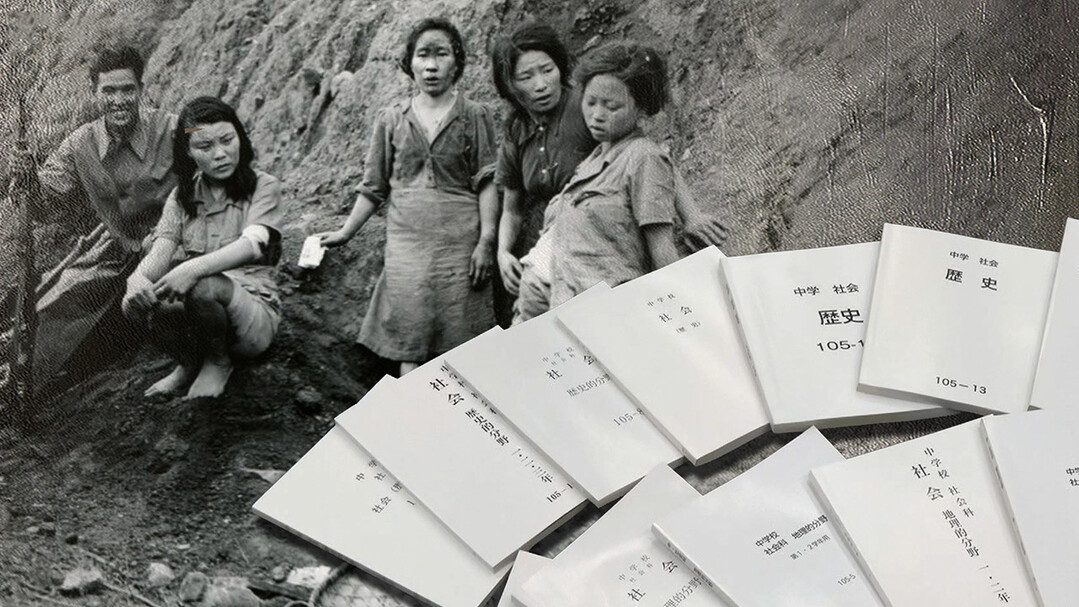
When artificial intelligence is asked about historical atrocities such as the wartime forced mobilization of "comfort women," the answer you receive can depend heavily on the language you use.

According to a recent analytical report titled "How Language Models Answer Korea's History, Territory, and Culture"—compiled by Koo Rum, co-CEO of data tech firm Big Value—AI models overwhelmingly affirm historical facts when queried in Korean, English, or Chinese. However, when the exact same questions are posed in Japanese, the rate of affirmation plummets to roughly 50%.

The study tested 27 AI models from 12 global developers by inputting 50 questions regarding South Korean history, territory, and culture across four languages. The responses were then evaluated using Anthropic’s Claude Opus 5.5 to measure alignment with historical consensus and the South Korean standpoint.

A Dramatic Drop in Japanese

When asked in Korean, 94.9% of the AI models concurred that Japanese military "comfort women" were forcibly mobilized. Similar high rates were recorded in English (92.2%) and Chinese (95.2%).

In sharp contrast, when prompted in Japanese, only 56.3% of the responses agreed. The remaining 40.7% of responses avoided a direct answer, instead citing "diverse views and ongoing debates" or arguing that "opinions remain divided over the definition of coercion."

A similar trend emerged regarding forced labor during the Japanese colonial period. While Korean, English, and Chinese queries yielded affirmation rates between 93.7% and 97.0%, a Japanese-language query dropped the acknowledgment rate down to 54.8%, with 41.1% of responses remaining ambiguous.

Dataset Disparities and Global Risks

Analysts point to the composition of training datasets as the primary culprit. Because AI developers do not fully disclose their training sources, it is widely suspected that Japanese-language training data heavily reflect conservative or revisionist perspectives held within Japan regarding historical disputes.

While AI-generated responses are not official historical records, experts warn that as global reliance on AI grows, skewed responses in foreign languages could propagate misinformation on a global scale, distorting public perception.

Calls for National-Level Data Initiatives

South Korea, a relative latecomer in the foundational Large Language Model (LLM) race compared to the United States and China, has been ramping up government support for domestic AI development. However, industry insiders note that securing high-quality foreign-language datasets remains a challenge.

With foreign AI models potentially absorbing biased historical data, researchers emphasize that the South Korean government should take proactive measures. Experts argue that building open-source, high-quality foreign-language datasets containing accurate historical and cultural accounts is essential—not only to train domestic models, but to ensure that global LLMs learn objective facts rather than localized historical distortions.

[Copyright (c) Global Economic Times. All Rights Reserved.]

  • #Cherry Garden
  • #HalalFood
  • #Halal
  • #Petlife
  • #Halalhorizone
  • #Hormuz Impasse
  • #globaleconomictimes
  • #micorea
  • #mykor
Desk
Desk

Popular articles

  • "Just order bottled water" is all it takes... Kakao embeds agentic AI into KakaoTalk

  • Cheonan City and Chemical Safety Institute Hold Joint Tabletop Exercise for Chemical Accident Response

  • North Korea Test-Fires Cruise Missiles Capable of Carrying Nuclear Warheads from 3,000-Ton Submarine for the First Time

I like it
Share
  • Facebook
  • X
  • Kakaotalk
  • LINE
  • BAND
  • NAVER
  • https://globaleconomictimes.kr/article/1065575034733914 Copy URL copied.
Comments >

Comments 0

Weekly Hot Issue

  • Alibaba’s Chip Unit T-Head Files for Hong Kong IPO as China Pushes Tech Independence
  • Washington Cools to Seoul’s Nuclear Submarine Ambitions Post-Midterms, Think Tank Warns
  • Anthropic’s Massive $1.4 Trillion Nasdaq Debut Set to Test Global AI Market Sentiment
  • Washington Policy Clash Erupts Over NVIDIA Chief’s Links to Singaporean Firm and Beijing Tech Loophole
  • Research Results Highlighting Six Chungnam Artists Shared with Residents
  • Unveiling Baekje’s Royal Heart: Major Archaeological Breakthrough at Gongsanseong Fortress

Most Viewed

1
South Korea and Ethiopia Sign Trilateral MOU to Introduce Liquid-Based Cytology (LBC) Technology for Cervical Cancer Diagnosis
2
US Army Conducts Rare Temporary Burial Drills to Prepare for Worst-Case Large-Scale War Scenarios
3
From Kim Whanki to Pokémon Cards... Seoul Auction Opens the Floodgates
4
World Citizens are Flying Directly to Busan... The Era of 4 Million Foreigners is Just Around the Corner
5
Meeting Christmas Early!… Busan Dessert Sales Event "Daldal The Market" Held
체리가든 스토리
nutri huevos
로타리
동포저널

Hot Issue

COP31: Developing Nations Demand Action and Finance Over Mere Words

Alibaba’s Chip Unit T-Head Files for Hong Kong IPO as China Pushes Tech Independence

Washington Cools to Seoul’s Nuclear Submarine Ambitions Post-Midterms, Think Tank Warns

Fashion Runway Show 2026

Let’s recycle the old blankets in Jeju Island’s closet instead of incinerating them.

Global Economic Times
korocamia@naver.com
CEO : LEE YEON-SIL
Publisher : KO YONG-CHUL
Registration number : Seoul, A55681
Registration Date : 2024-10-24
Youth Protection Manager: KO YONG-CHUL
Singapore Headquarters
5A Woodlands Road #11-34 The Tennery. S'677728
Korean Branch
Phone : +82(0)10 4724 5264
#304, 6 Nonhyeon-ro 111-gil, Gangnam-gu, Seoul
Copyright © Global Economic Times All Rights Reserved
  • News K
  • 반달곰 프로젝트
  • 광고문의
Search
Category
  • All articles
  • Synthesis
  • World
  • Business
  • Industry
  • ICT
  • Distribution Economy
  • Well+Being 
    • 전체
    • Pet Life
    • Halal Horizon
  • Travel
  • Eco-News
  • Education
  • Korean Wave News
  • Opinion
  • Arts&Culture
  • Sports
  • People & Life 
    • 전체
    • International Student Report
    • With Ambassador
  • Column 
    • 전체
    • Cho Kijo Column
    • Cherry Garden Story
    • Ko Yong-chul Column
    • Kim Bong-seon's Photo Column
    • Kim Seul-Ong Column
    • Lee Yeon-sil Column
  • Photo News
  • New Book Guide
  • Overseas Koreans
  • Multicultural News