• 2026.03.07 (Sat)
  • All articles
  • LOGIN
  • JOIN
Global Economic Times
fashionrunwayshow2026
  • Synthesis
  • World
  • Business
  • Industry
  • ICT
  • Distribution Economy
  • Well+Being
  • Travel
  • Eco-News
  • Education
  • Korean Wave News
  • Opinion
  • Arts&Culture
  • Sports
  • People & Life
    • International Student Report
    • With Ambassador
  • Column
    • Cho Kijo Column
    • Cherry Garden Story
    • Ko Yong-chul Column
    • Kim Seul-Ong Column
    • Lee Yeon-sil Column
  • Photo News
  • New Book Guide
MENU
 
Home > Industry

Will Samsung Heavy's '2 trillion jackpot' hit? “Mozambique FLNG contract soon“

Global Economic Times Reporter / Updated : 2024-10-26 09:35:18
  • -
  • +
  • Print


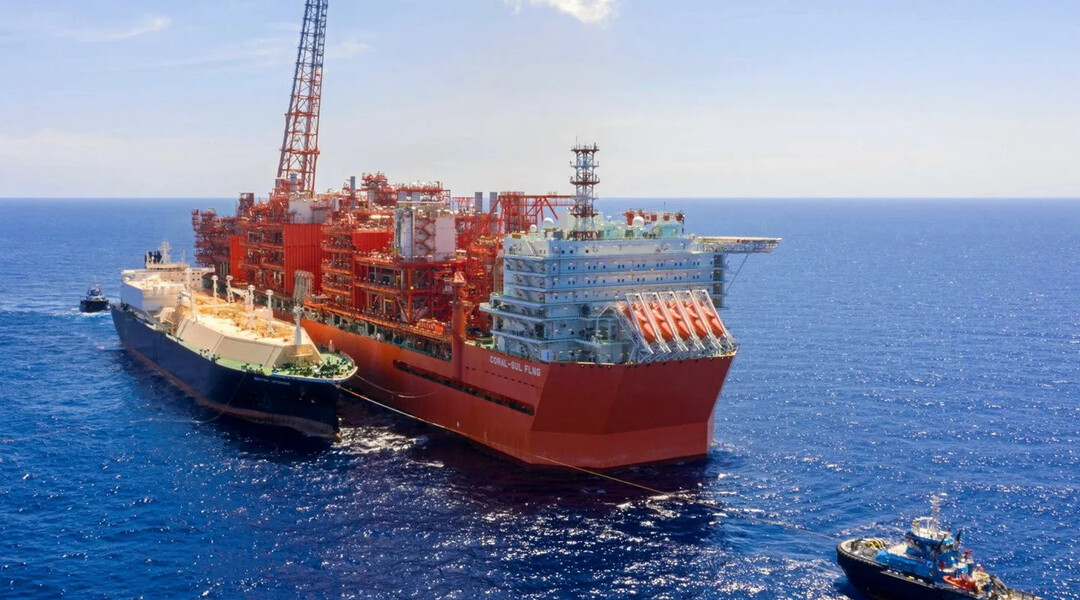
[GLOBAL ECONOMIC TIMES]  Samsung Heavy Industries is on the verge of winning a contract for Mozambique’s ‘Liquefied Natural Gas Production, Storage, and Offloading Equipment (FLNG)’, which is estimated to be worth 2 to 3 trillion won. Samsung Heavy Industries, a powerhouse in marine plants, is discussing receiving orders for about two FLNG units next year.

Samsung Heavy Industries announced in its third quarter performance conference call on the 24th, “The basic design of the ‘Coral Sul’ FLNG, a project in Mozambique, has already begun, and steel plate cutting work is also in progress.” He added, “It’s a question of when to sign the contract,” and added, “We will announce orders in the near future.” When energy companies place orders for offshore plants, they usually entrust the basic design to multiple shipbuilders, but in this case, only Samsung Heavy Industries is working on it, so it is expected to easily win the order.

Considering that the first coral liquor unit ordered by Samsung Heavy Industries in 2017 was worth 2.95 trillion won, this project is also estimated to be worth 2 trillion won. Samsung Heavy Industries is confident of winning FLNG orders next year as well. Currently, we have actually received FLNG orders from U.S. liquefied natural gas (LNG) producer Delphine and Canadian energy company Western, and are coordinating the timing of the main contract. These projects are also expected to be worth 2 trillion won per project.

The company said, “We will first build the products of the company we signed a contract with.” In the past, offshore plants were considered the ‘ugly duckling’ as the biggest cause of shipbuilders’ deficits, but recently, as the market shifted to supplier dominance, they have become a profitable product. In the second quarter, a one-time profit of 25 billion won was added as the ordering party changed some of the construction conditions for the offshore plant.

Samsung Heavy Industries' sales ratio is comprised of 8 to 2 in the merchant marine and marine sectors, respectively, and the company expects the maritime proportion to increase further next year. The company has so far received orders worth 56% of its annual order target (USD 9.7 billion). It is expected that the target will be easily achieved if FLNG is included.

Samsung Heavy Industries said, “In the case of tankers, etc., if the contract size exceeds the amount that can be supplied, we are considering collaboration with other shipyards.”

[Copyright (c) Global Economic Times. All Rights Reserved.]

Global Economic Times Reporter
Reporter Page

Popular articles

  • A New Milestone for Ukraine’s Post-War Reconstruction: The Birth of ISVP

  • About mexican food 

  • War Memorial Association Launches Youth Education Program Idea Contest

I like it
Share
  • Facebook
  • X
  • Kakaotalk
  • LINE
  • BAND
  • NAVER
  • https://globaleconomictimes.kr/article/1065573242995938 Copy URL copied.
Comments >

Comments 0

Weekly Hot Issue

  • Celltrion to Retire 9.11 Million Treasury Shares Worth ₩1.9 Trillion in Aggressive Shareholder Return Move
  • FBI Internal Network Breached: U.S. Points Finger at China in Major Security Lapse
  • China’s "Five-Year Total War": Pushing for a Homegrown ASML Amid U.S. Tech Blockade
  • Yujin Robot Evolves Industrial Automation: Integrating Autonomous Mobility and Collaborative Robotics
  • SK On Slashes 37% of US Workforce Amid Global EV Slowdown
  • Song Kang-ho and Youn Yuh-jung to Star in Netflix’s ‘Beef’ Season 2

Most Viewed

1
Adwa’s Echo in Korea: A Shared Story of Dignity and Freedom
2
2026, The Grand Year of Hangeul Celebration — The River of History Where Five Streams Converge
3
A New Milestone for Ukraine’s Post-War Reconstruction: The Birth of ISVP
4
Mexican currency and the powerful history behind its designs
5
Revised and Expanded Edition of ‘Failure of Negotiations with North Korea: Truth and Solutions’ Published
광고문의
임시1
임시3
임시2

Hot Issue

Hanwha Aerospace Solidifies Baltic Stronghold with $330M Defense Investment in Estonia

From $20 to $400: The Explosive "Vintage Digicam" Craze Gripping Korea’s Gen Z and Millennials

Yujin Robot Evolves Industrial Automation: Integrating Autonomous Mobility and Collaborative Robotics

SK On Slashes 37% of US Workforce Amid Global EV Slowdown

Let’s recycle the old blankets in Jeju Island’s closet instead of incinerating them.

Global Economic Times
korocamia@naver.com
CEO : LEE YEON-SIL
Publisher : KO YONG-CHUL
Registration number : Seoul, A55681
Registration Date : 2024-10-24
Youth Protection Manager: KO YONG-CHUL
Singapore Headquarters
5A Woodlands Road #11-34 The Tennery. S'677728
Korean Branch
Phone : +82(0)10 4724 5264
#304, 6 Nonhyeon-ro 111-gil, Gangnam-gu, Seoul
Copyright © Global Economic Times All Rights Reserved
  • 에이펙2025
  • APEC2025가이드북TV
  • 독도는우리땅
Search
Category
  • All articles
  • Synthesis
  • World
  • Business
  • Industry
  • ICT
  • Distribution Economy
  • Well+Being
  • Travel
  • Eco-News
  • Education
  • Korean Wave News
  • Opinion
  • Arts&Culture
  • Sports
  • People & Life 
    • 전체
    • International Student Report
    • With Ambassador
  • Column 
    • 전체
    • Cho Kijo Column
    • Cherry Garden Story
    • Ko Yong-chul Column
    • Kim Seul-Ong Column
    • Lee Yeon-sil Column
  • Photo News
  • New Book Guide
  • Multicultural News
  • Jobs & Workers