![[등록] 2026-09-01 15:48:31](/support/_updata/banner2/tl181982910_6749.png)


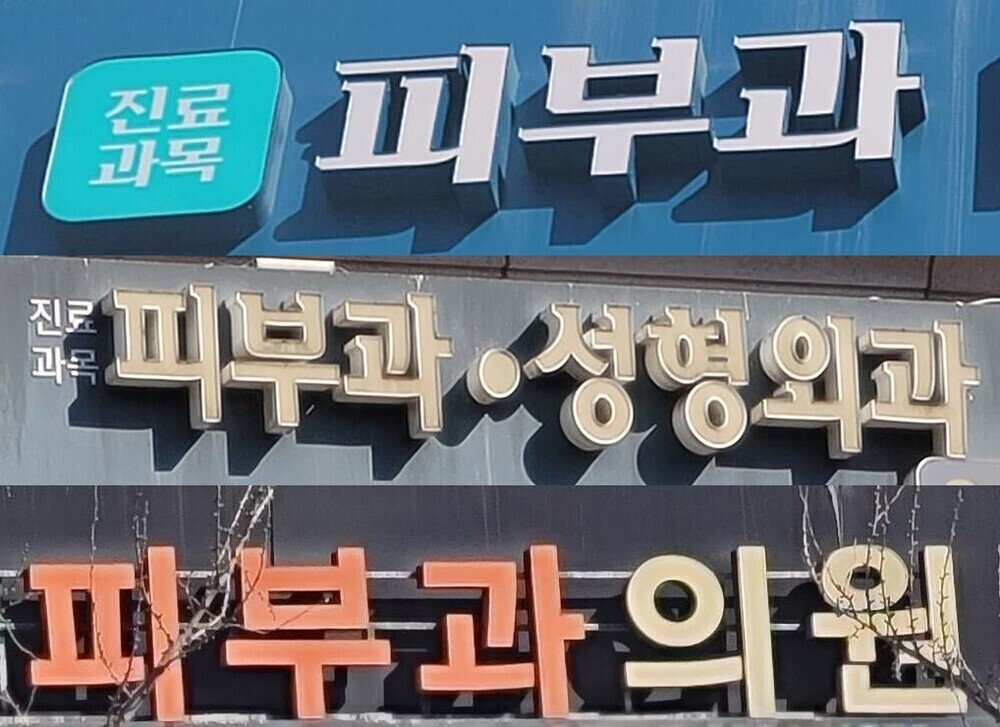
Dermatology clinics that have opened are showing the highest number of cases where they take pre-paid medical fees from patients and shut down ("eat and run") after temporary closures or permanent shutdowns, prompting consumers to exercise caution. This is analyzed as a side effect stemming from the increase in closures that mirrors the increase in newly opened clinics.
According to data submitted by the Korea Consumer Agency to Rep. Seo Young-seok (Gyeonggi Bucheon-si Gap), the Democratic Party of Korea's secretary on the National Assembly Health and Welfare Committee, a total of 1,157 consumer consultations regarding the temporary closure or shutdown of medical institutions were received from 2022 to August 2026. By type, dermatology accounted for the highest number at 487 cases (42.1%), followed by dentistry with 300 cases (25.9%). Combining these two medical departments alone totals 787 cases, accounting for 68.0% of the total.
These were followed by other hospital and clinic services at 162 cases (14.0%), plastic surgery at 58 cases (5.0%), and Korean medicine clinics at 33 cases (2.9%). Regarding the reasons for seeking consultations, breach of contract accounted for 548 cases, and contract cancellation, termination, and penalties accounted for 184 cases, bringing contract-related consultations to 732 cases (63.3%). This signifies that the temporary closure or shutdown of medical institutions goes beyond a simple cessation of business, leading to patient damages where they cannot get back already-paid medical fees or receive remaining treatments.
Particularly in dermatology and dentistry, treatments are often carried out over multiple sessions, and medical fees are frequently paid in advance. When a hospital suddenly closes its doors, patients not only suffer financial losses but also face interrupted treatments, making it difficult to continue receiving care at other hospitals. Under current medical law, declarations of temporary closure or shutdown for medical institutions are received by the jurisdiction's mayor, county head, or district head, and local governments must verify whether the medical institutions have implemented patient rights protection measures.
Medical institutions must post notices in prominent places inside the hospital and on their homepage up to 14 days prior to the scheduled declaration date. These notices must include the scheduled date of temporary closure or shutdown, along with methods for transferring and storing medical records, and settling and refunding medical fees. More stringent measures apply to hospitalized patients. They must be directly notified 30 days prior to the scheduled declaration date to patients or their guardians, and guidance on transferring to another medical institution must also be provided. However, there is no obligation to directly notify outpatients. Notices posted inside the hospital or on its homepage are practically the only channels.
Patients receiving long-term treatment who visit at intervals of several weeks or months, or patients who have pre-paid their medical fees, find it difficult to learn about temporary closures or shutdowns in a timely manner. Rep. Seo Young-seok stated, "The temporary closure or shutdown of a medical institution is not just a matter of closing a hospital door, but a matter concerning the health rights and rights and interests of patients who need to continue their treatments." He added, "The current system should not stop at just announcing the fact of temporary closure or shutdown. We must strengthen the patient protection system so that patients can actually get their medical fees refunded and continue receiving necessary treatments." Rep.
Seo Young-seok stated, "The temporary closure or shutdown of a medical institution is not simply a matter of closing down a hospital, but a matter that can infringe upon the health rights and interests of patients who must continue treatment." He added, "The current system should not stop at merely guiding patients on the fact of temporary closure or shutdown, but must strengthen the patient protection system so that patients can actually receive refunds for medical fees and continue the treatment they need."
[Copyright (c) Global Economic Times. All Rights Reserved.]