• 2026.11.21 (Sat)
  • All articles
  • LOGIN
  • JOIN
Global Economic Times
한인동포뉴스(상단)
  • Synthesis
  • World
  • Business
  • Industry
  • ICT
  • Distribution Economy
  • Well+Being
    • Pet Life
    • Halal Horizon
  • Travel
  • Eco-News
  • Education
  • Korean Wave News
  • Opinion
  • Arts&Culture
  • Sports
  • People & Life
    • International Student Report
    • With Ambassador
  • Column
    • Cho Kijo Column
    • Cherry Garden Story
    • Ko Yong-chul Column
    • Kim Bong-seon's Photo Column
    • Kim Seul-Ong Column
    • Lee Yeon-sil Column
    • Professor Lee Soo-young’s Life Essays
  • Photo News
  • New Book Guide
MENU
 
Home > Well+Being

How to Keep Running at 100: An Ultramarathoner Orthopedic Surgeon’s Blueprint for Longevity

Global Economic Times Reporter / Updated : 2026-11-21 08:44:33
  • -
  • +
  • Print
By prioritizing muscle elasticity over static strength, a veteran endurance athlete shares why stiff muscles—not worn-out cartilage—are a runner's greatest enemy.


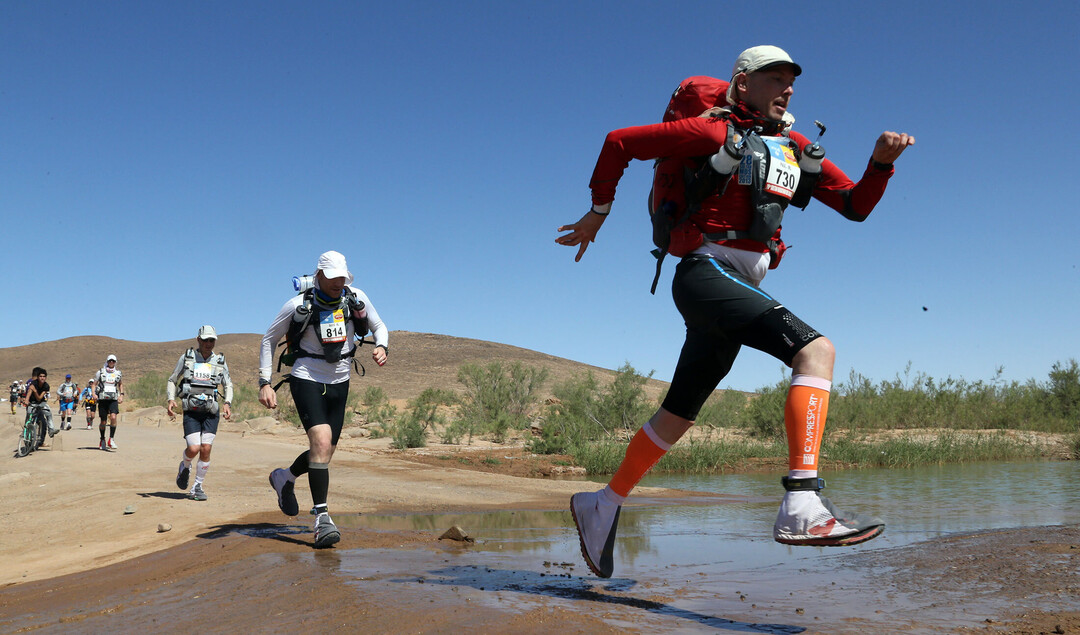
SEOUL — For most recreational runners, aging brings an inevitable dread of deteriorating knee cartilage. Yet, according to a veteran orthopedic specialist with a staggering endurance resume—117 full marathons, 85 100-kilometer ultramarathons, and 13 full-distance Ironman triathlons over 26 years—joint wear is rarely the primary culprit behind running-related injuries.

Instead, Dr. Hak-yoon Kim argues that the secret to running well into one’s 90s and 100s lies in cultivating muscles that are simultaneously powerful and pliable. When overworked muscles lose their elasticity and stiffen, they lose their shock-absorbing capacity, transferring damaging impact directly onto tendons, ligaments, and joints.

Ditch Static Holds for Uphill Power

While social media fitness trends frequently promote isometric knee exercises—tensing the leg without moving the joint—Dr. Kim notes that these static routines are best reserved for post-surgical rehabilitation rather than active runners. Sitting on a gym machine to lift heavy weights can similarly create bulky, rigid muscle tissue ill-suited for distance running.

To build functional, resilient strength, he recommends two primary methods:

High-Repetition Resistance: Lifting moderate weights slowly for roughly 20 repetitions, selecting a load where fatigue sets in around the 18th rep.
Hill Repeats: Running uphill naturally forces the lower body to generate explosive power while maintaining dynamic flexibility, translating directly to road performance.

Preventing Microtears and "Over-Massaging"

High-mileage training inevitably creates microscopic tears in muscle fibers. Without proper recovery, these microtears cause muscles to shorten and harden—a condition known as contracture. Runners must pay special attention to the gastrocnemius (calf) and the hamstrings, the latter being particularly vulnerable because it spans both the hip and knee joints.

To safely lengthen these tissues, Dr. Kim advises against bouncing or aggressive pulling, which triggers a protective contraction reflex. Instead, runners should ease into a stretch for 15 to 20 seconds, exhaling deeply to gain an extra millimeter or two of range at the very end.

When using foam rollers or massage guns on tight hamstrings, gentler is better. Aggressive deep-tissue pounding that leaves bruises actually ruptures blood vessels, inflicting fresh trauma on already fatigued tissue.

Rethinking Warm-Ups and Ice Baths

Preparation and recovery routines also require a strategic shift. Before a race, skipping passive heat packs in favor of a brisk three-to-four-minute warm-up jog elevates core muscle temperature far more effectively prior to stretching.

After crossing the finish line, contrasting hot and cold water therapies work well for large muscle groups like the quads and calves. However, ligaments around the ankles and knees should never be exposed to heat. While icing these joints is essential to calm inflammation, leaving an ice pack on for the traditional 20 minutes risks cold-induced tissue damage.

Dr. Kim’s rule of thumb for joint recovery is strict moderation: apply ice for no more than five to seven minutes at a time, take a 30-minute break, and repeat the cycle as needed. By pairing smart recovery with supple, conditioned muscles, lifelong running becomes an achievable reality rather than a recipe for injury.

[Copyright (c) Global Economic Times. All Rights Reserved.]

  • #Cherry Garden
  • #HalalFood
  • #Halal
  • #Petlife
  • #Halalhorizone
  • #Hormuz Impasse
  • #Joseon
  • #globaleconomictimes
  • #micore
Global Economic Times Reporter
Reporter Page

Popular articles

  • World Citizens are Flying Directly to Busan... The Era of 4 Million Foreigners is Just Around the Corner

  • Restoring Hearing with Genes, Cochlear Implants with Robots: Where Does Hearing Loss Treatment Stand Today?

  • Cold Wave and Autumn Chill Hit Korea on "Ipdong": Gangwon -6°C, Seoul Real-Feel -4°C… Rain and Snow Expected in Central Regions on Sunday

I like it
Share
  • Facebook
  • X
  • Kakaotalk
  • LINE
  • BAND
  • NAVER
  • https://globaleconomictimes.kr/article/1065570182604115 Copy URL copied.
Comments >

Comments 0

Weekly Hot Issue

  • Adding White Button Mushrooms to Noodle Dough May Support Prostate Cancer Care
  • South Korea’s Top Conglomerates Bet on Continuity and Tech Talent Amid AI Disruption
  • Busan Wins Grand Prize in "K-Medical Tourism Global Marketing" for Third Consecutive Year!
  • Five Original Stage Productions to Premiere Across Gangwon Province This November
  • Gangwon MICE Proves Competitiveness at Korea MICE Expo, Wins Two Categories at Korea MICE Awards
  • Warning Against Unauthorized Entry into Restricted Tetrapod Zones at Sokcho and Samcheok Ports

Most Viewed

1
South Korea and Ethiopia Sign Trilateral MOU to Introduce Liquid-Based Cytology (LBC) Technology for Cervical Cancer Diagnosis
2
Restoring Hearing with Genes, Cochlear Implants with Robots: Where Does Hearing Loss Treatment Stand Today?
3
Cold Wave and Autumn Chill Hit Korea on "Ipdong": Gangwon -6°C, Seoul Real-Feel -4°C… Rain and Snow Expected in Central Regions on Sunday
4
"Swap Snacks for Two Handfuls of Pecans?": How Triglycerides Dropped After 12 Weeks
5
AI Tsunami: Cutting Jobs Despite Record Profits—Microsoft Announces Third Round of Laydowns This Year
체리가든 스토리
nutri huevos
로타리
동포저널

Hot Issue

Tokyo Faces Diplomatic Isolation Concerns Following Shenzhen APEC Summit

U.S. Tightens AI Chip Export Controls as Security Warnings and Diplomatic Rifts Deepen

Alphabet Chairman John Hennessy: "Entry-Level Legal Document Processing Will Be Completely Replaced by AI"

Fashion Runway Show 2026

Let’s recycle the old blankets in Jeju Island’s closet instead of incinerating them.

Global Economic Times
korocamia@naver.com
CEO : LEE YEON-SIL
Publisher & Editor : KO YONG-CHUL
Registration number : Seoul, A55681
Registration Date : 2024-10-24
Youth Protection Manager: KO YONG-CHUL
Singapore Headquarters
5A Woodlands Road #11-34 The Tennery. S'677728
Korean Branch
Phone : +82(0)10 4724 5264
#304, 6 Nonhyeon-ro 111-gil, Gangnam-gu, Seoul
Copyright © Global Economic Times All Rights Reserved
  • News K
  • 반달곰 프로젝트
  • 광고문의
Search
Category
  • All articles
  • Synthesis
  • World
  • Business
  • Industry
  • ICT
  • Distribution Economy
  • Well+Being 
    • 전체
    • Pet Life
    • Halal Horizon
  • Travel
  • Eco-News
  • Education
  • Korean Wave News
  • Opinion
  • Arts&Culture
  • Sports
  • People & Life 
    • 전체
    • International Student Report
    • With Ambassador
  • Column 
    • 전체
    • Cho Kijo Column
    • Cherry Garden Story
    • Ko Yong-chul Column
    • Kim Bong-seon's Photo Column
    • Kim Seul-Ong Column
    • Lee Yeon-sil Column
    • Professor Lee Soo-young’s Life Essays
  • Photo News
  • New Book Guide
  • Overseas Koreans
  • Multicultural News