![[등록] 2026-09-01 15:48:31](/support/_updata/banner2/tl181982910_6749.png)


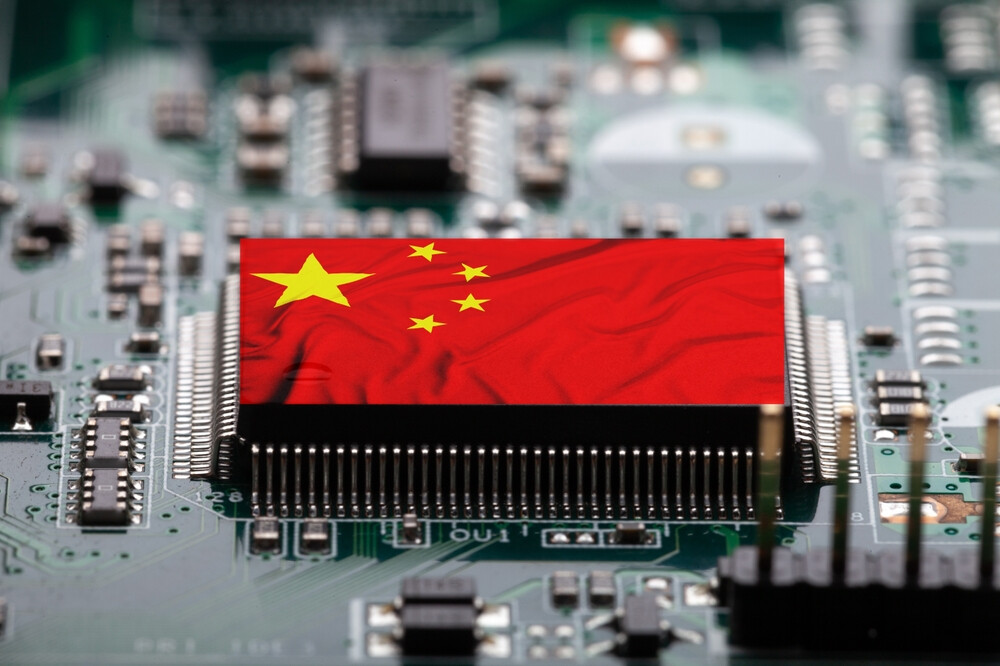
Seoul, South Korea - As the United States administration under President Donald Trump is expected to announce tariffs on semiconductor products on April 14th (local time), projections indicate that a high tariff rate could further accelerate the self-reliance efforts of Chinese semiconductor companies, including Huawei. Should China retaliate with counter-tariffs, the import of US-made chips and equipment would likely face restrictions, consequently boosting demand for domestically produced alternatives.
According to industry sources on April 13th, Naura Technology Group, China's leading semiconductor equipment manufacturer, recently projected a substantial increase in its first-quarter (January-March) revenue and profit, anticipating growth of approximately 50% year-on-year during its earnings briefing. This forecast surpasses the company's impressive annual performance in the previous year, where revenue and profit grew by 35.1% and 44.2% respectively compared to the year before, suggesting an even more rapid growth trajectory for the current year. Naura is a comprehensive semiconductor equipment company involved in the majority of key processes, including etching, deposition, and cleaning.
Naura competes with major US semiconductor equipment firms such as Applied Materials (AMAT) and Lam Research. Notably, over 90% of Naura's revenue is generated within China. In 2023, Naura entered the top 10 global equipment suppliers for the first time, ranking eighth based on revenue, thereby establishing its presence in the global semiconductor industry. Last year, the company further ascended to the sixth position. Advanced Micro-Fabrication Equipment China (AMEC), Naura's primary domestic competitor, is also experiencing rapid growth driven by local demand. AMEC's revenue increased by 44.7% year-on-year in the past year. Jeon Byeong-seo, head of the China Economic and Financial Research Institute, commented, "As the US-China conflict intensifies, the self-reliance of Chinese semiconductors and equipment, replacing the existing US supply chain, will only accelerate."
Building upon their advancements in semiconductor equipment, China is also expediting its self-sufficiency in semiconductor design and manufacturing. The alliance between fabless (design) giant Huawei and foundry (contract manufacturing) leader SMIC has managed to circumvent US sanctions on advanced semiconductors, producing 7-nanometer and 5-nanometer chips, thereby posing a threat to competitors in South Korea and the United States. The increasingly stringent US regulations against China are proving to be a boon for these companies by fostering greater reliance on domestic demand. According to the Financial Times (FT), the yield rate (proportion of usable products) of Huawei chips manufactured by SMIC, which was a dismal 20% last year, has risen to 40% this year. A semiconductor yield rate of 60% or higher is typically considered profitable.
The Chinese government is channeling significant financial resources to ensure that domestic companies can continue to develop and produce products and equipment, even if immediate profitability is low. Huawei's business report released on March 31st revealed that its research and development (R&D) investment reached 179.7 billion yuan (approximately 36 trillion Korean won) last year, exceeding Samsung Electronics' 35.02 trillion won investment by about 1 trillion won. Huawei's annual R&D expenditure has surpassed Samsung's for ten consecutive years since 2016, with the cumulative difference amounting to 32 trillion won.
Furthermore, the Chinese government is leveraging the justification of retaliating against US tariffs to introduce other forms of regulations that favor domestic enterprises. For instance, the National Development and Reform Commission of China recently implemented regulations mandating the use of energy-efficient chips by domestic companies, effectively placing Nvidia's chips on a list of items to be used sparingly.
China's growing semiconductor self-reliance poses a risk to South Korean companies, particularly in the memory sector, where South Korea holds a strong competitive edge. China's Changxin Memory Technologies (CXMT) is rapidly catching up, mass-producing advanced products such as Double Data Rate (DDR) 5 and High Bandwidth Memory (HBM), leading to a decline in China's share of South Korea's semiconductor exports to below 40% last year. Equipment manufacturers are also struggling due to the significant impact on their sales in China.
Cha Sang-kyun, Professor Emeritus and founding director of the Graduate School of Data Science at Seoul National University, stated, "China is catching up technologically in many areas, and South Korea's foothold in the Chinese semiconductor market will continue to shrink. We need to formulate survival strategies now, even considering a scenario where the Chinese market disappears."
[Copyright (c) Global Economic Times. All Rights Reserved.]