• 2026.03.07 (Sat)
  • All articles
  • LOGIN
  • JOIN
Global Economic Times
fashionrunwayshow2026
  • Synthesis
  • World
  • Business
  • Industry
  • ICT
  • Distribution Economy
  • Well+Being
  • Travel
  • Eco-News
  • Education
  • Korean Wave News
  • Opinion
  • Arts&Culture
  • Sports
  • People & Life
    • International Student Report
    • With Ambassador
  • Column
    • Cho Kijo Column
    • Cherry Garden Story
    • Ko Yong-chul Column
    • Kim Seul-Ong Column
    • Lee Yeon-sil Column
  • Photo News
  • New Book Guide
MENU
 
Home > Synthesis

South Korea: One in Five Listed Companies Classified as 'Marginal'

Global Economic Times Reporter / Updated : 2025-02-06 07:08:31
  • -
  • +
  • Print

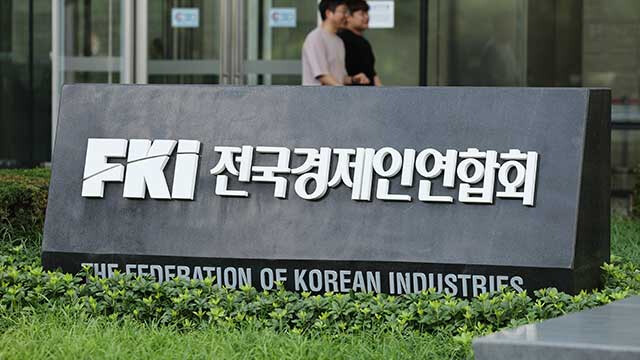
According to a recent analysis by the Korea Economic Research Institute (KERI), one in five listed companies in South Korea are classified as "marginal firms," meaning they are unable to cover their loan interest with their operating profits.

The analysis, which compared listed companies in South Korea with those in five major countries (the United States, Japan, Germany, the United Kingdom, and France), found that South Korea's proportion of marginal firms was 19.5% as of the third quarter of last year. This was the second highest proportion among the six countries, following the United States at 25.0%.

A marginal firm is defined as a company whose interest coverage ratio (operating profit divided by interest expense) has been below 1 for three consecutive years.

The sectors with the highest proportion of marginal firms in South Korea were real estate (33.3%), professional, scientific, and technical services (24.7%), wholesale and retail trade (24.6%), and information and communication (24.2%).

South Korea also had the second highest proportion of "temporarily marginal firms," which are companies with an interest coverage ratio of less than 1 in the current year. The United States had the highest proportion at 37.3%, followed by South Korea at 36.4%.

The increase in the proportion of marginal firms in South Korea was also the second largest among the six countries, with a 12.3% point increase from 7.2% in 2016. This compares to a 15.8% point increase in the United States.

The number of marginal firms in South Korea increased from 163 in 2016 to 440 in the third quarter of last year.

The sectors with the largest increases in the proportion of marginal firms in South Korea were professional, scientific, and technical services (20.7%p), information and communication (19.7%p), manufacturing (10.7%p), and wholesale and retail trade (9.6%p).

The KERI noted that the increase in marginal firms was greater for KOSDAQ-listed companies than for KOSPI-listed companies, suggesting that smaller businesses are being hit harder by the economic downturn.

The KERI called on the government to strengthen institutional support for businesses and to refrain from discussing revisions to the Commercial Act that are not in line with global standards.

[Copyright (c) Global Economic Times. All Rights Reserved.]
Global Economic Times Reporter
Reporter Page

Popular articles

  • A New Milestone for Ukraine’s Post-War Reconstruction: The Birth of ISVP

  • About mexican food 

  • War Memorial Association Launches Youth Education Program Idea Contest

I like it
Share
  • Facebook
  • X
  • Kakaotalk
  • LINE
  • BAND
  • NAVER
  • https://globaleconomictimes.kr/article/1065564426481319 Copy URL copied.
Comments >

Comments 0

Weekly Hot Issue

  • L’Oréal Korea and Naver Forge Strategic Partnership to Revolutionize AI-Driven Beauty Commerce
  • Domino’s Korea Embraces "Authentic Stateside Flavors" with New American Classic Pizza Duo
  • K-Inner Beauty Dominates Japan: Sales Surge 90% on Qoo10 Japan
  • Sempio and KFRI Join Forces to Pioneer High-Value Food Technologies
  • LG H&H Expands Japanese Footprint: Vegan Brand 'Freshian' Debuts at Biople by CosmeKitchen
  • 29CM’s '29HOME WEEK' Shatters Records: Home & Interior Sales Triple in 10 Days

Most Viewed

1
Adwa’s Echo in Korea: A Shared Story of Dignity and Freedom
2
2026, The Grand Year of Hangeul Celebration — The River of History Where Five Streams Converge
3
A New Milestone for Ukraine’s Post-War Reconstruction: The Birth of ISVP
4
Mexican currency and the powerful history behind its designs
5
Revised and Expanded Edition of ‘Failure of Negotiations with North Korea: Truth and Solutions’ Published
광고문의
임시1
임시3
임시2

Hot Issue

Hanwha Aerospace Solidifies Baltic Stronghold with $330M Defense Investment in Estonia

From $20 to $400: The Explosive "Vintage Digicam" Craze Gripping Korea’s Gen Z and Millennials

Yujin Robot Evolves Industrial Automation: Integrating Autonomous Mobility and Collaborative Robotics

SK On Slashes 37% of US Workforce Amid Global EV Slowdown

Let’s recycle the old blankets in Jeju Island’s closet instead of incinerating them.

Global Economic Times
korocamia@naver.com
CEO : LEE YEON-SIL
Publisher : KO YONG-CHUL
Registration number : Seoul, A55681
Registration Date : 2024-10-24
Youth Protection Manager: KO YONG-CHUL
Singapore Headquarters
5A Woodlands Road #11-34 The Tennery. S'677728
Korean Branch
Phone : +82(0)10 4724 5264
#304, 6 Nonhyeon-ro 111-gil, Gangnam-gu, Seoul
Copyright © Global Economic Times All Rights Reserved
  • 에이펙2025
  • APEC2025가이드북TV
  • 독도는우리땅
Search
Category
  • All articles
  • Synthesis
  • World
  • Business
  • Industry
  • ICT
  • Distribution Economy
  • Well+Being
  • Travel
  • Eco-News
  • Education
  • Korean Wave News
  • Opinion
  • Arts&Culture
  • Sports
  • People & Life 
    • 전체
    • International Student Report
    • With Ambassador
  • Column 
    • 전체
    • Cho Kijo Column
    • Cherry Garden Story
    • Ko Yong-chul Column
    • Kim Seul-Ong Column
    • Lee Yeon-sil Column
  • Photo News
  • New Book Guide
  • Multicultural News
  • Jobs & Workers