• 2026.10.22 (Thu)
  • All articles
  • LOGIN
  • JOIN
Global Economic Times
[등록] 2026-09-01 15:48:31
  • Synthesis
  • World
  • Business
  • Industry
  • ICT
  • Distribution Economy
  • Well+Being
    • Pet Life
    • Halal Horizon
  • Travel
  • Eco-News
  • Education
  • Korean Wave News
  • Opinion
  • Arts&Culture
  • Sports
  • People & Life
    • International Student Report
    • With Ambassador
  • Column
    • Cho Kijo Column
    • Cherry Garden Story
    • Ko Yong-chul Column
    • Kim Seul-Ong Column
    • Lee Yeon-sil Column
  • Photo News
  • New Book Guide
MENU
 
Home > Distribution Economy

GIC and Temasek Deny Allegations of Pressuring Indonesia Stock Market Downgrade... Background Amid MSCI Classification Crisis

LEE YEON SIL Reporter / Updated : 2026-10-22 07:00:50
  • -
  • +
  • Print

Singapore’s prominent sovereign wealth funds, GIC and Temasek, have strongly denied allegations that they pressured index provider Morgan Stanley Capital International (MSCI) to downgrade Indonesia's stock market classification. The controversy stemmed from claims made by a former high-ranking Indonesian official, unfolding as the Indonesian stock market faces an existential crossroads due to transparency issues and regulatory shortcomings.

The incident began on October 20 when former Indonesian Trade Minister Muhammad Lutfi accused Singaporean investors, including GIC and Temasek, of orchestrating a downgrade in Indonesia's market status to induce market panic and subsequently purchase undervalued blue-chip Indonesian stocks at bargain prices.

Singaporean authorities immediately drew a line. A GIC spokesperson countered that the firm's investment decisions are based on the fundamentals of individual companies and assets rather than index classifications or macroeconomic perspectives. GIC emphasized that it has invested in the Indonesian market for over 30 years and plans to continue identifying investment destinations with superior risk-adjusted returns. Temasek’s Head of Southeast Asia, Fock Wai Hoong, also dismissed the allegations as completely groundless and patently false, making it clear that neither the institution nor individuals acting in a personal capacity have ever contacted MSCI to influence decisions regarding regional securities markets.

The root cause of this conflict stems from a warning issued by MSCI on October 15. MSCI warned that it is considering reclassifying Indonesia out of its global indices or moving it to a "Standalone" market status, citing a lack of transparency in share ownership structures, concerns over insider trading, and inadequate regulatory enforcement. MSCI annually evaluates countries for index inclusion based on economic development levels, market size, liquidity, and accessibility. If Indonesia loses its Emerging Market status and is relegated to a Standalone market—joining countries like Argentina, Lebanon, and Zimbabwe—a massive outflow of global passive funds tracking MSCI indices would be inevitable, dealing a severe blow to the broader economy.

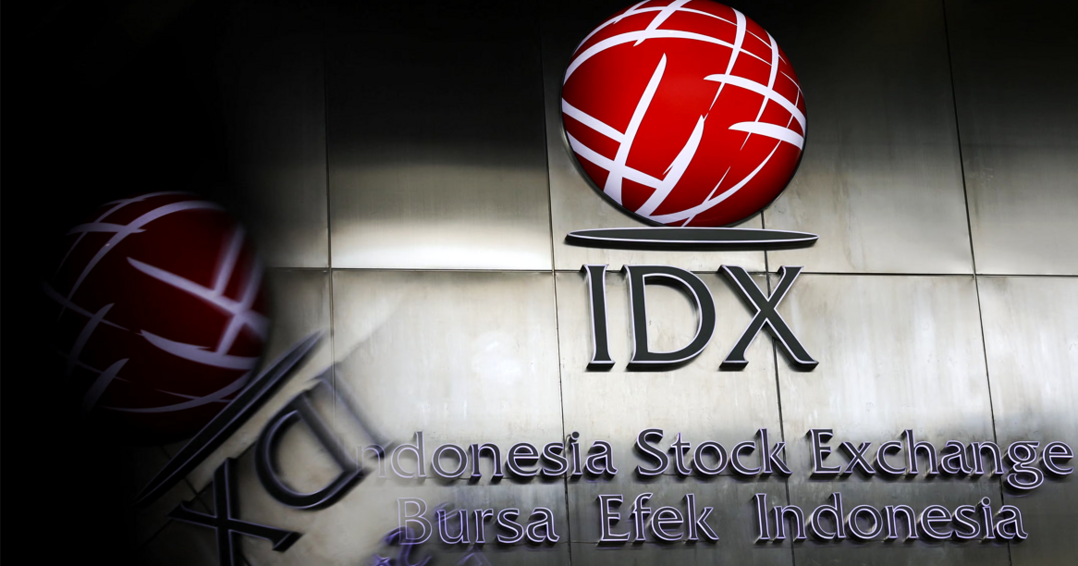
In fact, immediately following MSCI's warning, the Jakarta Composite Index suffered a severe shock, plunging by more than 14 percent between October 16 and 19. However, the market showed a partial recovery after the Indonesia Stock Exchange (IDX) unveiled high-intensity self-rescue measures to defend the index. IDX Director Jeffrey Hendrik defended MSCI's independence, emphasizing that global index providers operate fairly. Following a video conference with MSCI, the IDX announced that to prevent expulsion from the index, listed companies with excessively concentrated controlling shareholder stakes would be removed from flagship indices. Companies affected by this measure include major large-cap firms such as Dian Swastatika Sentosa and Barito Renewables Energy.

This is not the first time the Indonesian stock market has received a warning from MSCI. As early as January, it was warned that it could be downgraded from an emerging market to a frontier market. At the time, the Indonesian exchange pursued institutional improvements to boost liquidity, including lowering the minimum trading price from 50 rupiah to 1 rupiah and doubling the free-float ratio to 15 percent.

Experts analyze that this situation goes beyond a simple index rating adjustment, serving as a signal demanding structural reforms to enhance the reliability and transparency of trading mechanisms. As MSCI plans to collect feedback from market participants until April 30, 2027, and announce its final decision on June 30 of the same year, attention is focused on whether Indonesian financial authorities and the exchange can achieve substantive market cleansing measures during the remaining period.

[Copyright (c) Global Economic Times. All Rights Reserved.]

  • #Cherry Garden
  • #HalalFood
  • #Halal
  • #Petlife
  • #Halalhorizone
  • #Hormuz Impasse
  • #globaleconomictimes
  • #micorea
  • #mykor
LEE YEON SIL Reporter

Popular articles

  • Gwangju Koryoin Village to Host 'Koryoin Day' for Local Coexistence

  • Bridging Dreams Across Borders: Hanyang University’s International Engineering Students Carry the Flame of National Development

  • Seoul Cracks Down on Unregistered Home-Based Pet-Sitting Services amid Safety Concerns

I like it
Share
  • Facebook
  • X
  • Kakaotalk
  • LINE
  • BAND
  • NAVER
  • https://globaleconomictimes.kr/article/1065564021247600 Copy URL copied.
Comments >

Comments 0

Weekly Hot Issue

  • VN-Index Surges Past 1,700 Mark, Boosted by Vingroup's Rally
  • The Light and Shadow of Cloud Giants: The Truth Behind Anthropic's 100 Trillion Won H1 Net Loss and the Direction of the AI Market
  • Ambani’s Jio Platforms Sells Out on Day One in India’s Largest-Ever IPO, Drawing Global Capital
  • OCBC Becomes First Singaporean Bank to Introduce Malaysian Ringgit to Multi-Currency Accounts
  • Singapore and the United Arab Emirates Join Hands for Cooperation in Energy, Public Health, and Water Resources... Launch Negotiations for a Comprehensive Economic Partnership Agreement (CEPA)
  • Buenos Aires’ Food and Beverage Industry: How to Weather the Storm of Time

Most Viewed

1
AMD CEO Lisa Su Meets with Samsung and SK Hynix Chiefs, Sparking HBM Partnership Hopes
2
Henri Kagan and Kenso Soai Awarded the Nobel Prize in Chemistry
3
Deploying Drones to Inspect Sites and Support Administrative Tasks
4
Government Unveils 1,000 Trillion Won "K-GX" Initiative to Drive Decarbonization and Green Tech
5
Class Action Lawsuit Against Coupang Over Data Breach Voluntarily Dismissed to Refile in New York Southern District Court
체리가든 스토리
nutri huevos
로타리
동포저널

Hot Issue

Is the AI Investment Boom Fading? Wall Street Shaken by South Korean AI Startup’s Market Plunge

Government Fails to Collect Over 38 Trillion Won in Revenue Last Year, Surging by 12 Trillion Won in Just One Year

"Are We Only Making Dramas with AI?"… China Stirred Up by 55% Token Controversy

Fashion Runway Show 2026

Let’s recycle the old blankets in Jeju Island’s closet instead of incinerating them.

Global Economic Times
korocamia@naver.com
CEO : LEE YEON-SIL
Publisher : KO YONG-CHUL
Registration number : Seoul, A55681
Registration Date : 2024-10-24
Youth Protection Manager: KO YONG-CHUL
Singapore Headquarters
5A Woodlands Road #11-34 The Tennery. S'677728
Korean Branch
Phone : +82(0)10 4724 5264
#304, 6 Nonhyeon-ro 111-gil, Gangnam-gu, Seoul
Copyright © Global Economic Times All Rights Reserved
  • 향기네무료급식
  • APEC2025
  • 반달곰 프로젝트
Search
Category
  • All articles
  • Synthesis
  • World
  • Business
  • Industry
  • ICT
  • Distribution Economy
  • Well+Being 
    • 전체
    • Pet Life
    • Halal Horizon
  • Travel
  • Eco-News
  • Education
  • Korean Wave News
  • Opinion
  • Arts&Culture
  • Sports
  • People & Life 
    • 전체
    • International Student Report
    • With Ambassador
  • Column 
    • 전체
    • Cho Kijo Column
    • Cherry Garden Story
    • Ko Yong-chul Column
    • Kim Seul-Ong Column
    • Lee Yeon-sil Column
  • Photo News
  • New Book Guide
  • Overseas Koreans
  • Multicultural News