![[등록] 2026-09-01 15:48:31](/support/_updata/banner2/tl181982910_6749.png)


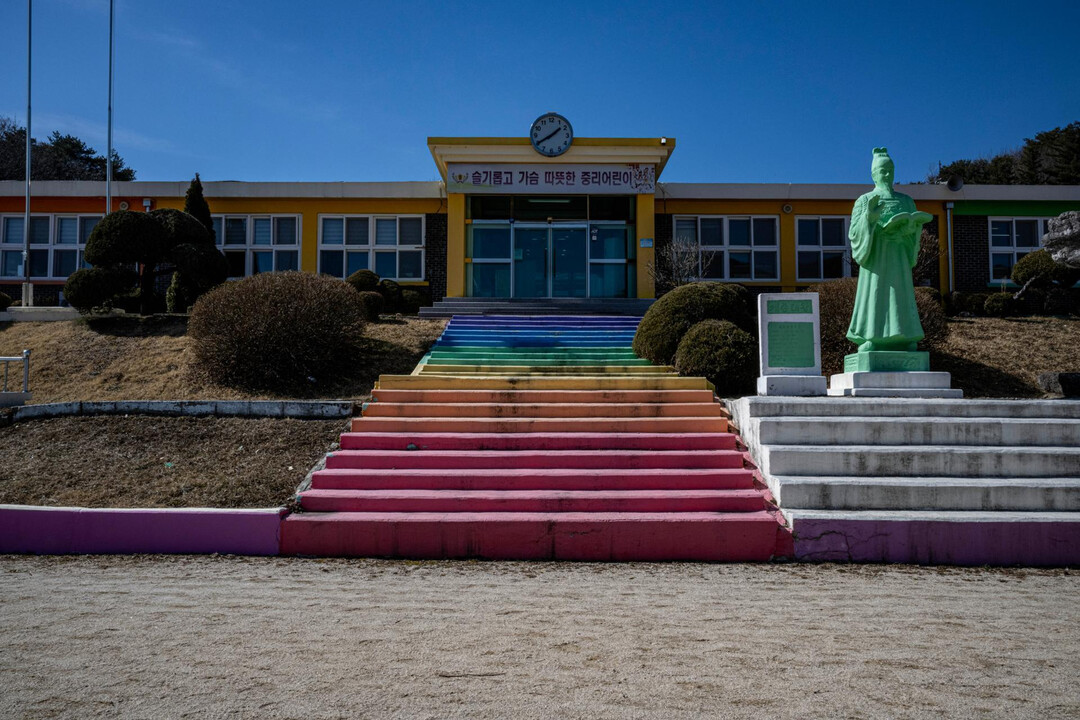
SEOUL — Over the past 26 years, South Korea has witnessed a dramatic restructuring of its educational landscape, marked by a sharp decline in student numbers, shrinking school sizes, and a pronounced concentration of higher education in the capital area.
According to the 15th issue of "Reading Our Education through Data," published on the 5th by the Ministry of Education and the Korean Educational Development Institute (KEDI), the fundamental statistics of the nation's schools have shifted significantly between 2000 and 2026.
Sharp Drop in K-12 Student Numbers and Smaller Classes
At the elementary school level, the average number of students per school dropped by 53.0%, falling from 763.2 students in 2000 to 358.5 students this year. The average number of students per class plummeted from 35.8 to 18.6, while the number of students per teacher decreased by 59.6% from 28.7 to 11.6. Conversely, the number of teachers per school rose by 16.2% from 26.6 to 30.9.
Class sizes have transformed profoundly. Elementary classes with 20 or fewer students surged from 11.9% to 48.8%. In stark contrast, large classes of 36 or more students—which accounted for 68.9% of all classes in 2000—virtually vanished, making up just 0.04% (46 classes) this year.
Similar downward trends were observed across middle and high schools:
-Middle Schools: The average number of students per school decreased by 40.5% (from 681.3 to 405.6), and students per class dropped from 38.0 to 24.5. Classes with over 36 students dropped sharply from 71.6% to 0.3%.
-High Schools: The average number of students per school fell by 49.6% (from 1,058.5 to 533.5), and students per class declined from 42.7 to 23.1. Classes with 36+ students decreased from 87.4% to 0.6%.
Deeper Declines in Non-Capital Regions
While the total number of schools increased in both the Seoul metropolitan area and non-metropolitan regions, student populations fell everywhere—with non-metropolitan areas experiencing a much steeper decline.
-Elementary: Non-metropolitan student numbers dropped by 48.0% (from 2.12 million to 1.1 million), compared to a 41.2% decline in the capital area.
-Middle Schools: Non-metropolitan regions saw a 33.4% decrease, outpacing the capital area's 21.5% drop.
-High Schools: Non-metropolitan student numbers fell by 44.4%, higher than the 30.3% reduction in the capital region.
Higher Education: Junior Colleges Shrink, Capital Concentration Deepens
In higher education, the trajectories of junior colleges and four-year universities diverged.
Junior colleges contracted significantly. The number of junior colleges decreased from 158 to 126, and total enrolled students plummeted by 44.7% from 913,273 to 504,897. Non-metropolitan junior colleges were hit hardest, seeing a 55.5% drop in enrollment. As a result, the proportion of junior college students in the capital region rose by 12.7 percentage points to 47.4%.
Meanwhile, four-year universities saw marginal growth overall—with institutions increasing from 191 to 195 and enrollments rising slightly by 2.0% to 1,894,516. However, this growth was heavily skewed toward the capital. University enrollment in the Seoul metropolitan area grew by 18.7%, while non-metropolitan universities experienced a 7.7% decline. Consequently, the proportion of university students concentrated in the capital area climbed from 36.9% to 42.9%.
KEDI noted that while the shrinking school-age population has led to smaller school structures and the virtual disappearance of overcrowded classrooms in K-12 education, higher education is grappling with the severe contraction of junior colleges and a capital-centric polarization in four-year universities.
[Copyright (c) Global Economic Times. All Rights Reserved.]