• 2026.08.12 (Wed)
  • All articles
  • LOGIN
  • JOIN
Global Economic Times
fashionrunwayshow2026
  • Synthesis
  • World
  • Business
  • Industry
  • ICT
  • Distribution Economy
  • Well+Being
  • Travel
  • Eco-News
  • Education
  • Korean Wave News
  • Opinion
  • Arts&Culture
  • Sports
  • People & Life
    • International Student Report
    • With Ambassador
  • Column
    • Cho Kijo Column
    • Cherry Garden Story
    • Ko Yong-chul Column
    • Kim Seul-Ong Column
    • Lee Yeon-sil Column
  • Photo News
  • New Book Guide
MENU
 
Home > Distribution Economy

South Korea Sees Surge in Subprime Lending Amid Tightening Credit

Global Economic Times Reporter / Updated : 2024-11-12 06:22:51
  • -
  • +
  • Print


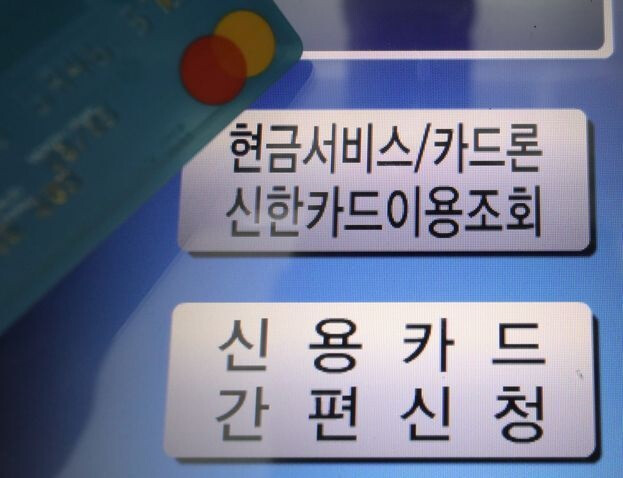
Seoul, South Korea – South Korea is experiencing a surge in subprime lending as households turn to non-bank financial institutions for loans amid tightening credit conditions imposed by commercial banks.

According to financial industry sources, loans from credit card companies and capital companies, including credit card loans, cash advances, and personal loans, increased by more than 900 billion won last month. Additionally, insurance policy loans, often used by individuals in urgent need of cash, saw a 300 billion won increase.

This significant surge in subprime lending, totaling over 1.5 trillion won, marks the largest increase since July 2021 when KakaoBank's IPO led to a surge in demand for loans.

Reasons for the Surge

The surge in subprime lending can be attributed to several factors:

Tightening credit conditions in commercial banks: As commercial banks tighten their lending standards, borrowers are turning to non-bank lenders for credit.
Aggressive marketing by non-bank financial institutions: Credit card companies and capital companies have been aggressively marketing their products to attract new borrowers.
Economic hardship: Many households are facing financial difficulties due to the economic downturn, leading them to seek additional credit.

Regulatory Response

Concerned about the potential risks associated with the rapid growth of subprime lending, the South Korean financial authorities are taking steps to monitor the situation. The Financial Services Commission (FSC) plans to conduct on-site inspections of rural credit unions and the National Agricultural Cooperative Federation to assess their lending practices, particularly regarding group loans for new apartment complexes.

Focus on Group Loans

The FSC is paying close attention to group loans, which are extended to a group of borrowers, such as those purchasing apartments in a new development. These loans are often offered with more lenient terms and conditions compared to individual loans.

The upcoming completion of the Olympic Park Foreon apartment complex, a massive redevelopment project in Seoul, is expected to lead to a surge in group loans. The FSC is concerned that the competitive nature of the lending market for this project could lead to lax underwriting standards.

Key Concerns

The rapid growth of subprime lending raises concerns about:

Financial stability: A sudden increase in subprime lending could pose risks to financial stability if borrowers are unable to repay their loans.
Household debt: The surge in subprime lending could contribute to the overall increase in household debt, which is already a major concern for policymakers.
Inequality: Subprime borrowers often have limited access to credit and may be charged higher interest rates, exacerbating income inequality.

Conclusion

The surge in subprime lending in South Korea highlights the challenges faced by policymakers in balancing the need to support economic growth with the need to maintain financial stability. As the government takes steps to address the risks associated with subprime lending, it is essential to strike a balance between protecting borrowers and ensuring the health of the financial system.

[Copyright (c) Global Economic Times. All Rights Reserved.]

Global Economic Times Reporter
Reporter Page

Popular articles

  • Planting Hope: Ethiopia’s Green Legacy and the Power of National Transformation

  • OpenAI Rebounds in Secondary Market as Valuation Surges 20% in Three Months

  • Google Cloud Deploys ‘Gemini Enterprise’ to Samsung Electronics DX Division

I like it
Share
  • Facebook
  • X
  • Kakaotalk
  • LINE
  • BAND
  • NAVER
  • https://globaleconomictimes.kr/article/1065561666081431 Copy URL copied.
Comments >

Comments 0

Weekly Hot Issue

  • Riot Games Hosts Largest-Ever TFT Festival at The Hyundai Seoul to Launch 'Sylvan Secrets' Set
  • MINISTRY OF EMPLOYMENT AND LABOR DIRECTS IMMEDIATE EXPANSION OF REST FACILITIES AT GIMPO AIRPORT AFTER UNANNOUNCED HEATWAVE INSPECTION
  • XAVIS Secures Contract to Supply Advanced X-Ray Inspection Systems to European Lines of Global Food Sauce Brand
  • Emma Expands Collaboration with Interior Design Experts to Present Sleep Space Solutions
  • Trump Criticizes U.S. Congressional AI Regulations as Threat to Tech Industry
  • Memory Chips Become Dominant Force in Global Semiconductor Industry, Expected to Account for 60% of Total Market This Year

Most Viewed

1
Planting Hope: Ethiopia’s Green Legacy and the Power of National Transformation
2
Japan Estimated to Have Spent ¥6–7 Trillion in Fresh Yen-Buying Intervention as US Joint Action Hints Emerge
3
The 16th Ethiopia-gil World Festival & Meskel Festival
4
South Korea’s July Exports Hit Record $98.9 Billion as Semiconductor Supercycle Powers Surge
5
Lube Base Oil Emerges as Export Lifesaver for South Korean Refiners Amid Middle East Conflict
광고문의
임시1
임시3
임시2

Hot Issue

MINISTRY OF EMPLOYMENT AND LABOR DIRECTS IMMEDIATE EXPANSION OF REST FACILITIES AT GIMPO AIRPORT AFTER UNANNOUNCED HEATWAVE INSPECTION

Riot Games Hosts Largest-Ever TFT Festival at The Hyundai Seoul to Launch 'Sylvan Secrets' Set

Nable Communications Secures 5G Private Network Upgrade Deal with LG Uplus

Ansan City Pay-as-You-Throw Trash Bag Abandoned in Japan Sparks Controversy in Kamikochi

Fashion Runway Show 2026

Global Economic Times
korocamia@naver.com
CEO : LEE YEON-SIL
Publisher : KO YONG-CHUL
Registration number : Seoul, A55681
Registration Date : 2024-10-24
Youth Protection Manager: KO YONG-CHUL
Singapore Headquarters
5A Woodlands Road #11-34 The Tennery. S'677728
Korean Branch
Phone : +82(0)10 4724 5264
#304, 6 Nonhyeon-ro 111-gil, Gangnam-gu, Seoul
Copyright © Global Economic Times All Rights Reserved
  • 향기네무료급식
  • BCB부천방송
  • 반달곰 프로젝트
Search
Category
  • All articles
  • Synthesis
  • World
  • Business
  • Industry
  • ICT
  • Distribution Economy
  • Well+Being
  • Travel
  • Eco-News
  • Education
  • Korean Wave News
  • Opinion
  • Arts&Culture
  • Sports
  • People & Life 
    • 전체
    • International Student Report
    • With Ambassador
  • Column 
    • 전체
    • Cho Kijo Column
    • Cherry Garden Story
    • Ko Yong-chul Column
    • Kim Seul-Ong Column
    • Lee Yeon-sil Column
  • Photo News
  • New Book Guide
  • Multicultural News
  • Jobs & Workers