![[등록] 2026-09-01 15:48:31](/support/_updata/banner2/tl181982910_6749.png)


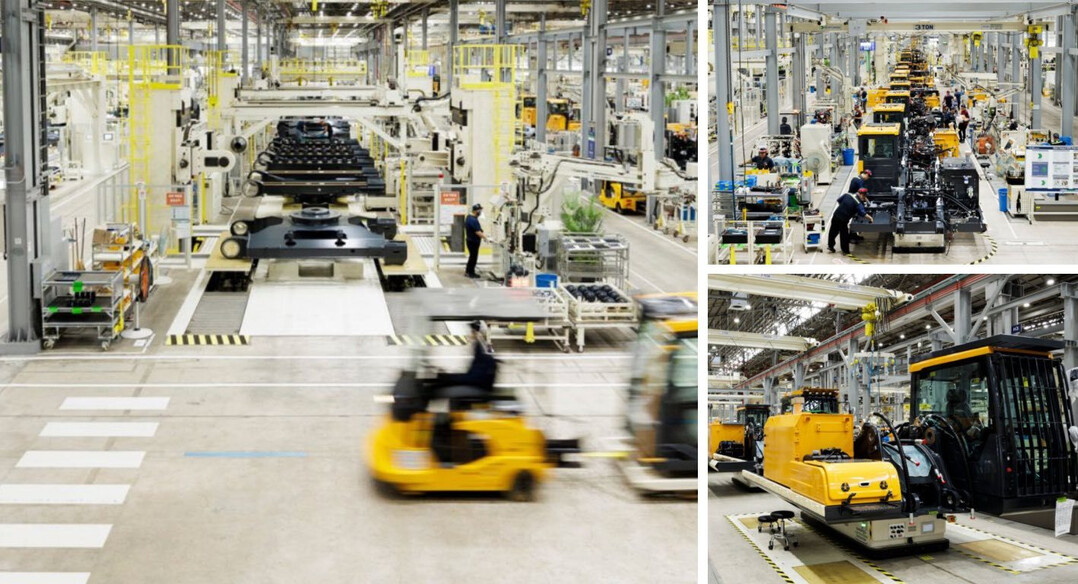
CHEONGJU, South Korea — In the rapidly evolving landscape of global energy infrastructure, HD Hyundai Electric is charting a new course. At its newly unveiled Distribution Campus in Cheongju, North Chungcheong Province, the conventional image of a factory floor—crowded with workers manually assembling parts—has been replaced by a seamless, data-driven ecosystem where autonomous robots and intelligent systems orchestrate the entire production cycle.
As artificial intelligence (AI) data centers drive an unprecedented global surge in electricity demand, the need for reliable, high-quality power distribution equipment has never been higher. HD Hyundai Electric’s 116.1 billion KRW (approximately 75.6 million USD) investment in this 85,420-square-meter facility is a strategic move to capitalize on this demand, positioning itself as a core hub for the global power equipment supply chain.
The Brain of the Factory: Total Data Integration
The heart of the Cheongju campus is its "Integrated Control Center." Unlike traditional manufacturing facilities where human managers oversee individual processes, the Cheongju plant operates as a cohesive, digital unit. Large screens display real-time metrics, ranging from incoming material tracking from over 80 suppliers to finished product inventory and total facility energy consumption.
"We have transitioned from a human-managed factory to a system-managed one," explains a lead engineer at the campus. "Every stage, from production and logistics to energy management, is interconnected through a single, continuous data flow. This allows us to predict demand, optimize workflows, and maintain consistent quality that human oversight alone cannot match."
Automation as the Standard, Not the Exception
Stepping onto the production floor, one is struck by the scarcity of manual labor for routine tasks. The facility employs a sophisticated logistics network consisting of 12 Autonomous Mobile Robots (AMRs), 10 Automated Case-handling Robots (ACRs), and 20 logistics shuttles.
When materials arrive from suppliers, they are automatically scanned and weighed. An 8-meter-high automated warehouse, managed by AI, stores these materials until needed. Two to three days before a scheduled assembly, depalletizing robots break down bulk supplies into "tote" units, which AMRs then deliver precisely to the relevant assembly lines. This system minimizes the time workers spend searching for components, allowing them to focus exclusively on value-added assembly and critical quality assurance.
The campus boasts an average production automation rate of 93%, with specific lines—such as the Molded Case Circuit Breaker (MCCB) line—reaching a staggering 95% automation level. In these sections, multi-joint robots perform intricate assembly tasks, while AI-powered vision systems inspect products for defects, ensuring that only those meeting the highest standards proceed to packaging.
Meeting the "Data Center" Standard
The production of vacuum circuit breakers (VCB) at the campus underscores the facility’s response to the global AI boom. These components serve as the "main gatekeepers" of power for massive AI data centers, where even a momentary failure can lead to catastrophic data loss and financial damage.
VCBs produced at the Cheongju campus undergo rigorous testing, including 200 consecutive switching operations and 80,000-volt withstand voltage tests. The production of the vacuum interrupter (VI), a core component, takes place in a semiconductor-grade cleanroom where robotic arms handle high-precision testing. By minimizing human intervention in these critical stages, the plant ensures uniform quality across every unit produced.
Future-Proofing for Global Competitiveness
The Cheongju campus has already increased HD Hyundai Electric’s annual production capacity for low- and medium-voltage circuit breakers by 70%, from 5 million to 8.5 million units. The company has set an ambitious target to expand this capacity to 13 million units by 2030.
Moreover, the shift to smart manufacturing has yielded tangible efficiency gains. The Overall Equipment Effectiveness (OEE)—a key measure of manufacturing productivity—has risen from 58% in the company’s previous facility to 75% at the Cheongju plant, with a long-term goal of reaching 90%.
"In the global data center market, speed and reliability are the ultimate currencies," says a company representative. "By consolidating our manufacturing and logistics into this smart base, we can offer lead times that are significantly more competitive than our rivals. We are not just building circuit breakers; we are building the infrastructure that powers the AI revolution."
As the world continues its rapid digital transformation, HD Hyundai Electric’s Cheongju campus serves as a compelling blueprint for the future of manufacturing. By integrating AI, robotics, and big data, the facility demonstrates that the next generation of industrial leadership will be defined by those who can successfully blend human expertise with the precision and scale of intelligent automation.
[Copyright (c) Global Economic Times. All Rights Reserved.]