![[등록] 2026-09-01 15:48:31](/support/_updata/banner2/tl181982910_6749.png)


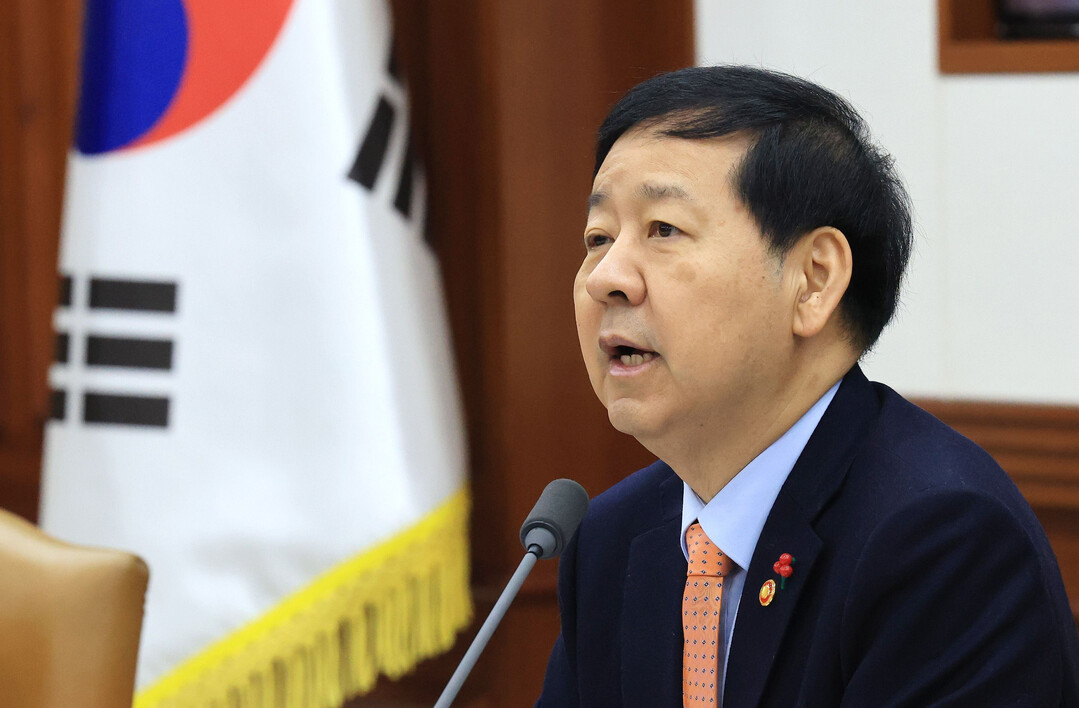
WASHINGTON D.C. — South Korea has unveiled an ambitious blueprint to position itself as the central pillar of the global artificial intelligence (AI) landscape. Deputy Prime Minister and Minister of Economy and Finance, Koo Yun-cheol, announced a strategic initiative to establish a “K-AI Hub,” suggesting that the nation could eventually serve as the official AI headquarters for the United Nations.
Speaking at a press conference with Korean correspondents in Washington D.C. on April 16, 2026, Minister Koo emphasized the necessity of building a world-class AI infrastructure within Korea. “We must establish Korea as a premier AI hub,” Koo stated. “In the long term, Korea is well-positioned to host the UN’s global AI operations, facilitating international cooperation and governance.”
Global Institutions Converge on Seoul
The vision for a Korean AI hub is already gaining significant international momentum. According to Minister Koo, the World Bank (WB) has already commenced work on establishing an AI-focused center in South Korea. Furthermore, agreements have been reached with six UN-affiliated organizations, the Asian Development Bank (ADB), and the Inter-American Development Bank (IDB) to set up their respective AI bases in the country.
The South Korean government plans to extend this collaborative network to the International Monetary Fund (IMF) and the European Bank for Reconstruction and Development (EBRD). This concentration of international financial and administrative bodies underscores the global confidence in Korea’s technological ecosystem.
The "SLM" Strategy: Efficiency Over Scale
A key highlight of Minister Koo’s announcement was a strategic shift in technological focus. While the United States continues to lead in Large Language Models (LLMs), which require astronomical amounts of land and power, South Korea will prioritize Small Language Models (SLMs).
“LLMs demand massive resources that pose a challenge for Korea’s geographical and energy constraints,” Koo explained. “Instead, our competitive edge lies in integrating SLMs—powered by proprietary data—into our world-leading manufacturing sectors, such as shipbuilding, automotive, and home appliances.”
He cited the shipbuilding industry as a prime example, noting that embedding specialized SLMs into South Korean vessels could revolutionize maritime technology and maintain the nation’s dominant market share through AI-driven innovation.
AI as a Solution for Global Economic Imbalances
Participating in the G20 Finance Ministers and Central Bank Governors Meeting, Minister Koo proposed AI as a remedy for persistent global economic challenges. He argued that AI can maximize economic efficiency and help resolve current account imbalances, which remain a primary agenda for the G20.
Regarding South Korea’s $350 billion investment plan in the United States, Koo confirmed that the process is proceeding smoothly based on established fact sheets, with no significant disagreements between the two nations.
Addressing Trade and Labor Issues
On a final note, the Minister addressed the U.S. Trade Representative’s (USTR) investigation under Section 301 regarding alleged forced labor in Korean salt farms. Koo reassured that the Ministry of Employment and Labor has provided comprehensive documentation and explanations to the U.S. authorities, expressing confidence that the issue will be resolved amicably without hindering bilateral trade relations.
Analysis and Outlook
Minister Koo’s “K-AI Hub” initiative represents a pragmatic yet bold departure from the "bigger is better" philosophy of AI development. By leveraging its manufacturing DNA and fostering deep ties with international organizations, South Korea aims to define a new niche in the AI era. If successful, Seoul could become not just a technological leader, but a diplomatic and administrative center for the future of global intelligence.
[Copyright (c) Global Economic Times. All Rights Reserved.]