![[등록] 2026-09-01 15:48:31](/support/_updata/banner2/tl181982910_6749.png)


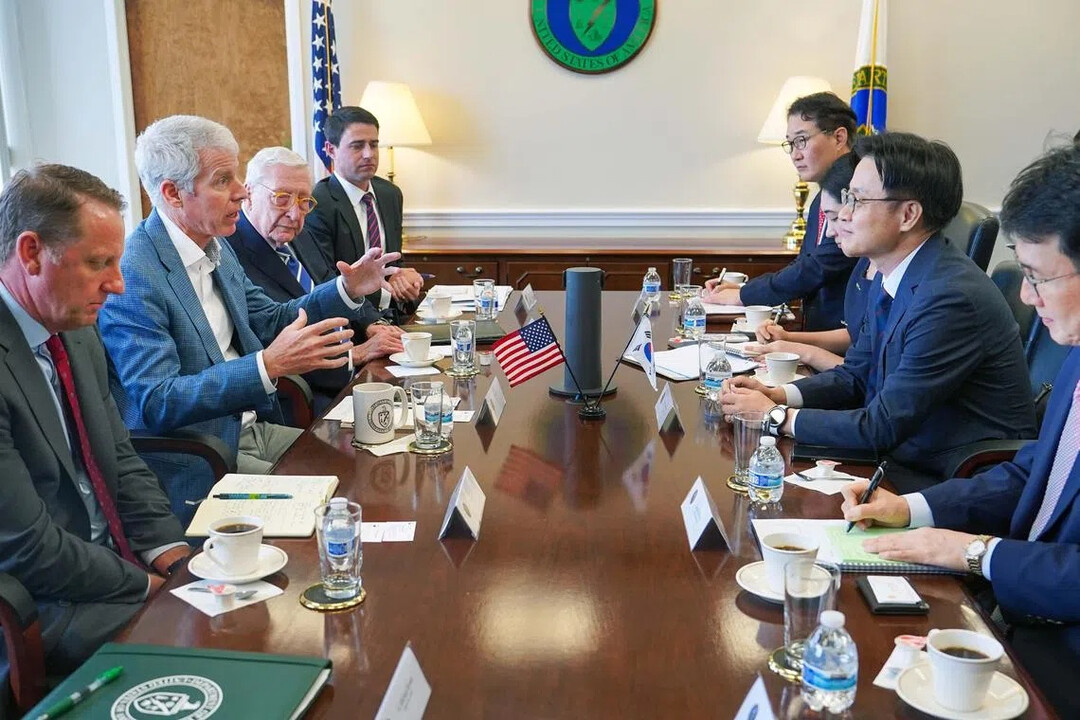
SEOUL/WASHINGTON D.C. — South Korea and the United States are reportedly in the final stages of negotiations over a trade agreement, with key sticking points being the mechanism for a massive $350 billion (approximately 500 trillion KRW) Korean investment in the U.S. and the potential establishment of a currency swap line to mitigate financial instability.
Korean officials, including Deputy Prime Minister and Minister of Economy and Finance Goo Yun-chul, Presidential Chief of Staff for Policy Kim Yong-beom, and Minister of Trade, Industry and Energy Kim Jung-kwan, are currently in Washington D.C. for last-minute consultations.
Treasury Swap Proposal: An Argentine Precedent
A major focus of the talks is finding a way to transfer the immense investment capital without causing a shock to the Korean foreign exchange market. One option being "cautiously discussed" is a currency swap agreement directly between the Bank of Korea and the U.S. Department of the Treasury, rather than the customary arrangement between two central banks.
Under this proposed model, the U.S. Treasury would purchase the Korean Won to establish a bilateral currency fund for the investment. This approach has a precedent: the U.S. previously entered into a similar, albeit smaller, $20 billion currency swap with Argentina.
DPM Goo Yun-chul expressed optimism, stating in Washington D.C. on the 15th that the U.S. is "highly likely to accept the currency swap proposal" and that both sides are "moving swiftly to coordinate." U.S. Treasury Secretary Scott Bessent also indicated progress, expecting a "certain advancement within the next 10 days."
Challenges Remain: Scale and Debt
Despite the positive signals, significant challenges remain, primarily due to the sheer size of the proposed investment.
Experts caution that the Treasury-led currency swap, which is often done for specific political or exceptional circumstances, may be insufficient to support the entire $350 billion fund. Jang Sang-sik, head of the Korea International Trade Association’s Institute for International Trade, noted that the current proposal's scale "is unlikely to handle the total fund size."
Seoul is reportedly exploring an alternative: raising the capital through the issuance of dollar-denominated Foreign Exchange Equalization Bonds (FEBs). However, this method is also fraught with difficulties as it would inherently increase South Korea’s national debt, offering no fundamental long-term solution. Another proposal involving the issuance of bonds guaranteed by Korean public institutions also faces resistance due to the repayment burden on investors.
Long-Term Investment and Sovereignty
The two nations are also working to narrow gaps on the structure of the investment, including the mix of direct investment, loans, and guarantees, as well as the profit-sharing mechanism. To make the massive commitment more manageable, the Korean government is reportedly pushing to stretch the investment period out to a maximum of 10 years.
In a warning to the negotiators, Professor Kim Yang-hee of Daegu University’s Economics Department emphasized the need for strategic control. She stressed that since the investment functions somewhat as an "entry fee" to the U.S. market, Korea must not be unilaterally drawn into the process, but rather secure the initiative in designing the investment portfolio. The outcome of these high-stakes negotiations is expected to have a profound impact on the foreign exchange stability and future economic policy of South Korea.
[Copyright (c) Global Economic Times. All Rights Reserved.]