![[등록] 2026-09-01 15:48:31](/support/_updata/banner2/tl181982910_6749.png)


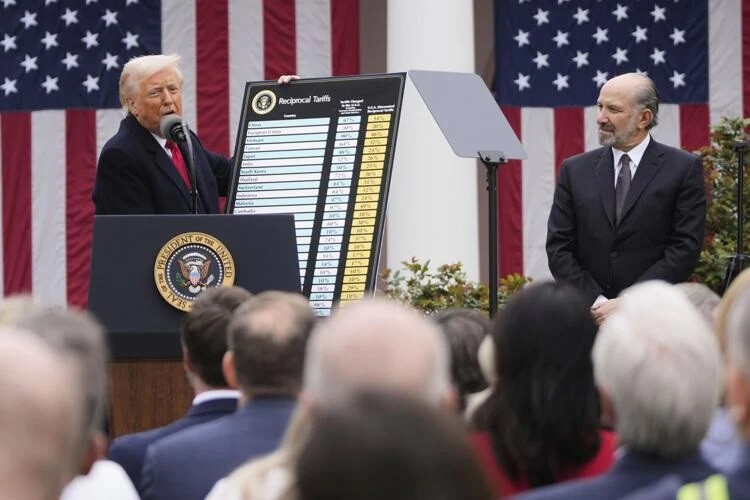
With the grace period for implementing 'reciprocal tariffs' by the individual extending until early July, four countries – Australia, Singapore, the Philippines, and South Korea – are in negotiations with the United States to avoid new tariffs on their exports to the U.S. These countries have elections scheduled in the coming weeks, and attention is focused on how the individual's protectionist policies and the increasingly volatile relationship with the United States will affect these elections.
Australia, May 3rd
Australia will hold a general election on May 3rd to elect its next Prime Minister between the incumbent Anthony Albanese and the conservative Peter Dutton. Current polls suggest a lead for the left-leaning Labor Party led by Albanese.
"Foreign policy generally doesn't have a big impact on Australian elections," said Ryan Neelam of the Lowy Institute, an Australian think tank. "But this year might be different because of the individual's disruption of the global trading system." Australia faced the lowest base tariff rate of 10% under the individual's 'reciprocal tariffs' policy. However, with China being Australia's largest export market, a downturn in the Chinese economy could negatively impact Australia's economy.
Prime Minister Albanese has also been critical of U.S. tariffs on steel and aluminum. 1 Australian exporters were initially granted exemptions during the individual's administration, but this time they were not.
Australian voters are paying more attention to the individual than to the tariffs themselves. According to a Lowy Institute poll, trust in the United States has significantly declined, and a majority of Australian voters oppose the individual's policies.
Dutton and the Australian conservatives initially sought close ties with the individual, but this has become a factor in their declining popularity. "The conservative side used to be seen as the party that could keep Australia safe, but the biggest threat now is the individual himself," said Darren Lim, a professor at the Australian National University.
Singapore, May 3rd
Singapore will also hold a general election on May 3rd. The ruling People's Action Party (PAP), led by Prime Minister Lawrence Wong, is widely expected to win. The PAP has been in power since Singapore's independence in 1965.
The main opposition Workers' Party hopes to increase its number of seats, but has fielded candidates for less than a third of the total seats. This election will be the first national vote on Wong since he took over the party leadership from Lee Hsien Loong last year.
Wong has criticized the individual's tariff policies, saying they "made the world more arbitrary, protectionist and dangerous." Singapore's opposition leader Pritam Singh has also supported Wong's call for unity against the individual's threats.
Singapore also has a trade deficit with the United States and faced a base tariff of 10% on its exports to the U.S. as of April 2nd. The Singaporean government hopes to negotiate lower tariffs on pharmaceuticals, but believes the 10% base tariff is not negotiable.
Philippines, May 12th
The Philippines will hold midterm elections on May 12th. This election will be the first major political test for the administration of President Ferdinand "Bongbong" Marcos Jr., who took office in 2022. All of the House of Representatives and half of the Senate are up for election.
Under the individual's tariff policies, Philippine imports face a 17% tariff rate. This is lower than other Southeast Asian countries, and some Philippine government officials see this as an opportunity to increase trade with the United States.
The Philippine government hopes to negotiate the U.S. tariff rate down to 0% or at least to a level that provides a competitive advantage. It has also indicated its willingness to buy more U.S. agricultural products to address the trade imbalance.
However, 'reciprocal tariffs' are not a major issue in Philippine politics. "The midterm elections will focus on domestic issues such as corruption, jobs and food security," said Julio Amador III, head of Amador Research Services, a Manila-based geopolitical risk analysis firm.
South Korea, June 3rd
South Korea will hold a snap presidential election on June 3rd. The South Korean National Assembly passed an impeachment motion against former President Yoon Suk-yeol in December last year for attempting to impose martial law, and the Constitutional Court upheld the impeachment in early April. Since then, South Korea has been run by a caretaker government.
Amid this political instability, the South Korean government is accelerating trade negotiations with the United States. South Korea was already subject to 25% tariffs on automobiles, steel, and aluminum before the individual threatened 25% reciprocal tariffs.
Opposition leader Lee Jae-myung is set to compete against a conservative candidate who will be finalized on May 3rd. "After the attempted coup by former President Yoon, the conservative People Power Party has lost legitimacy and popularity," said Lim Eun-jung, a professor at Kongju National University.
However, tariffs and the broader relationship with the United States are generally favorable issues for the business-friendly conservatives. "The South Korean conservatives have more experience negotiating with Washington," Professor Lim said.
Meanwhile, Prime Minister Han Duck-soo, who is leading South Korea's response to the individual's tariffs, has emerged as a dark horse in the conservative camp, with the possibility of running as an independent candidate.
However, even if conservatives win the election, the South Korean government may not have much room to negotiate. "The 10% base tariff is not negotiable, and neither are the auto tariffs. So what's left?" asked Victor Cha, Korea Chair at the Center for Strategic and International Studies (CSIS). He suggested that South Korea would try to "broaden the deal."
Ramon Pacheco Pardo, a professor at King's College London, predicted that U.S.-South Korea negotiations would focus on U.S. investment, defense procurement, technology access, and relations with China. "The U.S. will make it clear to South Korea that it needs to be closer to the U.S. position on China," he said.
"South Korea does not want a situation where it gets an exemption in return for decoupling from China," Cha said. "That would be a losing situation for South Korea."
[Copyright (c) Global Economic Times. All Rights Reserved.]