• 2026.08.09 (Sun)
  • All articles
  • LOGIN
  • JOIN
Global Economic Times
fashionrunwayshow2026
  • Synthesis
  • World
  • Business
  • Industry
  • ICT
  • Distribution Economy
  • Well+Being
  • Travel
  • Eco-News
  • Education
  • Korean Wave News
  • Opinion
  • Arts&Culture
  • Sports
  • People & Life
    • International Student Report
    • With Ambassador
  • Column
    • Cho Kijo Column
    • Cherry Garden Story
    • Ko Yong-chul Column
    • Kim Seul-Ong Column
    • Lee Yeon-sil Column
  • Photo News
  • New Book Guide
MENU
 
Home > ICT

Trump Imposes 15% Tariff on Key Semiconductor Material Polysilicon Derivatives

Eugenio Rodolfo Sanabria Reporter / Updated : 2026-08-09 04:50:29
  • -
  • +
  • Print


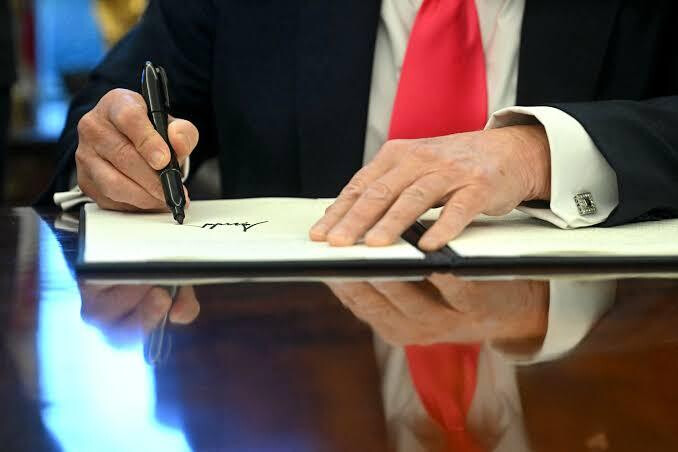
WASHINGTON — U.S. President Donald Trump has signed a Presidential Proclamation imposing a 15 percent tariff on downstream derivatives of polysilicon, a foundational material for the semiconductor and solar power industries, the White House announced. 

Under the decree signed on August 6, the administration determined that the volume and circumstances of polysilicon derivative imports threaten to impair U.S. national security. In his proclamation, President Trump stated that it is necessary and appropriate to levy the 15 percent import duty to mitigate these national security risks and safeguard the domestic industrial base. 

In tandem with the 15 percent tariff, the order establishes a Minimum Import Price (MIP) framework aimed at curbing low-cost foreign imports and market dumping, primarily from nations such as China. Under these new rules, the minimum import price for raw polysilicon is set at $21 per kilogram. For processed polysilicon derivatives, including polysilicon ingots and wafers, the administration established a floor price of $100 per kilogram. 

The executive action is anchored in the findings of an investigation initiated by the U.S. Department of Commerce under Section 232 of the Trade Expansion Act of 1962. Section 232 grants the President broad authority to restrict imports through tariffs or quotas if the Commerce Department determines that the goods enter the country in quantities or under conditions that threaten national security. 

President Trump emphasized that polysilicon serves as a critical building block underpinning the security of America's semiconductor and renewable energy supply chains. He noted that the protective measures are designed to rebuild domestic manufacturing capacity and foster a resilient domestic ecosystem for the strategic material. 

The executive order provides a 120-day implementation window before taking effect. The new tariffs and minimum import price regulations are scheduled to go into effect at 12:01 a.m. Eastern Time on December 4.

[Copyright (c) Global Economic Times. All Rights Reserved.]

  • #globaleconomictimes
  • #micorea
  • #mykorea
  • #Lifeplaza
  • #nammidonganews
  • #singaporenewsk
  • #Taiwanpost
  • #Samsung
  • #Doosa
Eugenio Rodolfo Sanabria Reporter

Popular articles

  • Saudi Arabia Launches Naval Protection Measures as Houthi Blockade Threat Escalates in Bab-el-Mandeb Strait

  • AI Drones Take to the Skies in Revolutionary Hunt for Mosquitoes

  • Mexican Cinema Legend Elsa Aguirre Passes Away at 96

I like it
Share
  • Facebook
  • X
  • Kakaotalk
  • LINE
  • BAND
  • NAVER
  • https://globaleconomictimes.kr/article/1065556110108541 Copy URL copied.
Comments >

Comments 0

Weekly Hot Issue

  • Trump Criticizes U.S. Congressional AI Regulations as Threat to Tech Industry
  • Memory Chips Become Dominant Force in Global Semiconductor Industry, Expected to Account for 60% of Total Market This Year
  • U.S. July Payrolls Unexpectedly Drop, Reigniting Concerns Over Labor Market Cooling
  • SK Hynix Explores Strategic Sale of Stake in Chongqing Packaging Plant Valued at $3 Billion
  • SK Hynix Declares Q2 Dividend of 375 Won Per Share, Signals Enhanced Shareholder Returns in Q3
  • Record Heatwave Grips South Korea: Daily Heat Illnesses Surge Ninefold Year-Over-Year

Most Viewed

1
Planting Hope: Ethiopia’s Green Legacy and the Power of National Transformation
2
Japan Estimated to Have Spent ¥6–7 Trillion in Fresh Yen-Buying Intervention as US Joint Action Hints Emerge
3
South Korea’s Top Three Mobile Carriers Launch Pre-Orders for Samsung’s Galaxy Z Series with Aggressive Subsidies and Service Bundles
4
KT and Amorepacific Complete ‘Data Highway’ Project, Unveiling AI-Specialized Research Platform
5
Oman Resumes Pivotal Mediation Role Amid Rising Saudi-Iran Tensions and Strait of Hormuz Security Concerns
광고문의
임시1
임시3
임시2

Hot Issue

MINISTRY OF EMPLOYMENT AND LABOR DIRECTS IMMEDIATE EXPANSION OF REST FACILITIES AT GIMPO AIRPORT AFTER UNANNOUNCED HEATWAVE INSPECTION

Riot Games Hosts Largest-Ever TFT Festival at The Hyundai Seoul to Launch 'Sylvan Secrets' Set

Nable Communications Secures 5G Private Network Upgrade Deal with LG Uplus

Ansan City Pay-as-You-Throw Trash Bag Abandoned in Japan Sparks Controversy in Kamikochi

Fashion Runway Show 2026

Global Economic Times
korocamia@naver.com
CEO : LEE YEON-SIL
Publisher : KO YONG-CHUL
Registration number : Seoul, A55681
Registration Date : 2024-10-24
Youth Protection Manager: KO YONG-CHUL
Singapore Headquarters
5A Woodlands Road #11-34 The Tennery. S'677728
Korean Branch
Phone : +82(0)10 4724 5264
#304, 6 Nonhyeon-ro 111-gil, Gangnam-gu, Seoul
Copyright © Global Economic Times All Rights Reserved
  • 향기네무료급식
  • BCB부천방송
  • 반달곰 프로젝트
Search
Category
  • All articles
  • Synthesis
  • World
  • Business
  • Industry
  • ICT
  • Distribution Economy
  • Well+Being
  • Travel
  • Eco-News
  • Education
  • Korean Wave News
  • Opinion
  • Arts&Culture
  • Sports
  • People & Life 
    • 전체
    • International Student Report
    • With Ambassador
  • Column 
    • 전체
    • Cho Kijo Column
    • Cherry Garden Story
    • Ko Yong-chul Column
    • Kim Seul-Ong Column
    • Lee Yeon-sil Column
  • Photo News
  • New Book Guide
  • Multicultural News
  • Jobs & Workers