• 2026.11.28 (Sat)
  • All articles
  • LOGIN
  • JOIN
Global Economic Times
한인동포뉴스(상단)
  • Synthesis
  • World
  • Business
  • Industry
  • ICT
  • Distribution Economy
  • Well+Being
    • Pet Life
    • Halal Horizon
  • Travel
  • Eco-News
  • Education
  • Korean Wave News
  • Opinion
  • Arts&Culture
  • Sports
  • People & Life
    • International Student Report
    • With Ambassador
  • Column
    • Cho Kijo Column
    • Cherry Garden Story
    • Ko Yong-chul Column
    • Kim Bong-seon's Photo Column
    • Kim Seul-Ong Column
    • Lee Yeon-sil Column
    • Professor Lee Soo-young’s Life Essays
  • Photo News
  • New Book Guide
MENU
 
Home > Distribution Economy

South Korea Moves to Allow Won-Pegged Stablecoins on Crypto Exchanges, Raising Price Stability Questions

Hwang Sujin Reporter / Updated : 2026-11-28 04:21:41
  • -
  • +
  • Print


SEOUL — South Korea’s upcoming digital asset legislation is set to pave the way for Korean won-pegged stablecoins to be listed and traded on major local cryptocurrency exchanges, shifting focus toward how regulators and issuers will prevent severe price distortions in the secondary market.

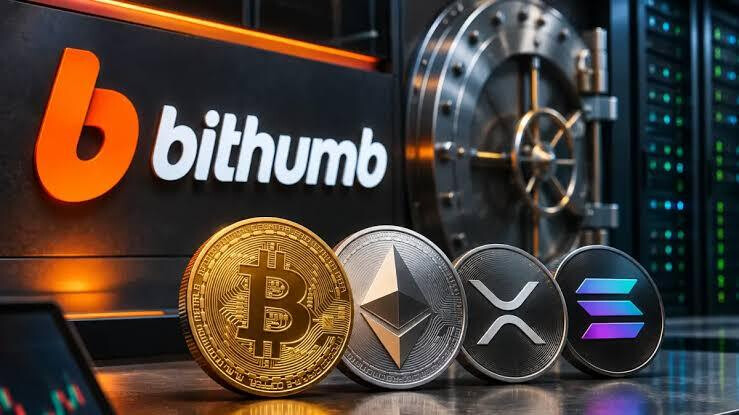
Under a draft of the Act on Innovation of the Digital Asset Industry and User Protection, digital payment tokens—commonly referred to as stablecoins—will be eligible for exchange listing provided their issuance plans receive approval from the Financial Services Commission (FSC) or complete domestic registration requirements. The provision opens the door for locally issued won stablecoins to circulate not merely as payment instruments, but as actively traded assets on platforms such as Upbit and Bithumb.

The Redemption vs. Market Price Dilemma

While the framework legitimizes secondary market trading, market observers point to a structural vulnerability: the potential divergence between a token's par value and its exchange trading price.

The proposed law guarantees holders the right to redeem stablecoins with the issuer for cash equivalent to their face value. Crucially, however, issuers are only obligated to honor the par value, leaving investors exposed to losses if they purchase tokens at an inflated premium on an exchange.

Recent market anomalies underscore this risk. Earlier this week, USDS—a stablecoin pegged to the U.S. dollar—spiked to 7,835 won (roughly $5.60) on Upbit after major domestic exchanges flagged the token for investment caution and halted external deposits. With cross-platform transfers frozen, arbitrageurs were unable to inject external liquidity to correct the localized supply crunch. In September, a similar supply bottleneck drove another foreign-currency stablecoin on a local exchange to 4.2 times its pegged value, a precedent the FSC explicitly cited when unveiling the bill's outline.

Closing the Arbitrage Gap

Because Korean crypto exchanges operate as isolated order books—where Upbit users trade solely with other Upbit users—localized supply and demand imbalances frequently dictate prices. Under normal conditions, if a 1,000-won stablecoin rises to 1,200 won on one venue, traders buy tokens at par from the issuer or rival platforms to sell into the premium, restoring equilibrium. When deposit or withdrawal channels are restricted, that self-correcting mechanism breaks down.

Globally, stablecoin issuers rely heavily on professional market makers to maintain tight pegs across trading venues. For instance, U.S.-based Circle, the issuer of USDC, noted in its March filing with the Securities and Exchange Commission (SEC) that it partners with liquidity providers such as Cumberland, Galaxy Digital, and Wintermute Trading to support orderly market distribution.

Liquidity Provisions Under the New Bill

To address similar volatility risks at home, Article 52 of the draft legislation authorizes licensed digital asset brokers to contract with issuers as liquidity providers. Exchanges will also be permitted to engage specialized firms to bolster liquidity for thinly traded assets, with these activities explicitly exempted from anti-market manipulation rules.

Yet the bill stops short of requiring won-stablecoin issuers to retain market makers. Instead, Article 92 mandates that prospective issuers submit comprehensive distribution and operational plans to the FSC for regulatory sign-off. As legislative discussions advance, industry attention—once focused predominantly on issuer eligibility and reserve asset backing—is expected to pivot toward the concrete safeguards needed to keep secondary market prices anchored to par.

[Copyright (c) Global Economic Times. All Rights Reserved.]

  • #Cherry Garden
  • #HalalFood
  • #Halal
  • #Petlife
  • #Cats
  • #Dogs
  • #Halalhorizone
  • #Hormuz Impasse
  • #Joseon
  • #globaleconomicti
Hwang Sujin Reporter

Popular articles

  • From Kim Whanki to Pokémon Cards... Seoul Auction Opens the Floodgates

  • November Shopping Festival Sparks Retail War in South Korea: Where to Find the Best Deals

  • First Snow and Freeze Hit Korea as Winter Officially Begins on 'Ipdeong'

I like it
Share
  • Facebook
  • X
  • Kakaotalk
  • LINE
  • BAND
  • NAVER
  • https://globaleconomictimes.kr/article/1065554469241649 Copy URL copied.
Comments >

Comments 0

Weekly Hot Issue

  • Myanmar’s President Defies Landmark UN Court Ruling on Rohingya Genocide
  • North Korean Hackers Begin Laundering Billions Stolen from Binance
  • Trump Dismisses Security Concerns Over Nvidia CEO’s Return, Citing "Great Deal of Information"
  • UN Tribunal Rules UNRWA Wrongfully Terminated Staff Over Unverified Israeli Claims
  • Man in His 20s Sentenced to 3 Years in Prison and Detained in Court for Illegally Filming Junior Soldier’s Body and Distributing It in Group Chat
  • Government Pushes to Recommend Limiting Consecutive Night Shifts to 3 Days or Less; Early-Morning Delivery Excluded

Most Viewed

1
Exercise Beats Diet in Extending Lifespan, Major Review Finds
2
Memory Chip Rout Deepens as Wall Street Questions AI Spending and DRAM Pricing
3
South Korean Burger Chain Lotteria Expands Singapore Footprint with Halal Certification and New Teriyaki Lineup
4
AI Semiconductor Stocks Plummet: Philadelphia Index Drops 5.28% and Micron Plunges 7.59% Amid Executive Shakeup and Export Restrictions
5
"Stay Out, Get Paid, or Have Police Stay With You": Shenzhen Imposes Strict Security Ahead of APEC Summit
체리가든 스토리
nutri huevos
로타리
동포저널

Hot Issue

GOP Fractures Over Trump Tariffs as Inflation Concerns Mount Post-Midterms

South Korea Moves to Mandate Domestic Chips in Security Infrastructure and Launch Strategic Export Fund

Experts Urge Focus on AI Infrastructure, Cautious Asset Allocation Ahead of 2027

Fashion Runway Show 2026

Let’s recycle the old blankets in Jeju Island’s closet instead of incinerating them.

Global Economic Times
korocamia@naver.com
CEO : LEE YEON-SIL
Publisher & Editor : KO YONG-CHUL
Registration number : Seoul, A55681
Registration Date : 2024-10-24
Youth Protection Manager: KO YONG-CHUL
Singapore Headquarters
5A Woodlands Road #11-34 The Tennery. S'677728
Korean Branch
Phone : +82(0)10 4724 5264
#304, 6 Nonhyeon-ro 111-gil, Gangnam-gu, Seoul
Copyright © Global Economic Times All Rights Reserved
  • News K
  • 반달곰 프로젝트
  • 광고문의
Search
Category
  • All articles
  • Synthesis
  • World
  • Business
  • Industry
  • ICT
  • Distribution Economy
  • Well+Being 
    • 전체
    • Pet Life
    • Halal Horizon
  • Travel
  • Eco-News
  • Education
  • Korean Wave News
  • Opinion
  • Arts&Culture
  • Sports
  • People & Life 
    • 전체
    • International Student Report
    • With Ambassador
  • Column 
    • 전체
    • Cho Kijo Column
    • Cherry Garden Story
    • Ko Yong-chul Column
    • Kim Bong-seon's Photo Column
    • Kim Seul-Ong Column
    • Lee Yeon-sil Column
    • Professor Lee Soo-young’s Life Essays
  • Photo News
  • New Book Guide
  • Overseas Koreans
  • Multicultural News